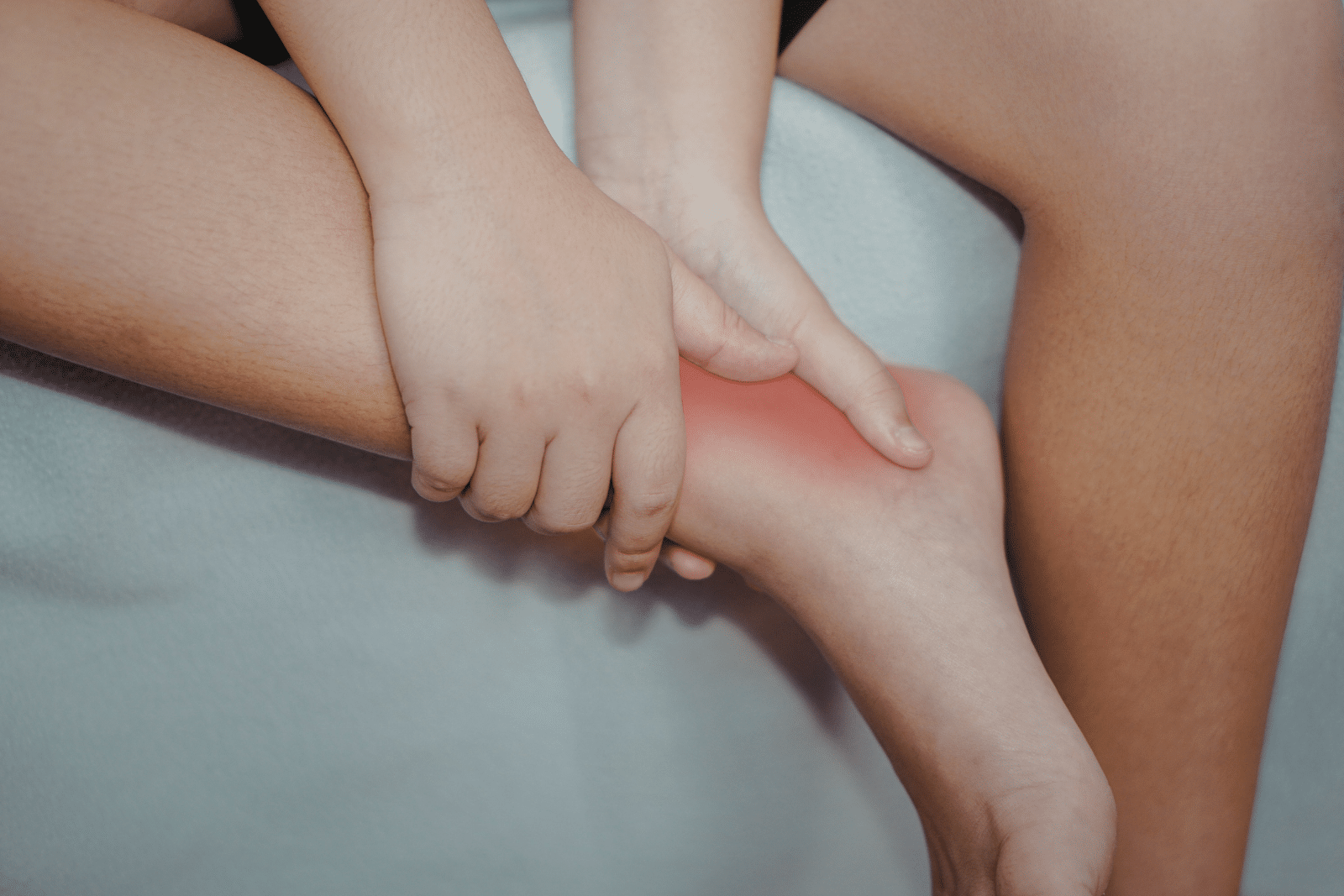
As a common concern for many patients, leg pain can be both confusing and deeply disruptive to your quality of life. Whether it is a sharp, electric sensation or a dull, persistent ache, leg pain often signals an underlying issue within the musculoskeletal or nervous system. This fact sheet is designed to help you understand the common origins of leg pain and how chiropractic care focuses on addressing the root cause rather than just masking the symptoms.
In this article, Dr Simon Nash (Chiropractor) discusses the various triggers for leg pain, ranging from spinal issues to local muscular trauma, and the diverse treatment modalities available to support recovery.
Medical Disclaimer: The information provided in this article is for general knowledge and informational purposes only and does not constitute medical advice. It is essential to consult with a qualified healthcare professional, such as the team at Our Chiro Brisbane, for an accurate diagnosis and personalised treatment plan.
Table of Contents
- Understanding the Origins of Leg Pain
- Common Causes: From Spinal Discs to Muscle Strains
- Referred Pain vs. Local Trauma
- How Chiropractic Care Can Help
- Innovative Treatment Modalities at Our Chiro
- Frequently Asked Questions (FAQs)
- Book a Consult with Our Chiro Brisbane
- References
- Video Transcript
Understanding the Origins of Leg Pain
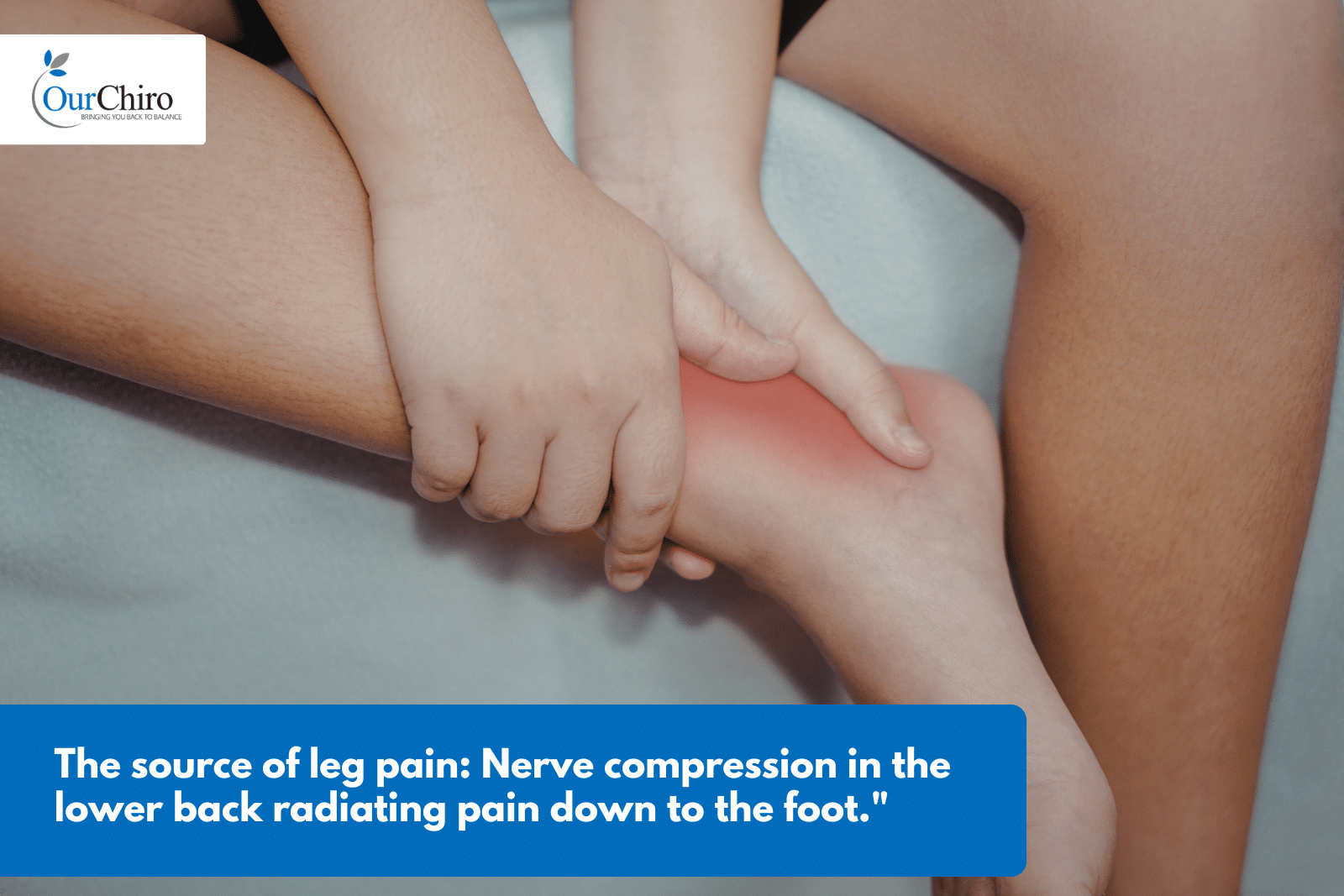
Leg pain is rarely a “one size fits all” condition. Because the nerves that supply your legs originate in your lower back (lumbar spine), many patients are surprised to learn that the source of their calf or thigh pain is actually a structural issue in their spine.
“A question we often get at the clinic is: what causes leg pain and how can chiropractic help?” says Dr Simon Nash. He notes that the first step in any clinical setting is a thorough investigation. “Leg pain can be caused by lots of different things… the first thing that we would do at the clinic is to make sure of where your leg pain is coming from, whether it’s referred pain or whether it’s local.”
By distinguishing between pain that is “referred” (starting elsewhere) and pain that is “local” (starting in the leg itself), a chiropractor can build a roadmap for effective treatment.
Common Causes: From Spinal Discs to Muscle Strains
Dr Nash identifies several primary culprits that frequently lead patients to seek care:
1. Disc Bulges and Nerve Compression
The intervertebral discs act as shock absorbers for the spine. If a disc bulges or herniates, it can put direct pressure on the nerve roots.
“You could have disc bulges in your lower back that could cause leg pain,” Dr Nash explains. This is often the primary driver behind sciatica, where pain travels from the lower back, through the glutes, and down the leg.
2. Facet Joint Issues
The facet joints are the small, stabilising joints located between and behind adjacent vertebrae.
“You could have facet arthropathy or facet degeneration,” says Dr Nash. “Facet joints are the little joints that make up the spine, and you can have an inflammation of those.” When these joints are inflamed, they can refer pain into the extremities, often mimicking a nerve or muscle problem.
3. Piriformis Syndrome
Deep in the buttock lies the piriformis muscle. Because the sciatic nerve runs very close to (or even through) this muscle, any tension here can be excruciating.
“You could have piriformis syndrome, which is a condition where you have a tightening of the piriformis muscle,” Dr Nash notes. This tightening “strangles” the nerve, leading to significant discomfort down the leg.
Expert Insight from Dr Simon Nash (Chiropractor):
“The human body is an interconnected chain. A restriction in the lumbar spine doesn’t just stay in the back; it changes how you walk and how your muscles fire. Often, the leg pain is simply the loudest alarm bell for a problem occurring further up the kinetic chain.”
Referred Pain vs. Local Trauma
It is vital to determine if the pain is mechanical or neurological. Local trauma, such as muscle strains and sprains, involves damage to the actual tissues of the leg. This might include hamstrings, quadriceps, or calves.
Conversely, referred pain is a “ghost” sensation where the brain perceives pain in the leg, but the damage is actually in the spine or pelvis. Research published in the Journal of Manipulative and Physiological Therapeutics suggests that chiropractic spinal manual therapy is significantly effective in managing both local back pain and the radiating symptoms that follow (Santilli et al., 2006)
How Chiropractic Care Can Help
Once the cause is established, the focus shifts to restoration. Chiropractic care isn’t just about “cracking” a joint; it is a multi-modal approach to health.
“Once we’ve established [the cause], we would then use different treatment techniques,” says Dr Nash. “So they may range from manual adjustments, low force adjustments… we might do mobilisations.”
Addressing Tissue Tension
For many, the pain is tied to soft tissue restrictions. Dr Nash highlights specific techniques used at Our Chiro: “We might do soft tissue work such as active release technique or trigger point therapy. We might do cupping technique.” These methods help break up adhesions and improve blood flow to the affected area.
Innovative Treatment Modalities at Our Chiro
In addition to traditional chiropractic adjustments, modern clinics utilise advanced technology to speed up the healing process.
- Dry Needling: Using fine needles to release “knots” or trigger points in the muscle.
- Cold Laser Therapy: A non-invasive treatment that uses specific wavelengths of light to interact with tissue, helping to accelerate the healing process.
- Shockwave Therapy: Particularly effective for chronic tendinopathies in the leg. “We could also do dry needling, cold laser therapy, shockwave therapy,” Dr Nash adds.
A study in the Journal of Pain Research highlights that multi-modal chiropractic care—combining spinal manipulation with soft tissue therapy and exercise provides superior outcomes for patients with radiating leg pain compared to isolated treatments (Bronfort et al., 2012)
Expert Insight from Dr Simon Nash (Chiropractor):
“We don’t just treat the pain; we treat the person. By combining high-tech tools like cold laser with traditional manual therapy, we can address both the acute inflammation and the long-term structural imbalances.”
Frequently Asked Questions (FAQs)
Q1: Why does my leg hurt if the problem is in my back? A: The nerves that provide sensation to your legs start in your lower back. If those nerves are pinched or irritated at the “source” (the spine), your brain perceives the pain occurring anywhere along the length of that nerve.
Q2: Can chiropractic help with a “pulled” hamstring? A: Yes. While we often focus on the spine, chiropractors are trained to treat “local trauma” such as muscle strains and sprains through soft tissue work and rehabilitation exercises.
Q3: What is “Cold Laser Therapy” and does it hurt? A: Cold laser is a pain-free, non-invasive treatment. It uses light energy to stimulate cellular repair and reduce inflammation. Most patients feel nothing at all during the procedure.
Q4: How many sessions will I need for leg pain? A: This depends on whether the cause is acute (like a recent strain) or chronic (like disc degeneration). After your initial assessment, Dr Nash will provide a tailored plan.
Q5: Is it safe to exercise with leg pain? A: It depends on the cause. If the pain is due to a disc bulge, certain movements might make it worse. We typically provide specific “rehab” exercises that are safe for your specific condition.
Q6: Does Our Chiro Brisbane use “low force” techniques? A: Yes. As Dr Nash mentioned, we offer both manual adjustments and low-force mobilisations for those who prefer a gentler approach.
Book a Consult with Our Chiro Brisbane
We know that living with leg pain is exhausting. It’s not just the physical ache; it’s the way it prevents you from playing with your kids, going for your morning walk, or even getting a good night’s sleep. You shouldn’t have to “just put up with it.”
At Our Chiro Brisbane, we pride ourselves on being health detectives. We don’t just want to stop the pain today; we want to ensure it doesn’t come back tomorrow. Our team offers an empathetic, evidence-based environment where your recovery is our priority.
Take the first step back to mobility. Book your appointment online here or call us on 07 3257 0399 to discuss how we can help you get back on your feet.
References
Bronfort, G., Evans, R., Anderson, A. V., Svendsen, K. H., Bracha, Y., & Grimm, R. H. (2012). Spinal Manipulation, Medication, or Home Exercise With Advice for Acute and Subacute Neck Pain. Annals of Internal Medicine, 156(1_Part_1), 1. https://doi.org/10.7326/0003-4819-156-1-201201030-00002
Santilli, V., Beghi, E., & Finucci, S. (2006). Chiropractic manipulation in the treatment of acute back pain and sciatica with disc protrusion: a randomized double-blind clinical trial of active and simulated spinal manipulations. The Spine Journal : Official Journal of the North American Spine Society, 6(2), 131–137. https://doi.org/10.1016/j.spinee.2005.08.001
Video Transcript
A question we often get at the clinic is what causes leg pain and how can chiropractic help? So leg pain can be caused by lots of different things. For example, you could have disc bulges in your lower back that could cause leg pain. You could have piriformis syndrome, which is a condition where you have a tightening of the piriformis muscle. You could have facet Arthropathy. Facet degeneration. Facet joints are the little, um the joints that make up the spine. And he can have an inflammation of those. You could have local trauma to the legs, such as muscle strains, sprains. You could have tendinopathies. So the first thing that we would do at the clinic is to make sure of where your leg pain is coming from, whether it’s referred pain, whether it’s local. Obviously, we’d try and determine how that leg pain came about. And then once we’ve established that, we would then use different treatment techniques. So they may be range from manual adjustments, low force adjustments. We might do mobilisations. We could do soft tissue work such as active release technique or trigger point therapy. We might do cupping technique. Um, we could also do dry needling cold laser therapy, shockwave therapy. Um, so we have to first determine what’s causing that leg pain. And then we would pick the best treatment to suit to help treat that leg pain.
This blog post was written and approved by Dr Simon Nash
Dr Simon Nash (M.Chiro, B.Chiro Sci.) is a chiropractor with over 20 years of clinical experience. He is a full professional member of Sports Medicine Australia (SMA) and Chiropractic Australia, and is AHPRA registered (CHI0000970189). Simon graduated from Macquarie University and is dual-registered to practise in Australia and Hong Kong.
He began his career in a multidisciplinary neurology-focused clinic in Sydney, developing a strong interest in treating headaches and migraines. Since 2006, he has operated Our Chiro Brisbane, now alongside his sisters Jessica and Rebecca.
Simon treats everyday injuries, workplace rehabilitation cases and complex presentations using a wide range of techniques. His sports medicine experience spans elite athletes including NRL and Rugby Union players, Olympians, and events like the Australian Open and Hong Kong 7s. He has also treated Guns N’ Roses during tour.


Disclaimer:
The information provided in this blog is for general informational purposes only and is not intended as medical advice. It should not be used to diagnose, treat, or replace professional consultation with a qualified healthcare provider. Always seek the advice of a chiropractor, GP, or other qualified health professional regarding any medical condition or treatment.
Click here to learn more about our editorial policy, that explains how content is created, fact-checked, and updated by qualified chiropractors and other health professionals.