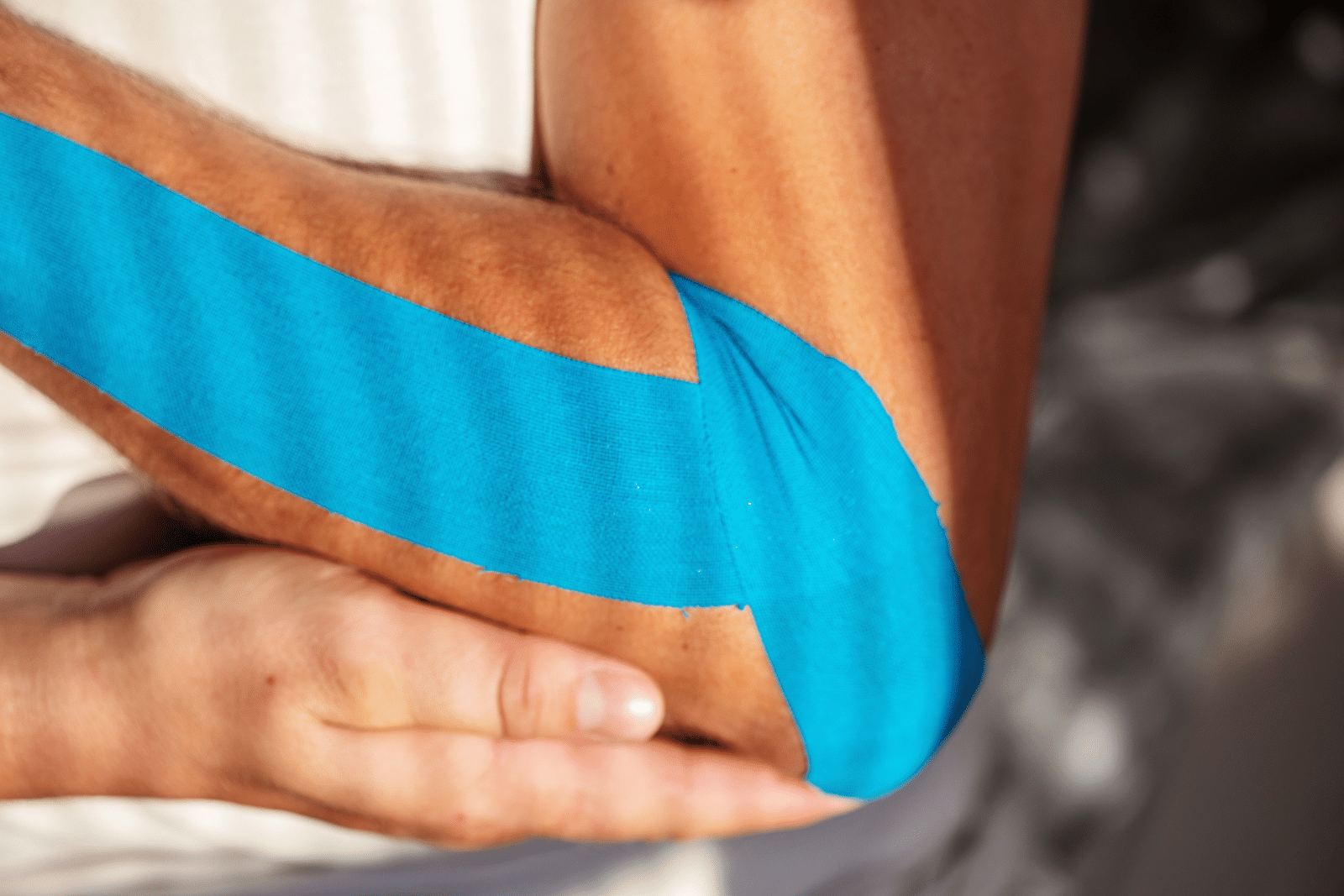
As one of the most common overuse injuries of the forearm and elbow, tennis elbow can cause nagging pain, weakness, and grip problems for anyone whose day involves repetitive hand and wrist movement. Despite its name, most people who develop the condition have never held a tennis racquet it’s just as likely to affect office workers, tradespeople, chefs, and home cooks. This fact sheet is designed to give you a clear overview of tennis elbow, its common causes, and how chiropractic care may offer a gentle, non-invasive path to recovery.
In this article, Dr. Simon Nash (Chiropractor) discusses what tennis elbow is, who tends to get it, and the range of conservative techniques a chiropractor might use to help settle your symptoms.
Medical Disclaimer: The information provided in this article is for general knowledge and informational purposes only, and does not constitute medical advice. It is essential to consult with a qualified healthcare professional for a diagnosis and personalised treatment plan.
Table of Contents
- Understanding Tennis Elbow
- Common Causes of Tennis Elbow
- How Chiropractors Diagnose Tennis Elbow
- The Chiropractic Approach to Tennis Elbow
- Frequently Asked Questions (FAQs)
- Book a Consult with Our Chiro Brisbane
- References
- Video Transcript
Understanding Tennis Elbow
Tennis elbow, medically known as lateral epicondylitis, is one of the most common elbow complaints Dr. Nash and the team see in the clinic. It’s a tendinopathy that develops around the lateral epicondyle, the bony bump on the outer side of the elbow.
The lateral epicondyle is where the tendons of the forearm’s extensor muscles converge and attach to the bone. “So lateral epicondylitis is on the outside of your elbow, and it’s where the group of tendons that originate from your fingers and run up your forearm insert onto that bone,” Dr. Nash explains. When that insertion point becomes irritated and inflamed, tennis elbow is the result.
“A very common condition that we see at the clinic is tennis elbow,” says Dr. Nash. “And probably 90% of people that have tennis elbow don’t play tennis.”
This lines up with the broader medical literature: lateral epicondylitis is described in clinical reviews as a degenerative tendinopathy of the common extensor origin. Most often the extensor carpi radialis brevis that develops in response to repetitive gripping and wrist extension during everyday activities, rather than any single sport (Ma & Wang, 2020).
Common Causes of Tennis Elbow
Despite the name, the vast majority of people who develop tennis elbow have never picked up a racquet.
“Usually with repetitive movements, for example such as chopping up with a knife, using a mouse, and just general repetitive strain around that area, causes lateral epicondylitis or tennis elbow,” Dr. Nash notes.
Anyone whose daily routine involves repeated gripping, twisting, or wrist extension is at risk. Common triggers include:
- Extended time on a computer mouse and keyboard
- Chopping and prepping in the kitchen
- Using hand tools such as screwdrivers, spanners, and paintbrushes
- Tradework involving repetitive gripping or torquing
- Musicians and gamers with heavy hand use
- And yes, a tennis backhand can absolutely do it too
In short, any activity that repeatedly loads the wrist extensor tendons past their capacity to repair themselves can lead to the microtears and disorganised collagen that characterise the condition.
How Chiropractors Diagnose Tennis Elbow
Pain on the outer elbow can stem from a few different structures: the extensor tendon, the radial nerve, or the elbow joint itself. Therefore, an accurate diagnosis starts with a thorough history and hands-on examination.
Clinicians typically rely on a combination of patient history, physical examination, and provocative orthopaedic tests (such as Cozen’s test and Mill’s test) that reproduce pain at the lateral epicondyle when the wrist is extended against resistance. Imaging such as ultrasound is used when needed to confirm the extent of tendon damage or rule out other causes of lateral elbow pain, such as radial tunnel syndrome, when symptoms don’t resolve as expected.
Accurate diagnosis is important because lateral elbow pain from different sources can look similar on the surface but respond very differently to treatment. Persistent outer-elbow pain is worth having properly assessed rather than assumed to be tennis elbow by default.
The Chiropractic Approach to Tennis Elbow
The good news is that tennis elbow responds well to conservative, non-surgical care in the vast majority of cases. Research consistently shows that most cases of lateral epicondylitis can be managed successfully with a combination of manual therapy, soft tissue work, load management, and progressive strengthening. Surgery is mainly reserved for a small minority of stubborn cases (Bisset & Vicenzino, 2015).
Depending on your presentation, conservative chiropractic care at Our Chiro Brisbane may incorporate:
Soft Tissue Therapy (including Active Release-style techniques): Releasing tension in the overworked wrist extensor muscle group to take load off the irritated tendon.
Dry Needling: Targeting tight, irritated tissue around the lateral epicondyle to help reduce pain and encourage healing.
Cold Laser Therapy (LLLT): A gentle, non-invasive option to help calm inflammation at the tendon’s insertion point.
Shockwave Therapy: A well-researched option for stubborn tendinopathy. Systematic reviews have found that extracorporeal shockwave therapy can produce meaningful pain reduction and functional improvement in patients with chronic lateral epicondylitis, with a strong safety profile (Yao et al., 2020).
Kinesio Taping: Supporting the forearm muscles during daily activity while the tendon recovers.
Manual Adjustments and Mobilisations: Restoring normal movement through the elbow, wrist, and surrounding joints. Mobilisation-with-movement techniques targeting the elbow have been shown to produce immediate improvements in pain-free grip strength in people with lateral epicondylitis (Vicenzino et al., 2001).
Exercise Prescription: Progressive loading of the wrist extensors, often using eccentric or isometric protocols is one of the most consistently supported components of long-term recovery.
Frequently Asked Questions (FAQs)
Q1: Do I need to play tennis to get tennis elbow? A: No. Despite the name, tennis elbow is most commonly caused by everyday repetitive movements like using a computer mouse, chopping in the kitchen, or using hand tools rather than by playing tennis.
Q2: What’s the difference between tennis elbow and golfer’s elbow? A: They’re mirror-image conditions. Tennis elbow (lateral epicondylitis) affects the tendons on the outer side of the elbow, while golfer’s elbow (medial epicondylitis) affects the tendons on the inner side. Both are overuse tendinopathies but involve different muscle groups.
Q3: Will I need surgery for tennis elbow? A: Surgery is rarely needed. The majority of cases respond well to conservative management such as soft tissue therapy, dry needling, shockwave therapy, and graduated strengthening, with surgical intervention reserved for chronic, treatment-resistant cases.
Q4: How long does tennis elbow take to heal? A: Recovery varies depending on severity and how early it’s addressed, but most mild-to-moderate cases improve over several weeks to a few months with consistent conservative care. Ignoring symptoms and continuing the aggravating activity can prolong recovery considerably.
Q5: What can I do at home to help tennis elbow? A: Modifying the repetitive activity that triggered it (mouse setup, grip size, technique), applying ice after aggravating activity, and gentle forearm stretching can help in the early stages. It’s still worth getting it assessed, since ongoing irritation of the tendon can make it harder to resolve.
Q6: Can tennis elbow come back after it’s healed? A: Yes, if the underlying repetitive strain isn’t addressed. Ergonomic changes, a graduated return to the aggravating activity, and ongoing strengthening of the forearm muscles all help reduce the chance of recurrence.
Book a Consult with Our Chiro Brisbane
Ongoing elbow pain has a way of creeping into everything. Your work at the computer, your grip on a coffee cup, your backhand, even just carrying the shopping. It’s completely normal to feel frustrated when a “minor” ache in your elbow doesn’t seem to settle down on its own.
At Our Chiro Brisbane, our experienced team is here to help you get to the bottom of it. We focus on identifying exactly which structures are involved and why, so we can tailor a conservative care plan suited to your body and your daily demands.
If you’re dealing with elbow pain that isn’t improving, take the first step towards relief. You can explore our Chiropractic Services or learn more about our non-invasive care options on our Services Page.
Ready to get checked? Book an appointment with Our Chiro Brisbane today or call (07) 3257 0399.
References
Bisset, L. M., & Vicenzino, B. (2015). Physiotherapy management of lateral epicondylalgia. Journal of Physiotherapy, 61(4), 174–181. https://doi.org/10.1016/j.jphys.2015.07.015
Ma, K. L., & Wang, H. Q. (2020). Management of lateral epicondylitis: A narrative literature review. Pain Research and Management, 2020, 6965381. https://doi.org/10.1155/2020/6965381
Vicenzino, B., Paungmali, A., Buratowski, S., & Wright, A. (2001). Specific manipulative therapy treatment for chronic lateral epicondylalgia produces uniquely characteristic hypoalgesia. Manual Therapy, 6(4), 205–212. https://doi.org/10.1054/math.2001.0411
Yao, G., Chen, J., Duan, Y., & Chen, X. (2020). Efficacy of extracorporeal shock wave therapy for lateral epicondylitis: A systematic review and meta-analysis. BioMed Research International, 2020, 2064781. https://doi.org/10.1155/2020/2064781
Video Transcript
A very common condition that we see at the clinic is tennis elbow, and probably 90% of people that have tennis elbow don’t play tennis. So tennis elbow is a common term referred to for a condition that is actually called lateral epicondylitis. So lateral epicondylitis is on the outside of your elbow and it’s where the group of tendons that originate from your fingers and run up your forearm insert onto that bone. And usually with repetitive movements, for example, such as chopping up with a knife, using a mouse, and just general repetitive strain around that area causes lateral epicondylitis or tennis elbow.
This blog post was written and approved by Dr Simon Nash
Dr Simon Nash (M.Chiro, B.Chiro Sci.) is a chiropractor with over 20 years of clinical experience. He is a full professional member of Sports Medicine Australia (SMA) and Chiropractic Australia, and is AHPRA registered (CHI0000970189). Simon graduated from Macquarie University and is dual-registered to practise in Australia and Hong Kong.
He began his career in a multidisciplinary neurology-focused clinic in Sydney, developing a strong interest in treating headaches and migraines. Since 2006, he has operated Our Chiro Brisbane, now alongside his sisters Jessica and Rebecca.
Simon treats everyday injuries, workplace rehabilitation cases and complex presentations using a wide range of techniques. His sports medicine experience spans elite athletes including NRL and Rugby Union players, Olympians, and events like the Australian Open and Hong Kong 7s. He has also treated Guns N’ Roses during tour.


Disclaimer:
The information provided in this blog is for general informational purposes only and is not intended as medical advice. It should not be used to diagnose, treat, or replace professional consultation with a qualified healthcare provider. Always seek the advice of a chiropractor, GP, or other qualified health professional regarding any medical condition or treatment.
Click here to learn more about our editorial policy, that explains how content is created, fact-checked, and updated by qualified chiropractors and other health professionals.