“Why did you become a chiropractor?” For Dr Simon Nash, the answer starts in childhood, with severe migraines that disrupted his life and a long search for anything that might help. This fact sheet shares Simon’s story, explains what migraine with aura actually is, and looks at how chiropractic care may offer a gentle, non-invasive option for some people living with migraines and headaches.
In this article, Dr. Simon Nash (Chiropractor) discusses the migraines he experienced growing up, the medical treatment he received, how he first came to chiropractic care, and why he switched university courses to become a chiropractor.
Please note: The information provided in this article is for general knowledge and informational purposes only, and does not constitute medical advice. It is essential to consult with a qualified healthcare professional for a formal diagnosis and personalised treatment plan.
Table of Contents
- Growing Up with Migraines
- The Search for Answers
- Discovering Chiropractic
- From Medical Science to Chiropractic
- The Chiropractic Approach to Migraines and Headaches
- Frequently Asked Questions (FAQs)
- Book a Consult with Our Chiro Brisbane
- References
- Video Transcript
Growing Up with Migraines
As a young person, Simon experienced classic migraines, now more commonly called migraine with aura. An aura is a set of temporary neurological symptoms, most often visual disturbances such as flashing lights or partial loss of vision, that typically comes on before the headache phase.
“I used to get really bad migraines, classic migraines, where you get the aura, loss of vision, and then end up with obviously vomiting and whatnot,” explains Dr. Nash.
Migraines aren’t “just a headache”. Attacks can involve severe throbbing pain, nausea and vomiting, and sensitivity to light and sound, and they can take someone out of school, work or social life for a day or more. “So it used to wipe me out quite a fair bit and impact, I guess, life, especially when you’re young,” Simon recalls.
The Search for Answers
Simon’s mother, a nurse, was determined to find help.
That search led the family to a neurologist in Sydney. Medication helped, but only to a point. “He put me on, I think it was four different medications and whatnot, and that helped reduce how many times I was getting a migraine. So it used to be a couple of times a week, then to once every two weeks.”
When those options had been exhausted, the neurologist was honest: “Look, we’ll call you if there’s anything new, but at the moment that’s as best we’re going to get it.”
Discovering Chiropractic
Then came a suggestion that changed Simon’s path. “He said, but you know what? Some of my patients respond to chiropractic,” says Dr. Nash.
This was back in the 1990s. Through an aunt, the family found a chiropractor in Wollongong. The result was life-changing for Simon: “And I think I’ve had about four or five migraines ever since, starting chiropractic care.”
It’s important to remember that this is one person’s experience. Migraines vary greatly between individuals, and not everyone will respond the same way.
From Medical Science to Chiropractic
After finishing school, Simon studied medical science with a view to becoming a GP or neurologist, specifically to help people with migraines. During that time, someone asked him a simple question. “Why don’t you be a chiropractor?”
“And so I switched university courses and, yeah, that’s how I became a Chiro.”
That early experience is why headaches and migraines remain a special interest for Simon today. You can read more about how we help on our Headaches and Migraines page.
The Chiropractic Approach to Migraines and Headaches
Migraine is primarily a neurological condition, and medication remains a cornerstone of care, but conservative, non-drug approaches can play a supporting role. Clinical practice guidelines suggest chiropractic care, including spinal manipulation, may help improve migraine and neck-related headaches (Bryans et al., 2011), and a review of six randomised controlled trials found spinal manipulation reduced migraine days and pain intensity (Rist et al., 2019). The research is still developing and results vary between studies (Chaibi et al., 2017), so how much it helps differs from person to person.
Chiropractic care works best as one part of a broader plan alongside your GP or neurologist, rather than a replacement for medical care. At Our Chiro Brisbane, our clinical process involves:
- Comprehensive Assessment: Taking a detailed headache history and performing physical, neurological and orthopaedic testing to understand your headache type and screen for anything that needs medical referral.
- Targeted Interventions: Utilising gentle adjustments, joint mobilisations, soft tissue therapy and dry needling to address tension and restriction in the neck, shoulders and upper back.
- Rehabilitation & Postural Advice: Providing tailored exercises and workplace postural advice to support the neck long term and help reduce triggers.
Frequently Asked Questions (FAQs)
Q1: What is a “classic migraine”? A: It’s an older term for migraine with aura. The aura is a temporary neurological disturbance, commonly visual changes such as flashing lights or partial loss of vision, that usually comes before the headache.
Q2: Can chiropractic cure migraines? A: No treatment can promise a cure. Some people report fewer or less severe migraines with chiropractic care, but research results are mixed, and responses vary from person to person.
Q3: Should I stop my migraine medication if I start chiropractic care? A: No. Never change or stop prescribed medication without speaking to your GP or neurologist. Chiropractic care can be used alongside medical management.
Q4: How do I know if my headache is coming from my neck? A: Headaches that change with neck movement or posture, or that come with neck stiffness, may have a neck component (cervicogenic headache). A clinical assessment is needed to confirm this.
Q5: Does Dr Simon treat headaches and migraines? A: Yes. Headaches and migraines are what led Simon into chiropractic, and he assesses each patient individually to determine whether chiropractic care is appropriate.
Q6: Should I keep a headache diary? A: It can help. Recording when headaches occur, how long they last and possible triggers such as sleep, stress, food or screen time gives your practitioner useful information.
Q7: When should I seek immediate medical attention for a headache? A: Seek urgent medical care for a sudden, severe “worst ever” headache, headache with fever and a stiff neck, headache after a head injury, or headache with new weakness, numbness, confusion or difficulty speaking.
Book a Consult with Our Chiro Brisbane
We understand how draining frequent headaches and migraines can be. They can make simple things like working at a screen, driving or spending time with family feel impossible, and leave you wondering if anything will help. You don’t have to navigate this alone.
At Our Chiro Brisbane, we are committed to listening to your concerns, getting to the root cause of your symptoms, and supporting you with compassionate, personalised care. Whether your headaches are linked to neck tension, posture or something else, we’re here to help you find a clearer path forward.
Book an appointment with Our Chiro Brisbane today or call (07) 3257 0399.
References
Bryans, R., Descarreaux, M., Duranleau, M., Marcoux, H., Potter, B., Ruegg, R., Shaw, L., Watkin, R., & White, E. (2011). Evidence-based guidelines for the chiropractic treatment of adults with headache. Journal of Manipulative and Physiological Therapeutics, 34(5), 274–289. https://doi.org/10.1016/j.jmpt.2011.04.008
Chaibi, A., Benth, J. Š., Tuchin, P. J., & Russell, M. B. (2017). Chiropractic spinal manipulative therapy for migraine: A three-armed, single-blinded, placebo, randomized controlled trial. European Journal of Neurology, 24(1), 143–153. https://doi.org/10.1111/ene.13166
Rist, P. M., Hernandez, A., Bernstein, C., Kowalski, M., Osypiuk, K., Vining, R., Long, C. R., Goertz, C., Song, R., & Wayne, P. M. (2019). The impact of spinal manipulation on migraine pain and disability: A systematic review and meta-analysis. Headache, 59(4), 532–542. https://doi.org/10.1111/head.13501
Video Transcript
It’s a question a lot of patients always ask. I used to get really bad migraines, classic migraines, where you get the aura, loss of vision, and then end up with obviously vomiting and whatnot. So it used to wipe me out quite a fair bit and impact, I guess, life, especially when you’re young.
And so mum, being a nurse, tried to find anyone that could fix it. So we ended up going to the president of the World Migraine Association, which was a rotational, I guess, title for a neurologist, and we found that guy in Sydney. And he put me on, I think it was four different medications and whatnot, and that helped reduce how many times I was getting a migraine. So it used to be a couple of times a week, then to once every two weeks.
And we got to the end of that medication, and he said, look, we’ll call you if there’s anything new, but at the moment that’s as best we’re going to get it. He said, but you know what? Some of my patients respond to chiropractic. And I think this was back in the 90s, so mum was like, okay, we’ll investigate that. And I think through an aunt we found a chiropractor in Wollongong and took me there. And I think I’ve had about four or five migraines ever since, starting chiropractic care.
So I finished school and went and did medical science and was looking at a path into, I guess, being a GP or maybe a neurologist to help people with migraines. And during that, someone said, why don’t you be a chiropractor? Because I’d always be talking about it to people with headaches. And so I switched university courses and, yeah, that’s how I became a Chiro.
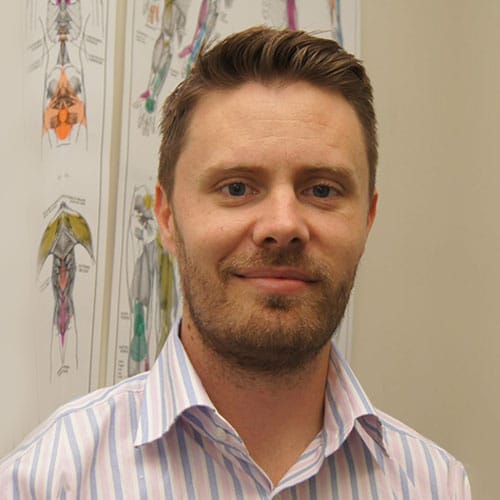
This blog post was written and approved by Dr Simon Nash
Dr Simon Nash (M.Chiro, B.Chiro Sci.) is a chiropractor with over 20 years of clinical experience. He is a full professional member of Sports Medicine Australia (SMA) and Chiropractic Australia, and is AHPRA registered (CHI0000970189). Simon graduated from Macquarie University and is dual-registered to practise in Australia and Hong Kong.
He began his career in a multidisciplinary neurology-focused clinic in Sydney, developing a strong interest in treating headaches and migraines. Since 2006, he has operated Our Chiro Brisbane, now alongside his sisters Jessica and Rebecca.
Simon treats everyday injuries, workplace rehabilitation cases and complex presentations using a wide range of techniques. His sports medicine experience spans elite athletes including NRL and Rugby Union players, Olympians, and events like the Australian Open and Hong Kong 7s. He has also treated Guns N’ Roses during tour.


Disclaimer:
The information provided in this blog is for general informational purposes only and is not intended as medical advice. It should not be used to diagnose, treat, or replace professional consultation with a qualified healthcare provider. Always seek the advice of a chiropractor, GP, or other qualified health professional regarding any medical condition or treatment.
Click here to learn more about our editorial policy, that explains how content is created, fact-checked, and updated by qualified chiropractors and other health professionals.