
As a common source of elbow discomfort and upper limb restriction, elbow tendinopathies like golfer’s elbow and tennis elbow can cause a great deal of disruption to daily life. These conditions affect a wide variety of people, from dedicated athletes and gym enthusiasts to individuals who spend long hours working at a computer or performing repetitive manual tasks. This fact sheet is designed to provide you with a comprehensive overview of the differences between golfer’s elbow and tennis elbow, their primary causes, and how targeted care can support your recovery.
In this article, Dr. Simon Nash (Chiropractor) discusses the key anatomical differences, common triggers, and effective management strategies for both conditions.
Please note: The information provided in this article is for general knowledge and informational purposes only, and does not constitute medical advice. It is essential to consult with a qualified healthcare professional for a diagnosis and personalised treatment plan.
Table of Contents
- Understanding Golfer’s Elbow and Tennis Elbow
- Anatomical Differences: Lateral vs. Medial
- Common Causes and Risk Factors
- Management and Remedial Care
- Frequently Asked Questions (FAQs)
- Book a Consult with Our Chiro Brisbane
- References
- Video Transcript
Understanding Golfer’s Elbow and Tennis Elbow
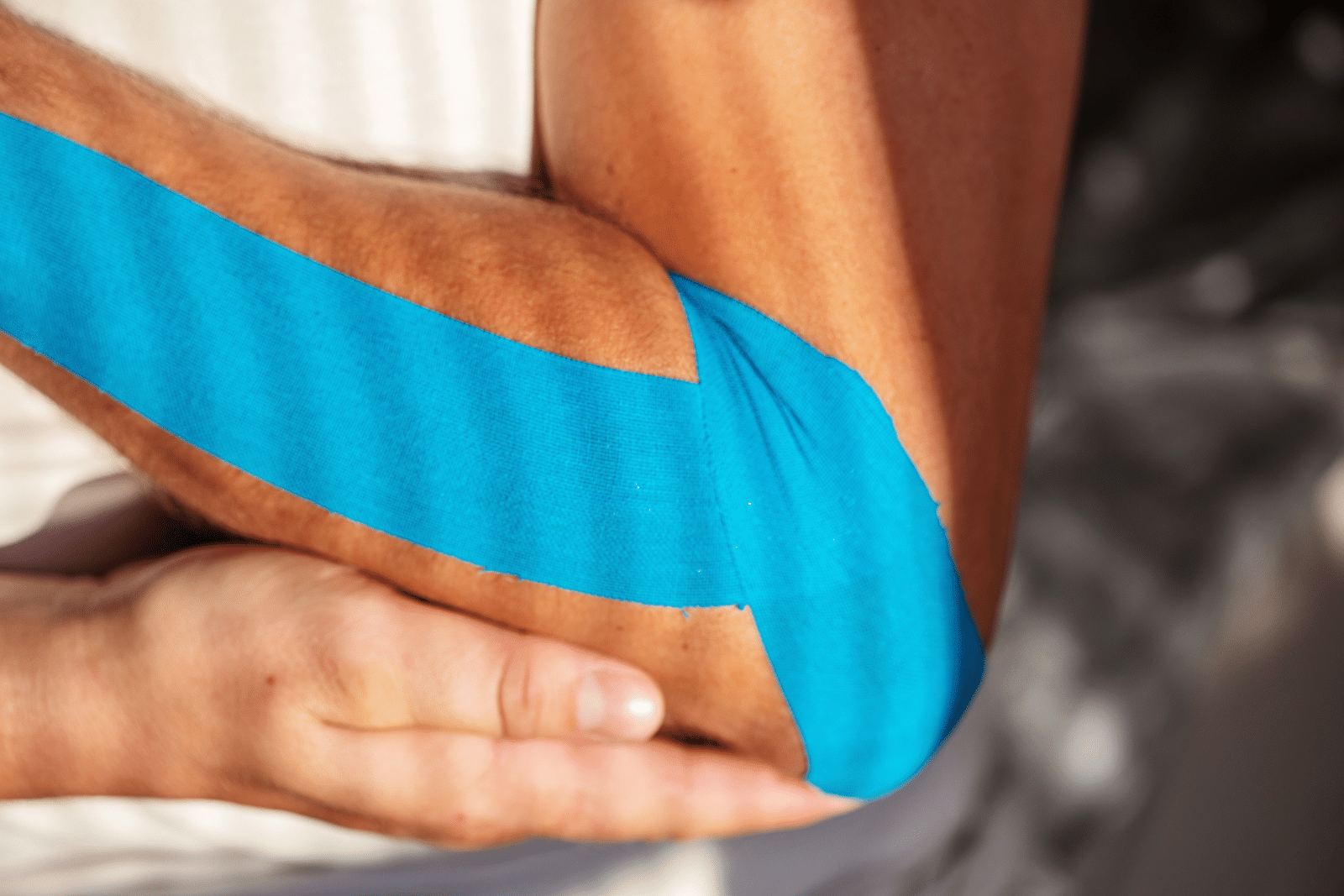
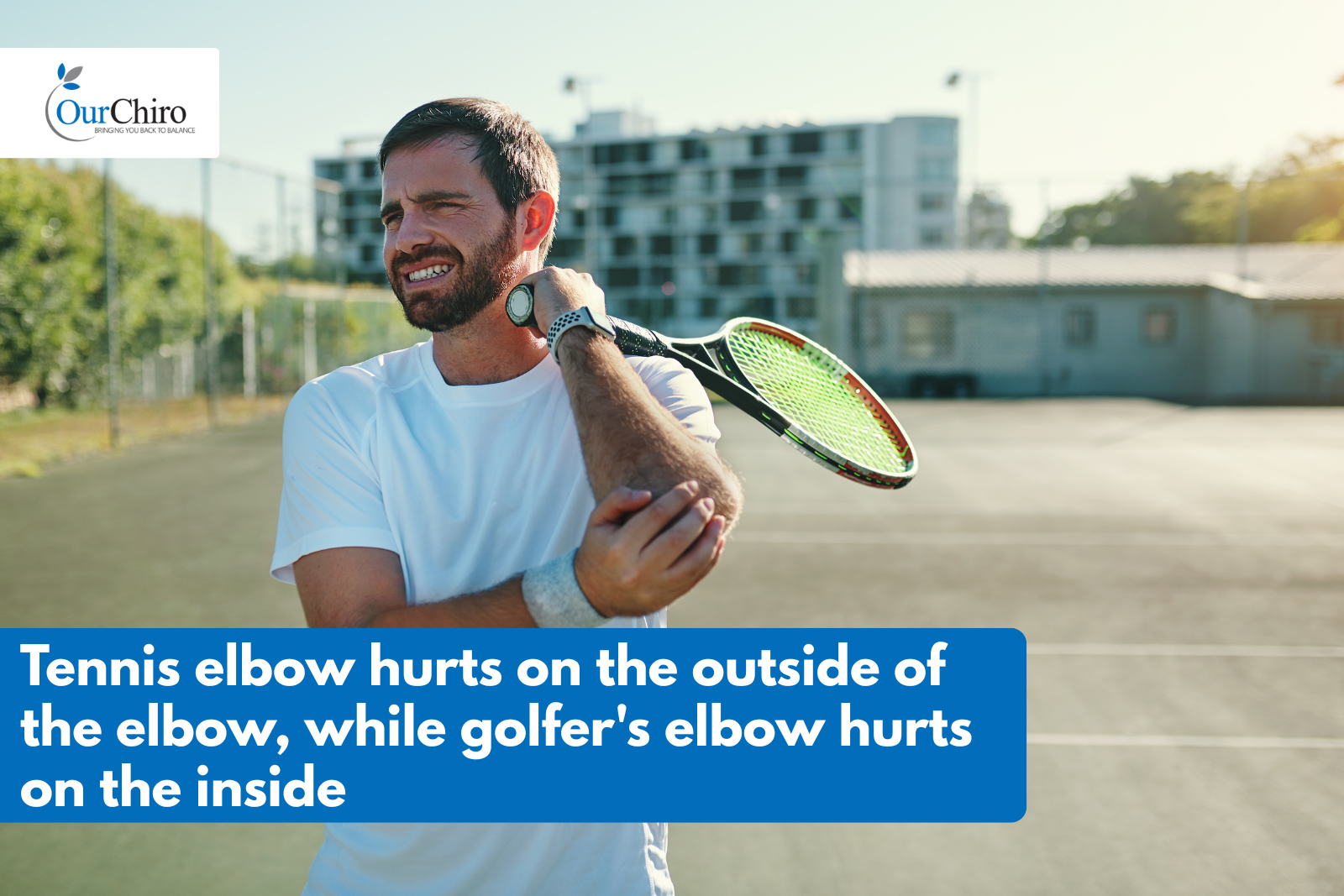
Elbow pain can significantly limit your ability to carry out everyday activities, and two of the most frequent causes of pain around the elbow joint are lateral epicondylitis (tennis elbow) and medial epicondylitis (golfer’s elbow). Although both conditions stem from micro-tears and inflammation in the forearm tendons, their specific site of presentation and functional impact differ.
Understanding which condition is affecting your forearm is crucial for choosing the right path toward recovery and implementing effective rehabilitation strategies.
Anatomical Differences: Lateral vs. Medial
The main distinguishing factor between tennis elbow and golfer’s elbow comes down to location and the specific muscle-tendon units involved.
Tennis Elbow (Lateral Epicondylitis)
Tennis elbow affects the outer portion of the elbow joint. It involves the wrist extensor tendons, which attach to the lateral epicondyle the bony bump on the outside of your elbow.
“So tennis elbow is pain on that lateral side of the epicondyle or lateral side of the elbow,” explains Dr. Nash.
When these muscles and tendons are overloaded, simple actions like gripping a coffee cup, turning a door handle, or shaking hands can send a sharp pain or burning sensation along the outer forearm.
Golfer’s Elbow (Medial Epicondylitis)
In contrast, golfer’s elbow affects the inner portion of the elbow joint. It involves the wrist flexor tendons, which attach to the medial epicondyle the bony prominence on the inside of your elbow.
“And golfer’s elbow is on the medial side of the elbow,” Dr. Nash clarifies. “It’s called medial epicondylitis and [tennis below] is lateral epicondylitis.”
Pain from medial epicondylitis is typically aggravated by flexing the wrist inward, squeezing objects, or performing pulling movements.
Common Causes and Risk Factors
Despite their sports-derived names, neither condition requires you to ever step foot on a golf course or tennis court.
“Causes are typically the same, so it’s repetitive movement, and you do not have to play tennis or golf to get either of them,” explains Dr. Nash.
Both tennis elbow and golfer’s elbow are primary overuse injuries resulting from repetitive strain on the forearm musculature. When the tendons are subjected to continuous micro-trauma without sufficient time to rest and repair, localised inflammation and tendinopathy develop.
Common activities that can trigger these conditions include:
- Occupational Tasks: Frequent mouse click-and-drag motions, heavy typing, plumbing, painting, or carpentry.
- Gym Workouts & Sports: Heavy pull-ups, bicep curls, tennis backhands, golf swings, or bowling.
- Hobbies & Household Chores: Gardening, cooking, raking, or playing musical instruments.
“You could have a repetitive movement such as in a sport or at the gym, or using a mouse, anything that’s often repeated and causes that irritation to those two insertion points of the tendons of the forearm,” adds Dr. Nash.
Management and Remedial Care
Addressing tendon overload requires a structured approach that aims to manage pain, reduce strain, and promote structural repair. Research indicates that non-invasive therapies play a central role in overcoming chronic epicondylitis. A clinical study published in the Journal of Manual & Manipulated Therapy highlighted that targeted soft-tissue mobilisation and eccentric strengthening exercises significantly improve pain thresholds and functional grip strength in lateral epicondylitis (Bisset et al., 2006). Furthermore, a systematic review in the American Journal of Sports Medicine demonstrated the efficacy of conservative rehabilitation protocols in restoring tendon health and preventing long-term recurrence (Ma & Wang, 2020).
Care strategies often include:
- Targeted Soft-Tissue Therapy: Releasing tight forearm flexors or extensors to relieve traction on the tendon insertion points.
- Joint Mobilisation: Ensuring proper biomechanical movement across the wrist, elbow, shoulder, and cervical spine.
- Progressive Strengthening: Utilising load-managed rehabilitation exercises to build tendon resistance and capacity over time.
At Our Chiro Brisbane, we offer comprehensive services such as targeted Chiropractic Care and specialised Remedial Massage to assist patients managing tendon irritation and upper limb discomfort.
Frequently Asked Questions (FAQs)
Q1: Can computer work really cause golfer’s or tennis elbow? A: Yes. Continuous clicking, typing, and holding a computer mouse with poor wrist posture can cause repetitive strain on the forearm tendons, leading to lateral or medial epicondylitis.
Q2: How can I tell if I have tennis elbow or golfer’s elbow? A: The simplest key difference is location: pain on the outside bump of your elbow is typically tennis elbow (lateral epicondylitis), while pain on the inside bump is usually golfer’s elbow (medial epicondylitis).
Q3: Should I put heat or ice on elbow tendon pain? A: Ice is generally recommended for acute flare-ups to reduce pain and inflammation. For chronic tightness or stiff muscles, moist heat can help improve blood flow and relax the forearm muscles.
Q4: Will resting my arm completely fix the problem? A: While temporary rest avoids further aggravation, complete rest alone rarely solves tendon problems. Progressive strengthening and load modification are usually needed to build tendon resilience.
Q5: How long does it take for elbow tendinopathy to heal? A: Recovery times vary depending on severity and duration. Mild cases may improve within 4 to 6 weeks, whereas chronic tendon issues may take several months of structured rehabilitation.
Q6: Can wearing an elbow strap help? A: Counterforce braces or elbow straps can help reduce direct mechanical strain on the tendon insertion point during daily activities, offering temporary symptom relief while you undergo treatment.
Book a Consult with Our Chiro Brisbane
We understand how frustrating and limiting persistent elbow pain can be. Whether it prevents you from excelling at your workout, limits your productivity at work, or simply makes holding a warm cup of coffee painful, feeling restricted in your daily movement can affect your overall quality of life. At Our Chiro Brisbane, we are dedicated to listening to your concerns and helping you find effective, personalised pathways toward relief.
Our experienced team will carefully evaluate your elbow and upper limb biomechanics to identify the root cause of your discomfort and create a structured care plan tailored to your goals.
Take the first step toward moving comfortably again. Book an appointment with Our Chiro Brisbane today or call (07) 3257 0399
References
Bisset, L., Beller, E., Jull, G., Brooks, P., Darnell, R., & Vicenzino, B. (2006). Mobilisation with movement and exercise, corticosteroid injection, or wait and see for tennis elbow: Randomised trial. BMJ, 333(7575), 939. https://doi.org/10.1136/bmj.38961.584653.ae
Ma, K.-L., & Wang, H.-Q. (2020). Management of lateral epicondylitis: A narrative literature review. Pain Research and Management, 2020(1), 1–9. https://doi.org/10.1155/2020/6965381
Video Transcript
What is the difference between golfers elbow and tennis elbow? A question that we often get at the clinic is what’s the difference between golfer’s elbow and tennis elbow? So tennis elbow is pain on that lateral side of the epicondyle or lateral side of the elbow and golfer’s elbow is on the medial side of the elbow. So it’s called medial epicondylitis and that’s lateral epicondylitis and that’s basically the two differences with location.Causes are typically the same so it’s repetitive movement and you do not have to play tennis or golf to get either of them. So you could have a repetitive movement such as in a sport or at the gym or using a mouse, anything that’s often repeated and causes that irritation to those two insertion points of the tendons of the forearm.
This blog post was written and approved by Dr Simon Nash
Dr Simon Nash (M.Chiro, B.Chiro Sci.) is a chiropractor with over 20 years of clinical experience. He is a full professional member of Sports Medicine Australia (SMA) and Chiropractic Australia, and is AHPRA registered (CHI0000970189). Simon graduated from Macquarie University and is dual-registered to practise in Australia and Hong Kong.
He began his career in a multidisciplinary neurology-focused clinic in Sydney, developing a strong interest in treating headaches and migraines. Since 2006, he has operated Our Chiro Brisbane, now alongside his sisters Jessica and Rebecca.
Simon treats everyday injuries, workplace rehabilitation cases and complex presentations using a wide range of techniques. His sports medicine experience spans elite athletes including NRL and Rugby Union players, Olympians, and events like the Australian Open and Hong Kong 7s. He has also treated Guns N’ Roses during tour.


Disclaimer:
The information provided in this blog is for general informational purposes only and is not intended as medical advice. It should not be used to diagnose, treat, or replace professional consultation with a qualified healthcare provider. Always seek the advice of a chiropractor, GP, or other qualified health professional regarding any medical condition or treatment.
Click here to learn more about our editorial policy, that explains how content is created, fact-checked, and updated by qualified chiropractors and other health professionals.