Your shoulder is one of the most mobile joints in your body, allowing you to reach, lift, push, and pull through an incredible range of motion. But that mobility comes at a cost: the shoulder relies heavily on a small group of muscles and tendons called the rotator cuff to keep everything stable and moving smoothly. When those tendons become irritated and painful, everyday actions like reaching overhead, lifting a bag, or even sleeping on your side can become a real struggle.
Rotator cuff tendinopathy is one of the most common shoulder complaints we see in the clinic, affecting everyone from gym-goers and tradies to office workers and retirees. The good news is that with the right diagnosis and a targeted treatment plan, most people can recover well and return to the activities they love.
In this article, Dr Simon Nash (Chiropractor) explains what rotator cuff tendinopathy is, why it develops, and the range of chiropractic techniques used at Our Chiro Brisbane to relieve pain, restore movement, and prevent the problem from coming back.
Medical Disclaimer: The information provided in this article is for general knowledge and informational purposes only, and does not constitute medical advice. It is essential to consult with a qualified healthcare professional, such as the team at Our Chiro Brisbane, for an accurate diagnosis and a personalised treatment plan tailored to your specific condition.
Table of Contents
- What is the Rotator Cuff?
- What is Rotator Cuff Tendinopathy?
- Why Does Rotator Cuff Tendinopathy Develop?
- The Chiropractic Approach to Rotator Cuff Recovery
- Frequently Asked Questions (FAQs)
- Book a Consult with Our Chiro Brisbane
- References
- Video Transcript
What Is the Rotator Cuff?
The rotator cuff is a group of four muscles: the supraspinatus, infraspinatus, subscapularis, and teres minor that surround the shoulder joint. Together, their tendons form a supportive “cuff” around the head of the upper arm bone (humerus), holding it securely within the shallow socket of the shoulder blade.
“The rotator cuff is made up of four muscles,” explains Dr Simon Nash (Chiropractor). “You have your supraspinatus, your infraspinatus, your subscapularis and your teres minor.”
These four muscles work as a team every time you move your arm. They stabilise the joint, control rotation, and allow you to lift your arm away from your body. Because they are involved in almost every shoulder movement you make, the rotator cuff tendons are placed under near-constant demand throughout the day, which is exactly why they are so vulnerable to overuse.
What Is Rotator Cuff Tendinopathy?
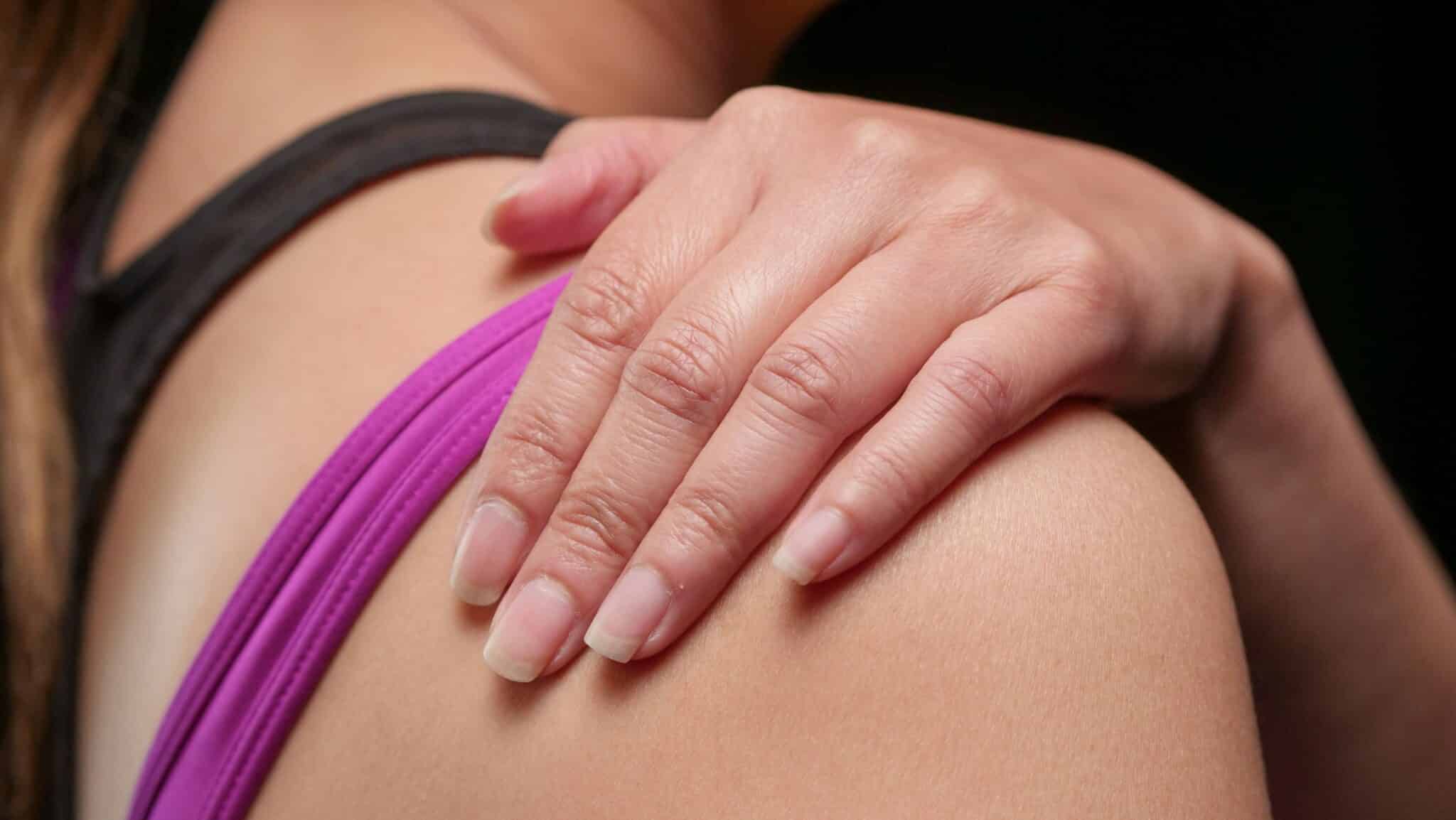
Rotator cuff tendinopathy occurs when one or more of the rotator cuff tendons become irritated and painful.
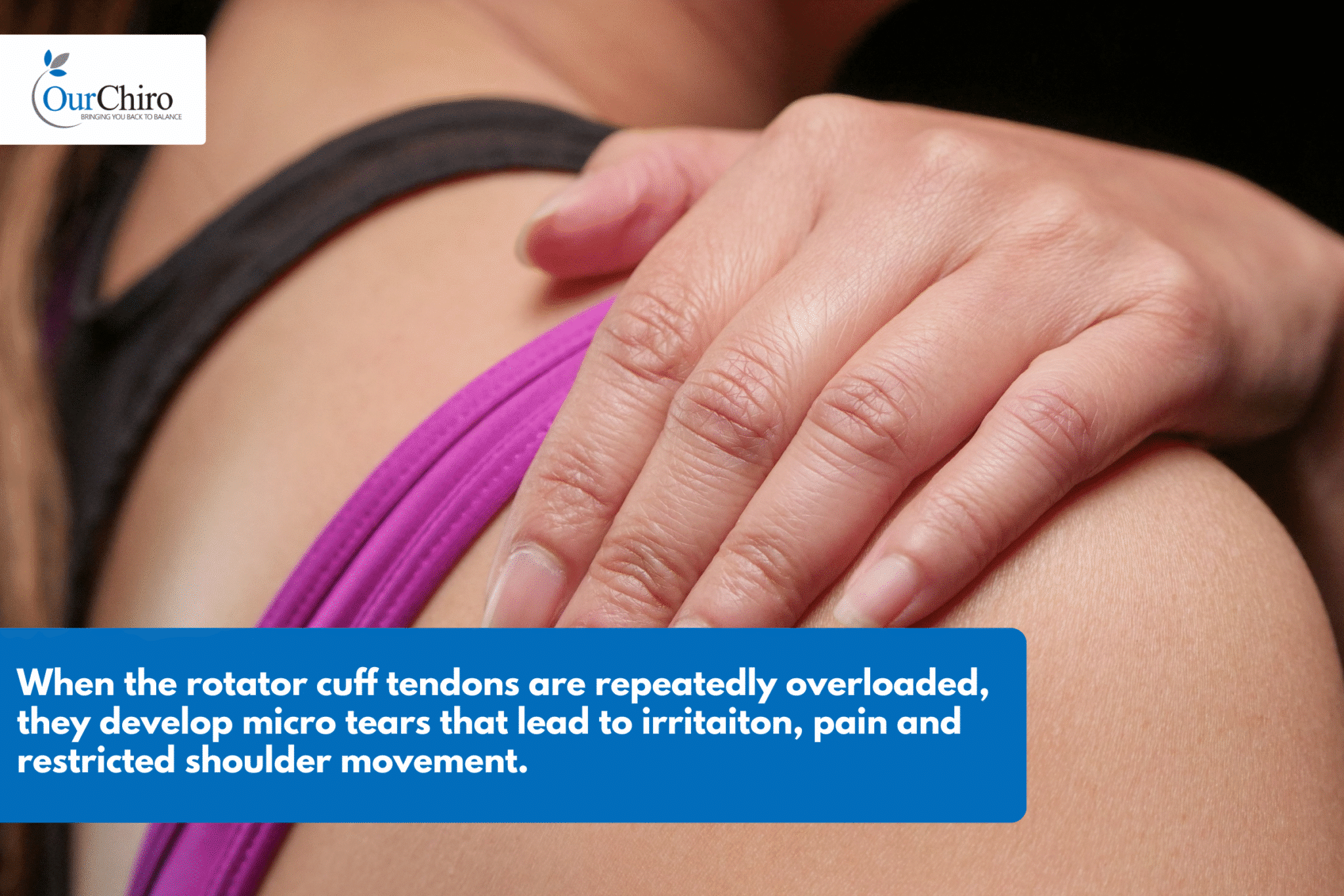
“A tendinopathy is when you have an irritation to the tendon,” Dr Nash explains. “Usually micro tears through repetitive movements or irritation to those said tendons.”
Rather than one sudden injury, tendinopathy is typically a gradual process. Each repetitive movement, whether it’s overhead lifting at the gym, painting a ceiling, swimming laps, or reaching across a desk hundreds of times a day places small amounts of stress on the tendon. When the tendon doesn’t get adequate time to repair between bouts of activity, those micro tears accumulate, and the tendon becomes inflamed, thickened, and painful.
In some longer-standing cases, calcification can develop within the tendon when deposits of calcium build up in the damaged tissue. As Dr Nash notes, “You can have some calcification within that tendon that restricts the movement.” This can make certain positions, particularly overhead or behind-the-back movements, sharply painful.
An important part of diagnosis is identifying exactly which tendon is involved. “What we would obviously look at is which tendon. Whether it’s all four involved or whether it’s just one. Typically you only get one or two,” says Dr Nash. Pinpointing the affected muscle group allows treatment to be targeted precisely where it’s needed.
Common signs of rotator cuff tendinopathy include:
-
- A dull, aching pain in the shoulder that worsens with overhead activity
- Pain when lifting the arm out to the side, often through a specific “painful arc”
- Night pain, especially when lying on the affected shoulder
- Weakness or fatigue in the shoulder during lifting or reaching tasks
- Stiffness or a feeling of restriction with certain movements
Why Does Rotator Cuff Tendinopathy Develop?
Rotator cuff tendinopathy is fundamentally an overuse condition. The most common contributing factors we see in the clinic include:
Repetitive overhead activity. Sports such as swimming, tennis, and weightlifting, as well as occupations involving overhead work (painters, electricians, carpenters), repeatedly load the rotator cuff tendons in their most vulnerable positions.
Training errors and sudden load increases. Ramping up gym volume too quickly, adding heavy pressing movements without adequate preparation, or returning to sport after a long break can overwhelm a tendon’s capacity to adapt.
Poor posture and shoulder mechanics. Rounded shoulders and a forward head posture narrow the space the rotator cuff tendons move through, increasing friction and irritation with every arm movement.
Age-related tendon changes. Tendons naturally lose some of their elasticity and blood supply as we age, making them slower to repair and more susceptible to accumulating micro tears.
Muscle imbalances. When the larger muscles around the shoulder (like the deltoid and chest muscles) overpower the smaller stabilising rotator cuff muscles, the joint mechanics change, and the cuff tendons absorb stress they aren’t designed to handle.
The Chiropractic Approach to Rotator Cuff Recovery
Research supports this active approach. A 2012 systematic review published in Physiotherapy found evidence supportive of exercise as part of managing rotator cuff tendinopathy, while noting that further research is still needed to confirm the extent of the benefit (Littlewood et al., 2012).
Shockwave therapy is another treatment option commonly used for chronic tendinopathies, particularly in cases involving calcification, with the aim of stimulating the tendon’s natural healing response and helping to break down calcific deposits.
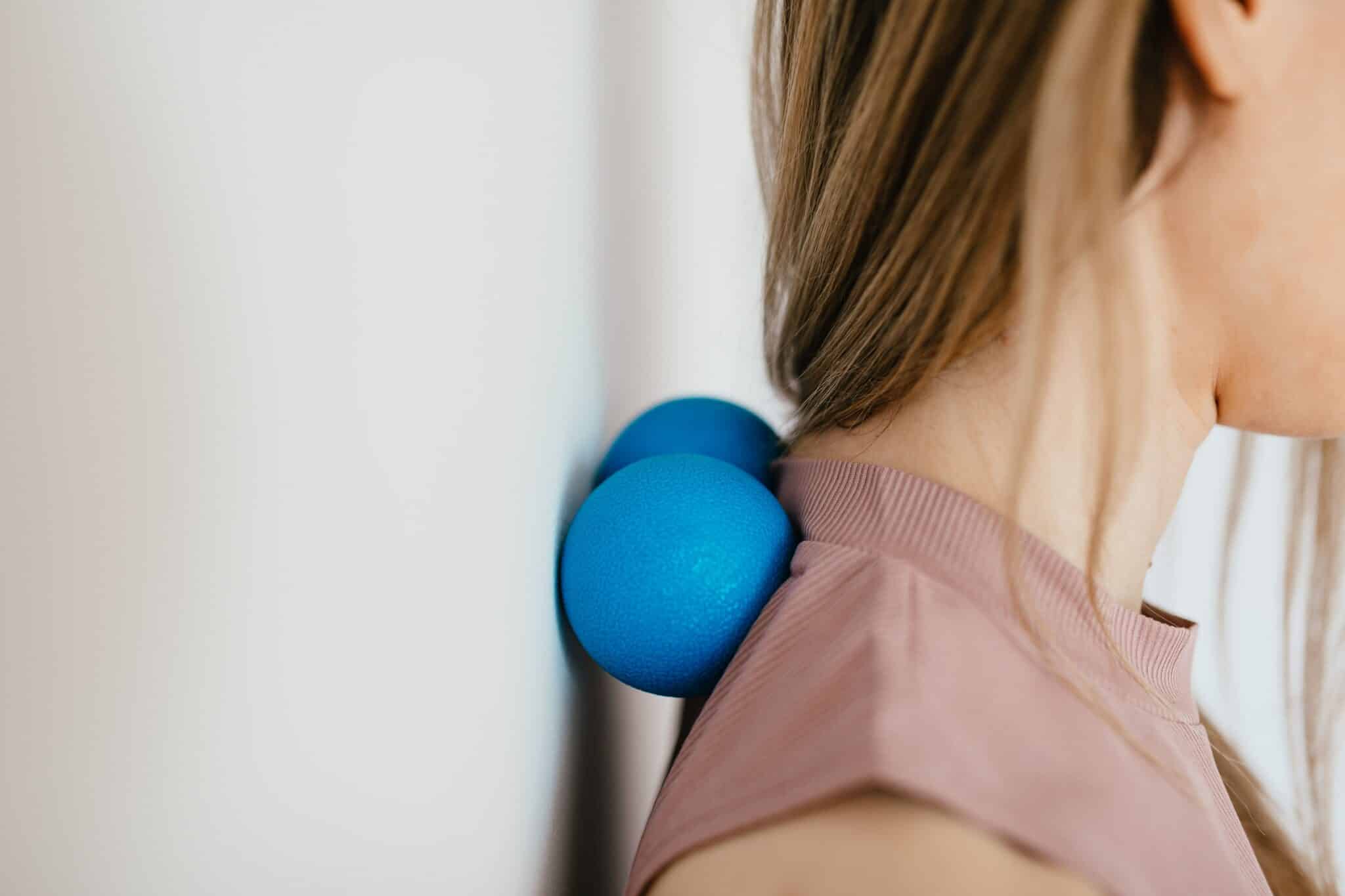
Active Muscle Release & Soft Tissue Therapy: Targeted pressure and release techniques relax the overworked, hypertonic muscles surrounding the shoulder, reducing tension on the irritated tendons and improving local circulation to support healing.
Dry Needling: Fine needles are inserted into myofascial trigger points within the rotator cuff and surrounding musculature, releasing deep muscular tension, reducing pain, and promoting blood flow to the affected tissue.
Shockwave Therapy: Acoustic pressure waves are delivered directly to the affected tendon, stimulating the body’s natural healing response. Shockwave therapy is particularly useful for chronic tendinopathies and cases involving calcification.
Cold Laser Therapy (Low Level Laser): Non-invasive light therapy targets deep tissue inflammation at a cellular level, helping to reduce pain and accelerate tissue repair without any downtime.
Manual Mobilisation: Gentle, controlled mobilisation of the shoulder joint and surrounding structures restores normal joint mechanics, reduces stiffness, and takes mechanical stress off the healing tendons.
At-Home Rehabilitation Exercises: Custom exercises are prescribed to reduce inflammation, progressively strengthen the rotator cuff, and correct the muscle imbalances and movement patterns that contributed to the problem, protecting the shoulder against future flare-ups.
Frequently Asked Questions (FAQs)
Q1: What is the difference between rotator cuff tendinopathy and a rotator cuff tear? A: Tendinopathy refers to irritation and degeneration of the tendon, usually involving micro tears at a fibre level, whereas a rotator cuff tear is a more significant structural disruption of the tendon, either partial or full thickness. Tendinopathy typically develops gradually through overuse, while larger tears often (though not always) involve a specific incident. Untreated tendinopathy can weaken a tendon over time and increase the risk of a more significant tear.
Q2: Can I keep training or playing sport with rotator cuff tendinopathy? A: Often, yes, with modification. Complete rest is rarely the best approach, as tendons respond well to appropriate load. However, continuing to push through sharp pain, particularly with overhead pressing or throwing, will typically worsen the irritation. We usually recommend temporarily reducing load, adjusting your range of motion, and substituting aggravating exercises while the tendon settles and strengthens.
Q3: Why does my shoulder hurt more at night? A: Night pain is a hallmark of rotator cuff problems. Lying on the affected shoulder compresses the irritated tendons and the bursa (a fluid-filled cushion) beneath the shoulder’s bony arch. Additionally, without the distraction of daytime activity, many people simply notice the deep ache more. Sleeping on your back or on the unaffected side with a pillow supporting the sore arm can help while the tendon recovers.
Q4: What is calcification in the rotator cuff, and can it be treated without surgery? A: Calcification occurs when calcium deposits build up within a damaged tendon, which can restrict movement and cause sharp pain in certain positions. In many cases it can be managed conservatively. Shockwave therapy is commonly used to help break down calcific deposits and stimulate the tendon to heal, alongside soft tissue work and progressive rehabilitation exercises.
Q5: How does dry needling help a rotator cuff problem? A: Dry needling targets trigger points which are highly irritable, taut bands within the muscles of the rotator cuff and surrounding shoulder. Stimulating these points produces a local twitch response that relaxes the muscle fibres, improves blood flow, and reduces the chemical irritation contributing to your pain. Releasing this muscular tension also takes strain off the irritated tendons.
Q6: How long does it take to recover from rotator cuff tendinopathy? A: It depends on how long the problem has been present and its severity. Mild, recent-onset tendinopathy often improves within 4 to 6 weeks with appropriate treatment and load management. Chronic tendinopathies, or cases involving calcification, generally require a structured rehabilitation program over 8 to 12 weeks or more to restore full strength and resilience. Consistency with prescribed home exercises makes a significant difference to recovery time.
Book a Consult with Our Chiro Brisbane
Shoulder pain has a way of creeping into everything including your training, your work, your sleep, and even simple tasks like getting dressed or reaching for a cup. If a persistent shoulder ache is holding you back, you don’t have to simply put up with it or hope it resolves on its own. Left unaddressed, rotator cuff tendinopathy tends to linger and can progressively worsen.
At Our Chiro Brisbane, our team specialises in identifying the root cause of your shoulder pain and building a clear, practical treatment plan around it. Whether your recovery calls for hands-on Chiropractic Treatments, dry needling, shockwave therapy, or Low Level Laser Therapy to target deep tissue inflammation, we will work alongside you to get your shoulder moving freely and confidently again.
Take the first step toward a pain-free shoulder. Book an appointment with Our Chiro Brisbane today or call (07) 3257 0399
References
Littlewood, C., Ashton, J., Chance-Larsen, K., May, S., & Sturrock, B. (2012). Exercise for rotator cuff tendinopathy: a systematic review. Physiotherapy, 98(2), 101–109. https://doi.org/10.1016/j.physio.2011.08.002
Video Transcript
A question and something that we often see in the clinic is rotator cuff tendinopathy. So what is that? So the rotator cuff is made up of four muscles. You have your supraspinatus, your infraspinatus, your subscapularis and your teres minor. So a tendinopathy is when you have an irritation to the tendon. So usually micro tears through repetitive movements or irritation to those said tendons. What we would obviously look at is which tendon, whether it’s all four involved or whether it’s just one, typically you only get one or two. You can have some calcification within that tendon that restricts the movement. So we want to look at which muscle group or which muscle is affected and then treat that accordingly, whether we’re using muscle release techniques, needling techniques, shockwave therapy, cold laser or manual mobilization. We’d obviously also give the patient some exercises to do at home to help reduce that inflammation and help reduce that tendinopathy.
This blog post was written and approved by Dr Simon Nash
Dr Simon Nash (M.Chiro, B.Chiro Sci.) is a chiropractor with over 20 years of clinical experience. He is a full professional member of Sports Medicine Australia (SMA) and Chiropractic Australia, and is AHPRA registered (CHI0000970189). Simon graduated from Macquarie University and is dual-registered to practise in Australia and Hong Kong.
He began his career in a multidisciplinary neurology-focused clinic in Sydney, developing a strong interest in treating headaches and migraines. Since 2006, he has operated Our Chiro Brisbane, now alongside his sisters Jessica and Rebecca.
Simon treats everyday injuries, workplace rehabilitation cases and complex presentations using a wide range of techniques. His sports medicine experience spans elite athletes including NRL and Rugby Union players, Olympians, and events like the Australian Open and Hong Kong 7s. He has also treated Guns N’ Roses during tour.


Disclaimer:
The information provided in this blog is for general informational purposes only and is not intended as medical advice. It should not be used to diagnose, treat, or replace professional consultation with a qualified healthcare provider. Always seek the advice of a chiropractor, GP, or other qualified health professional regarding any medical condition or treatment.
Click here to learn more about our editorial policy, that explains how content is created, fact-checked, and updated by qualified chiropractors and other health professionals.