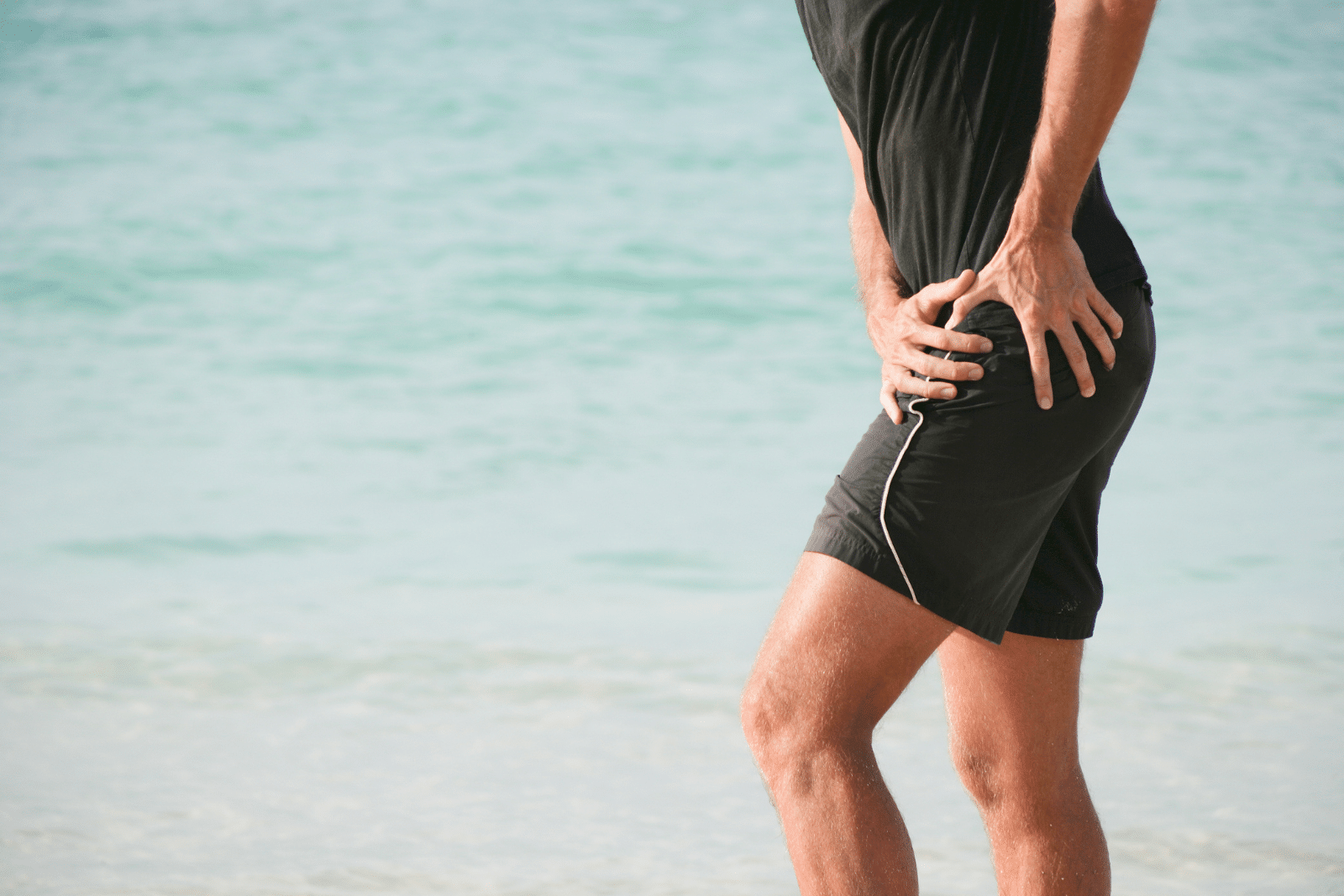
As a common source of deep hip and groin pain, hip impingement can lead to significant discomfort and restriction in daily life. It is a condition that affects active individuals, athletes, and anyone performing repetitive hip-bending movements. This fact sheet provides you with a comprehensive overview of hip impingement, its underlying causes, and how conservative musculoskeletal care can support your recovery.
In this article, Dr. Simon Nash (Chiropractor) discusses the mechanics of femoroacetabular impingement (FAI), its impact on surrounding soft tissues, and the different management options available.
Please note: The information provided in this article is for general knowledge and informational purposes only, and does not constitute medical advice. It is essential to consult with a qualified healthcare professional for a diagnosis and personalised treatment plan.
Table of Contents
- Understanding Hip Impingement
- Causes and Anatomic Types of FAI
- Associated Soft Tissue Irritations
- Managing Hip Impingement and Conservative Care
- Frequently Asked Questions (FAQs)
- Image Suggestion and Meta Description
- Book a Consult with Our Chiro Brisbane
- References
- Video Transcript
Understanding Hip Impingement
Hip impingement, known medically as Femoroacetabular Impingement (FAI), occurs when the ball and socket of the hip joint do not fit together smoothly. Under normal circumstances, the head of the thigh bone (femur) glides seamlessly inside the hip socket (acetabular cup). However, when structural variations develop, friction increases during movement, leading to mechanical limitation and localised discomfort.
“Hip impingement can be classified as femoroacetabular impingement or FAI,” explains Dr. Nash. “And it’s where you end up with extra bone being laid down around the hip and it basically impinges when the person moves their hip around.”
For many individuals, this extra bone development creates a pinching sensation deep within the groin or outer hip, particularly during activities requiring deep hip flexion, such as squatting, running, or sitting for prolonged periods.
“Hip impingement is often a subtle condition that creeps up over time. Recognising the early signs of joint friction allows us to manage soft tissue distress before secondary compensations become chronic.”— Dr. Simon Nash (Chiropractor)
Causes and Anatomic Types of FAI
The primary driver of FAI is an altered shape of the bones that form the hip joint. These bone changes typically develop while the bones are growing during adolescence and can take a few distinct structural forms:
- Cam Impingement: The femoral head (the ball) is not perfectly round. Instead, an extra ridge or bump of bone forms on the edge, causing it to grind against the cartilage inside the socket when the hip flexes.
- Pincer Impingement: The acetabulum (the socket) extends out too far, over-covering the femoral head. This causes the rim of the socket to pinch against the neck of the thigh bone during movement.
- Combined Impingement: A combination of both Cam and Pincer variations, where both the ball and socket feature abnormal bony contours.
Over time, this mechanical altered fit exerts continuous stress on the surrounding joint structures, potentially leading to tears in the hip labrum (the cartilage ring lining the socket) or early joint degeneration if left unmanaged.
Associated Soft Tissue Irritations
The primary structural issue in FAI involves bone, but much of the daily pain experienced by patients comes from secondary soft tissue irritation. As the hip joint struggles to move smoothly, adjacent muscles and fluid-filled sacs (bursae) take on extra stress to compensate.
“And that can sometimes lead to irritations around the bursa, changes in muscle movement, changes in muscle irritation as well,” notes Dr. Nash.
When hip mechanics are altered, surrounding muscles such as the hip flexors, gluteals, and piriformis often tighten to stabilise the joint. This increased muscle tone can aggravate local fluid sacs, resulting in bursitis, or alter normal gait patterns, producing secondary lower back or pelvic discomfort.
“When the hip joint can’t move freely, the body creates workarounds. We frequently see muscle tightness and bursal inflammation occurring as direct responses to underlying joint restriction.”— Dr. Simon Nash (Chiropractor)
Managing Hip Impingement and Conservative Care
Managing hip impingement requires a clear understanding of what conservative therapies can achieve versus when surgical intervention is warranted. Conservative care, including chiropractic management, soft tissue therapy, and target exercise rehabilitation, plays a key role in easing secondary soft tissue distress and optimising biomechanics.
“So we can look at trying to reduce the muscle type pains and problems and help reduce the bursa,” Dr. Nash explains. “Typically, it’s more of an orthopaedic specialty issue where you may see an orthopaedic surgeon to help reduce that impingement.”
A study published in the Journal of Orthopaedic & Sports Physical Therapy highlights that conservative rehabilitation focusing on core stability, hip muscle strengthening, and movement retraining significantly improves pain and physical function in patients with FAI. (Wall et al., 2016) Additionally, research indexed in the British Journal of Sports Medicine (The Warwick Agreement on FAI syndrome) emphasises a comprehensive approach that includes patient education, tailored exercise therapy, and clinical assessment to evaluate joint health. (Griffin et al., 2016)
A conservative approach may involve:
- Soft Tissue Therapy & Dry Needling: Easing chronic muscle tightness in the hip flexors, glutes, and adductors.
- Targeted Rehabilitation Exercises: Strengthening stabilising muscles around the pelvis and hip to improve movement quality.
- Joint Mobilisation: Gently addressing movement restrictions in surrounding areas, such as the lumbar spine and pelvis, to lighten the mechanical workload on the hip.
- Laser Therapy or Modalities: Utilising gentle modalities like Cold Laser Therapy to calm local inflammation around bursae and tendons.
- Chiropractic Care: Utilising tailored Chiropractic Services to address structural imbalances and support spinal-pelvic alignment.
Where physical bone alterations severely restrict movement or cause significant labral damage, consulting an orthopaedic specialist for surgical evaluation may be an appropriate step.
Frequently Asked Questions (FAQs)
Q1: Can chiropractic care cure hip impingement? A: Chiropractic care cannot change or remove the underlying bone structure involved in FAI. However, it can help manage surrounding muscle tension, reduce bursal inflammation, and optimise hip and pelvic function.
Q2: How do I know if my hip pain is FAI or something else? A: FAI typically causes deep groin or hip pain triggered by sitting, squatting, or twisting. Diagnostic imaging (X-rays or MRI) combined with clinical tests by a healthcare practitioner can help confirm FAI.
Q3: Is exercise safe if I have a hip impingement? A: Yes, but exercises should be modified to avoid extreme end-range hip flexion or internal rotation that pinches the joint. Low-impact strengthening and core stability exercises are often very beneficial.
Q4: Will I definitely need surgery for FAI? A: Not necessarily. Many individuals manage FAI successfully through conservative therapies, movement modifications, and targeted exercise programs without requiring surgery.
Q5: What is the difference between a hip impingement and hip bursitis? A: FAI is a structural bone shape issue within the joint. Hip bursitis is inflammation of the fluid-filled sac outside or around the joint. However, FAI frequently causes secondary hip bursitis due to altered joint friction.
Q6: Can sitting for long hours aggravate a hip impingement? A: Yes. Sitting places the hip in a flexed position, which can pinch the impinging bone structures and irritate surrounding soft tissues over extended periods.
Book a Consult with Our Chiro Brisbane
We understand how frustrating deep hip and groin pain can be. When simple daily movements like getting out of a car, putting on shoes, or going for a walk trigger sharp discomfort, it can leave you feeling restricted and unsure of your physical limits. At Our Chiro Brisbane, we appreciate how important it is to keep moving comfortably and confidently.
Our experienced team works closely with you to assess your hip and pelvic mechanics, address secondary muscle and bursa irritation, and guide you on an evidence-based care path. Whether supporting your recovery through targeted rehabilitation or helping you coordinate specialised care, we are here to support your journey back to better mobility.
Take control of your hip health today. Book an appointment with Our Chiro Brisbane to discuss your options or call us on (07) 3257 0399
References
Griffin, D. R., Dickenson, E. J., O’Donnell, J., Agricola, R., Awan, T., Beck, M., Clohisy, J. C., Dijkstra, H. P., Falvey, E., Gimpel, M., Hinman, R. S., Hölmich, P., Kassarjian, A., Martin, H. D, Martin, R., Mather, R. C., Philippon, M. J., Reiman, M. P., Takla, A., … Bennell, K. L. (2016). The warwick agreement on femoroacetabular impingement syndrome (FAI syndrome): An international consensus statement. British Journal of Sports Medicine, 50(19), 1169–1176. https://doi.org/10.1136/bjsports-2016-096743
Wall, P. D., Dickenson, E. J., Robinson, D., Hughes, I., Realpe, A., Hobson, R., Griffin, D. R., & Foster, N. E. (2016). Personalised hip therapy: Development of a non-operative protocol to treat femoroacetabular impingement syndrome in the FASHIoN randomised controlled trial. British Journal of Sports Medicine, 50(19), 1217–1223. https://doi.org/10.1136/bjsports-2016-096368
Video Transcript
So hip impingement can be classified as femoroacetabular impingement or FAI. And it’s where you end up with extra bone being laid down around the hip and it basically impinges when the person moves their hip around. And that can sometimes lead to irritations around the bursa, changes in muscle movement, changes in muscle irritation as well. So we can look at trying to reduce the muscle type pains and problems and help reduce the bursa. Typically, it’s more of an orthopaedic specialty issue where you may see an orthopaedic surgeon to help reduce that impingement.
This blog post was written and approved by Dr Simon Nash
Dr Simon Nash (M.Chiro, B.Chiro Sci.) is a chiropractor with over 20 years of clinical experience. He is a full professional member of Sports Medicine Australia (SMA) and Chiropractic Australia, and is AHPRA registered (CHI0000970189). Simon graduated from Macquarie University and is dual-registered to practise in Australia and Hong Kong.
He began his career in a multidisciplinary neurology-focused clinic in Sydney, developing a strong interest in treating headaches and migraines. Since 2006, he has operated Our Chiro Brisbane, now alongside his sisters Jessica and Rebecca.
Simon treats everyday injuries, workplace rehabilitation cases and complex presentations using a wide range of techniques. His sports medicine experience spans elite athletes including NRL and Rugby Union players, Olympians, and events like the Australian Open and Hong Kong 7s. He has also treated Guns N’ Roses during tour.


Disclaimer:
The information provided in this blog is for general informational purposes only and is not intended as medical advice. It should not be used to diagnose, treat, or replace professional consultation with a qualified healthcare provider. Always seek the advice of a chiropractor, GP, or other qualified health professional regarding any medical condition or treatment.
Click here to learn more about our editorial policy, that explains how content is created, fact-checked, and updated by qualified chiropractors and other health professionals.