
Migraine is one of the most common and disabling headache disorders, affecting roughly 15% of the general population (Chaibi et al., 2011). It typically causes moderate to severe, often one-sided, throbbing head pain that may come with nausea and sensitivity to light and sound. While many people blame a single culprit, such as chocolate or a glass of wine, migraines usually arise from a combination of factors. This fact sheet gives an overview of what triggers migraines, how they are assessed, and how chiropractic care may offer a gentle, non-invasive path to recovery.
In this article, Dr. Simon Nash (Chiropractor) discusses what triggers a migraine, why they are so often poorly treated, and why it’s rarely as simple as one food or drink.
Medical Disclaimer: The information provided in this article is for general knowledge and informational purposes only, and does not constitute medical advice. It is essential to consult with a qualified healthcare professional for a diagnosis and personalised treatment plan.
Table of Contents
- Understanding Migraine
- Common Causes of Migraine
- How Chiropractors Diagnose Migraine
- The Chiropractic Approach to Migraine
- Frequently Asked Questions (FAQs)
- Book a Consult with Our Chiro Brisbane
- References
- Video Transcript
Understanding Migraine
Migraine is a primary headache disorder, meaning the headache is the condition itself rather than a symptom of another disease. It is classified as migraine without aura or migraine with aura, where visual or sensory disturbances precede the headache (Headache Classification Committee of the International Headache Society [IHS], 2018). Attacks commonly last from 4 to 72 hours.
Migraine involves the trigeminal nerve system, which supplies sensation to the head and face. This system connects closely with the nerves of the upper neck, which helps explain why neck pain and tension so often accompany migraine (Luedtke et al., 2018).
Despite decades of research, the exact cause remains unclear. As Dr. Nash explains, “no one to this day knows why people get migraines, hence why they’re so, I guess, poorly treated.” He adds that “a lot of the medication that is produced for migraines is often a subgroup of the side effects of other medications. So they use medication that you would see in cardiac patients, so beta blockers and things like that, to try and just control blood flow and whatnot.”
Common Causes of Migraine
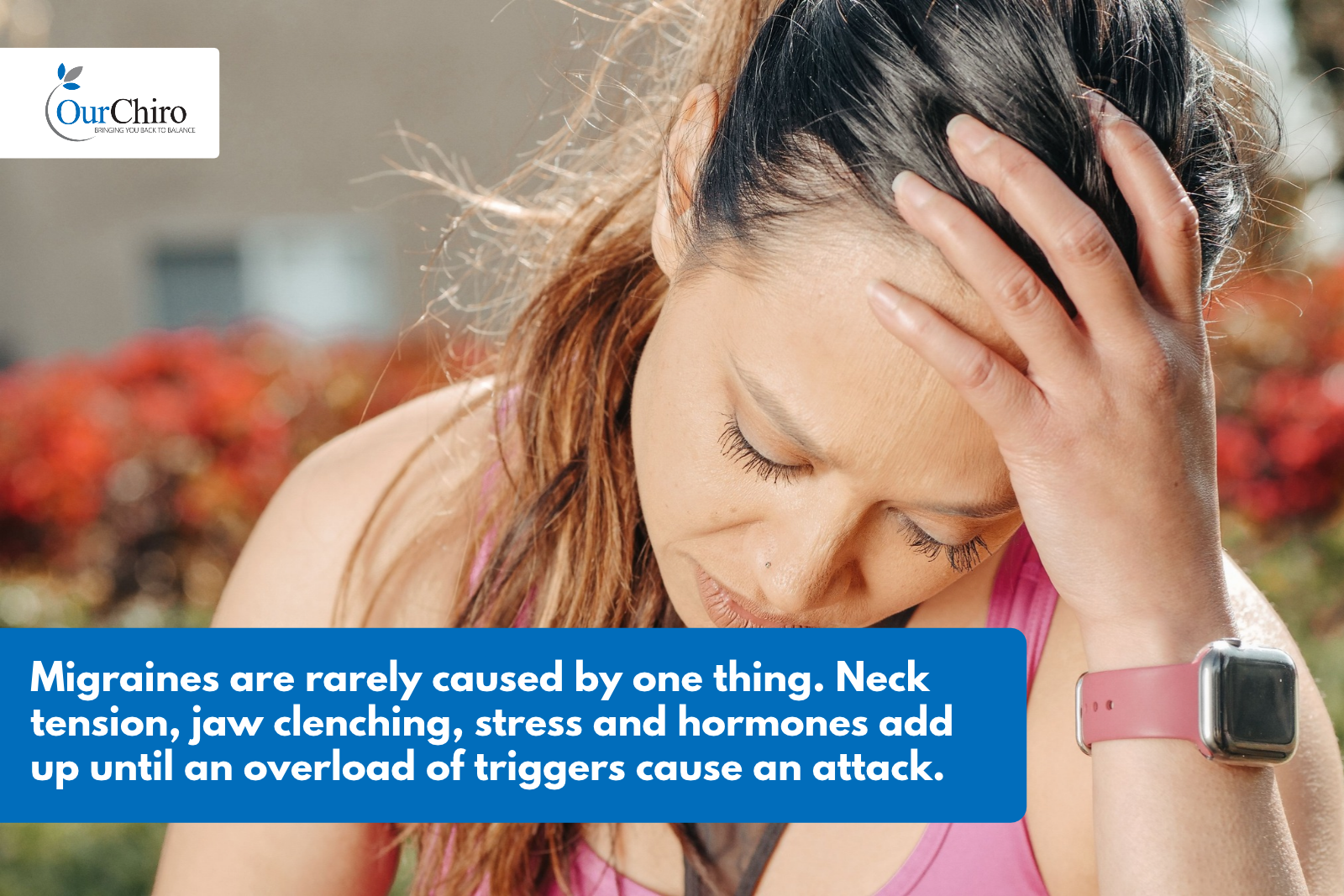
Rather than a single cause, Dr. Nash describes migraines as “the sum of the parts”. A useful way to think about it is a threshold: each trigger adds load, and when the total load is too much, an attack follows. In Dr. Nash’s words, triggers “present like an irritation to the body and when that irritation or that stressor hits the body, it overloads and then they end up with a migraine.”
Common contributors include:
- Neck tension: Tight or irritated neck muscles and joints. Research found that 93% of migraine patients examined had at least three musculoskeletal dysfunctions in the neck and upper back (Luedtke et al., 2018).
- Jaw clenching: As Dr. Nash notes, “people clench their jaw”, which loads the muscles of the head and face.
- Shoulder tension: Tightness through the upper shoulders and trapezius.
- Hormonal changes: “A lot of women actually even get migraines around their menstrual cycle,” says Dr. Nash.
- Stress and sleep: In a meta-analysis of over 27,000 people, stress (58%) and sleep disturbance (41%) were the most commonly reported triggers (Pellegrino et al., 2018).
- Food and alcohol: These can play a part, but as Dr. Nash says, “it’s not as simple as a lot of people think, oh, it’s when I eat too much chocolate, when I drink too much alcohol.”
How Chiropractors Diagnose Migraine
A thorough assessment helps identify which factors are adding to your migraine load. It usually includes:
- Detailed history: Frequency, duration and character of your headaches, any aura, associated symptoms, and patterns linked to sleep, stress, hormones, posture, diet or work.
- Physical and orthopaedic tests: Assessment of neck range of motion, palpation of the upper cervical joints, muscle testing, and checks of the jaw and shoulders. Palpation of the upper neck that reproduces head pain may help identify patients who are likely to benefit from neck-focused care (Luedtke et al., 2018).
- Neurological screening: Reflexes, sensation and cranial nerve checks to rule out more serious causes.
- Imaging only when needed: Scans are not routinely required for migraine but may be ordered or referred for if there are red flags.
- Differential diagnoses: Tension-type headache, cervicogenic headache, medication-overuse headache, TMJ dysfunction, and secondary headaches requiring medical referral (IHS, 2018).
Seek urgent medical care for a sudden, severe “worst-ever” headache, headache with fever and neck stiffness, new weakness, confusion, or headache after a head injury.
The Chiropractic Approach to Migraine
Conservative manual therapies are a reasonable non-drug option for people with migraine, with research suggesting spinal manipulation may reduce migraine days and pain intensity (Rist et al., 2019). Because migraines are multi-factorial, as Dr. Nash puts it, you “have to take into account the patient’s, I guess, symptoms and their triggers.” Care is tailored to reduce the load from each contributing factor.
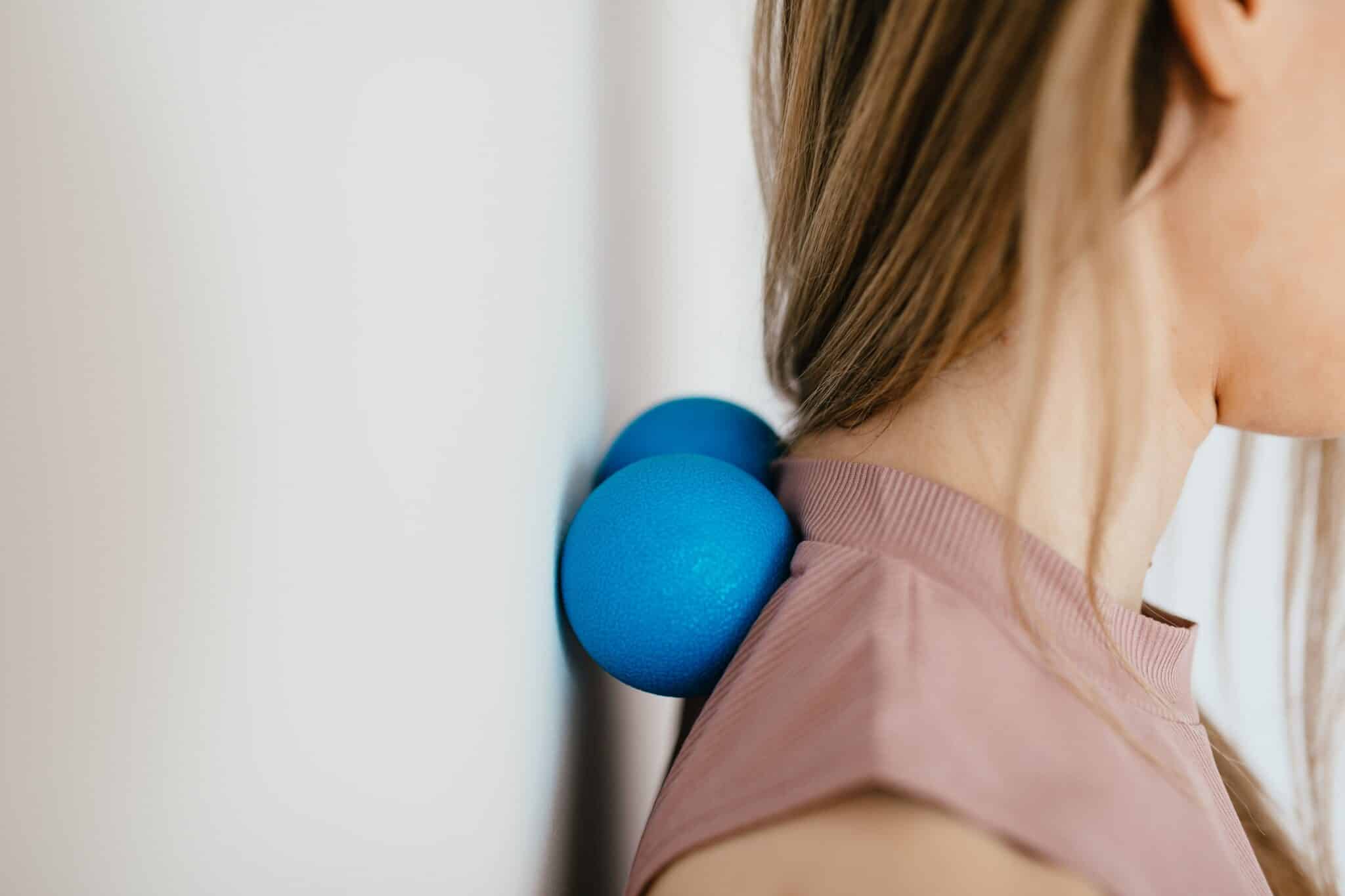
Soft Tissue Therapy: Massage and trigger point release for the neck, shoulders and jaw muscles to reduce tension. Massage therapy has shown benefit for migraine pain intensity in clinical trials (Chaibi et al., 2011).
Dry Needling: Used to release tight trigger points in muscles such as the upper trapezius and suboccipitals that can refer pain into the head.
Manual Adjustments and Mobilisations: Gentle techniques to improve movement in the upper neck and upper back, which may reduce irritation of the cervical-trigeminal pathway (Rist et al., 2019).
Exercise Prescription: Deep neck flexor strengthening, postural exercises and jaw relaxation strategies to keep tension down between visits.
Lifestyle and Trigger Advice: Guidance on sleep, stress management, desk setup and keeping a headache diary to spot your personal patterns.
Chiropractic care can work alongside the management plan from your GP or neurologist.
Frequently Asked Questions (FAQs)
Q1: Is there one thing that causes migraines? A: Usually not. Migraines tend to result from several stressors adding up, such as neck tension, poor sleep, stress and hormonal changes, until the body reaches its threshold.
Q2: Can neck problems trigger migraines? A: Neck tension is a common contributor. Research shows most migraine sufferers have measurable dysfunction in the neck and upper back, and treating the neck may help some people reduce migraine frequency.
Q3: Should I cut out chocolate and alcohol? A: They can be triggers for some people, but they are rarely the whole story. A headache diary is a better way to identify your personal triggers than blanket avoidance.
Q4: Can chiropractic care help migraines? A: Research suggests spinal manipulation and other manual therapies may reduce migraine days and pain for some people. Results vary, so a proper assessment is important.
Q5: Why do I get migraines around my period? A: Hormonal fluctuations, particularly the drop in oestrogen before menstruation, are a well-recognised trigger. Reducing other contributing factors may help lower your overall load at that time.
Q6: When should I see a doctor instead? A: See a GP or emergency department urgently for a sudden severe headache, headache with fever, confusion, weakness or after a head injury, or if your headache pattern changes significantly.
Book a Consult with Our Chiro Brisbane
If you’re dealing with migraines or head pain that isn’t improving, take the first step towards relief. You can explore our Chiropractic Services or learn more about our non-invasive care options on our Services Page. Ready to get checked? Book an appointment with Our Chiro Brisbane today or call (07) 3257 0399.
References
Chaibi, A., Tuchin, P. J., & Russell, M. B. (2011). Manual therapies for migraine: A systematic review. The Journal of Headache and Pain, 12(2), 127–133. https://doi.org/10.1007/s10194-011-0296-6
Headache Classification Committee of the International Headache Society. (2018). The International Classification of Headache Disorders, 3rd edition. Cephalalgia, 38(1), 1–211. https://doi.org/10.1177/0333102417738202
Luedtke, K., Starke, W., & May, A. (2018). Musculoskeletal dysfunction in migraine patients. Cephalalgia, 38(5), 865–875. https://doi.org/10.1177/0333102417716934
Pellegrino, A. B. W., Davis-Martin, R. E., Houle, T. T., Turner, D. P., & Smitherman, T. A. (2018). Perceived triggers of primary headache disorders: A meta-analysis. Cephalalgia, 38(6), 1188–1198. https://doi.org/10.1177/0333102417727535
Rist, P. M., Hernandez, A., Bernstein, C., Kowalski, M., Osypiuk, K., Vining, R., Long, C. R., Goertz, C., Song, R., & Wayne, P. M. (2019). The impact of spinal manipulation on migraine pain and disability: A systematic review and meta-analysis. Headache, 59(4), 532–542. https://doi.org/10.1111/head.13501
Video Transcript
A lot of the time migraines have a lot of, you know, different reasons, of being that sort of the sum of the parts. So some classic ones are, yeah, neck tension, people clench their jaw, you get stuff from shoulders. It usually triggers. So a lot of people, a lot of women actually even get migraines around their menstrual cycle, they attribute, you know, that to their migraines.
So, yeah, no one to this day knows why people get migraines, hence why they’re so, I guess, poorly treated. A lot of the medication that is produced for migraines is often a subgroup of the side effects of other medications. So they use medication that you would see in cardiac patients, so beta blockers and things like that, to try and just control blood flow and whatnot.
So it’s… [you] have to take into account the patient’s, I guess, symptoms and their triggers and, yeah, it’s not as simple as a lot of people think, “oh, it’s when I eat too much chocolate, when I drink too much alcohol,” but it’s sort of almost they present like an irritation to the body, and when that irritation or that stressor hits the body, it overloads and then they end up with a migraine.
This blog post was written and approved by Dr Simon Nash
Dr Simon Nash (M.Chiro, B.Chiro Sci.) is a chiropractor with over 20 years of clinical experience. He is a full professional member of Sports Medicine Australia (SMA) and Chiropractic Australia, and is AHPRA registered (CHI0000970189). Simon graduated from Macquarie University and is dual-registered to practise in Australia and Hong Kong.
He began his career in a multidisciplinary neurology-focused clinic in Sydney, developing a strong interest in treating headaches and migraines. Since 2006, he has operated Our Chiro Brisbane, now alongside his sisters Jessica and Rebecca.
Simon treats everyday injuries, workplace rehabilitation cases and complex presentations using a wide range of techniques. His sports medicine experience spans elite athletes including NRL and Rugby Union players, Olympians, and events like the Australian Open and Hong Kong 7s. He has also treated Guns N’ Roses during tour.


Disclaimer:
The information provided in this blog is for general informational purposes only and is not intended as medical advice. It should not be used to diagnose, treat, or replace professional consultation with a qualified healthcare provider. Always seek the advice of a chiropractor, GP, or other qualified health professional regarding any medical condition or treatment.
Click here to learn more about our editorial policy, that explains how content is created, fact-checked, and updated by qualified chiropractors and other health professionals.