
Experiencing sharp rib pain can be an incredibly alarming sensation. Because the ribs wrap around your chest cavity, pain in this area often directly impacts basic, necessary movements like twisting, bending, or even simply catching your breath. This fact sheet is designed to help you understand the common mechanical reasons behind thoracic and rib cage discomfort, how to spot the difference between a minor alignment issue and something requiring urgent attention, and how targeted physical therapy can help.
In this article, Dr. Simon Nash (Chiropractor) discusses what causes rib pain, the clinical signs that mean you should get it checked, and how chiropractic care addresses the mechanical roots of rib dysfunction.
Please note: The information provided in this article is for general knowledge and informational purposes only, and does not constitute medical advice. Any chest or rib pain affecting your breathing must be thoroughly evaluated by a medical physician to rule out cardiac, pulmonary, or other medical emergencies before pursuing mechanical treatment.
Table of Contents
-
- Understanding Rib Pain and Breathing Restrictions
- When to Seek Immediate Medical Evaluation
- Common Mechanical Causes of Rib Pain
- The Chiropractic Approach to Rib Dysfunction
- Expected Recovery and Healing Times
- Frequently Asked Questions (FAQs)
- Book a Consult with Our Chiro Brisbane
- References
- Video Transcript
Understanding Rib Pain and Breathing Restrictions
Your rib cage is a highly dynamic structure designed to shield your vital organs while expanding and contracting thousands of times a day to facilitate breathing. When something alters the smooth mechanical movement of these bones, joints, or muscles, the resulting discomfort can be intense and immediate.
“Rib pain can be caused by a few different little things. Obviously, patients will notice rib pain by a restriction of breathing in.” notes Dr. Simon Nash (Chiropractor)
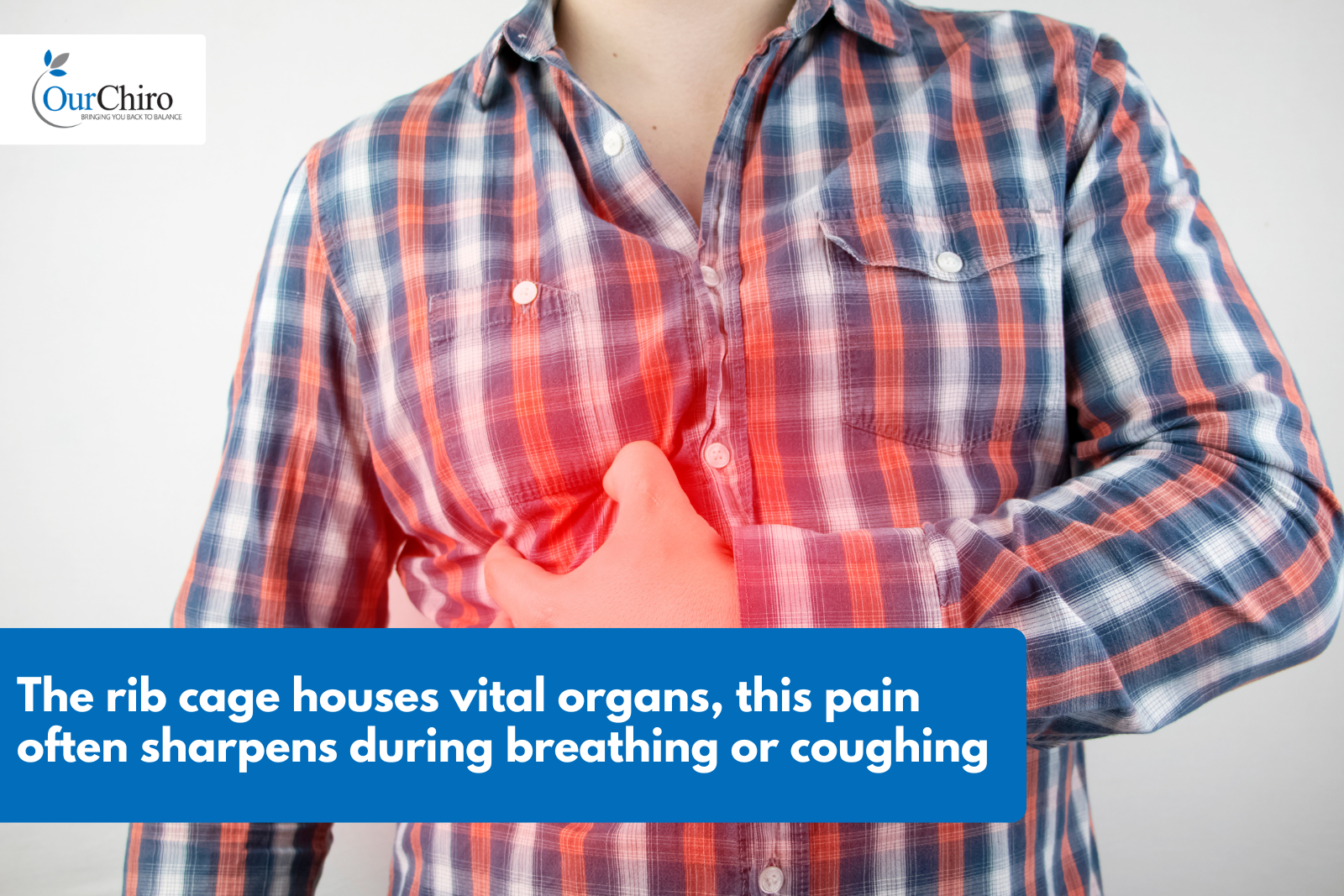
Because the simple act of taking an inhalation forces the ribs to pivot upwards and outwards, any structural restriction can trigger sharp, catching pain around your chest or mid-back. This frequently leaves individuals feeling unable to draw a full breath, creating an exhausting cycle of shallow breathing and secondary muscle guarding.
When to Seek Immediate Medical Evaluation
Before exploring structural or biomechanical sources of pain, it is vital to acknowledge that chest and rib discomfort can mimic serious, life-threatening internal medical events.
“If people take a big breath in and they feel pain around their chest… obviously with anything to do with breathing, we want to make sure that it’s not a medical issue, not a medical emergency,” cautions Dr. Nash. “So that needs to be ruled out first and foremost.”
“We always place patient safety at the absolute forefront. If your rib or chest pain is accompanied by shortness of breath, dizziness, sweating, or pain radiating into your jaw or left arm, you must bypass the clinic and head straight to an emergency department.”
— Dr. Simon Nash (Chiropractor)
Once a clear medical clearance is established by an emergency physician or general practitioner, we can confidently look closer at the musculoskeletal architecture of the thoracic spine and thoracic cage.
Common Mechanical Causes of Rib Pain
If your pain is non-cardiac and non-pulmonary, it is typically mechanical, meaning it stems from the joints, nerves, or muscles supporting the rib cage. Dr. Nash highlights two primary mechanical issues frequently observed in clinical practice:
1. Costovertebral Joint Dysfunction
The most frequent culprit behind localised, sharp mid-back and rib pain is an issue occurring where the rib bone anchors directly to the thoracic spine.
“You might have an issue with the costovertebral joint,” explains Dr. Nash. “So it’s where the ribs come round and articulate or join with the spine. That’s quite a common issue that we see. And that can be quite acutely painful.”
When these joint surfaces become misaligned, compressed, or sprained due to sudden twisting, poor posture, or coughing fits, it causes acute local inflammation. Research published in the Journal of Manual & Manipulative Therapy notes that mechanical thoracic spinal pain often involves these exact costovertebral articulations, causing referred pain patterns that wrap directly around the chest wall (Fruth, 2006).
2. Intercostal Neuralgia and Muscle Inflammation
Between each of your ribs sit bands of intercostal muscles along with a dedicated pathway for intercostal nerves. If these soft tissues are strained or irritated, it can create a very specific type of radiating discomfort.
“Second to that, we might have something such as intercostal neuralgia, where you get an inflammation of the intercostal muscles and the nerves that supply those muscles within and in between the ribs,” says Dr. Nash.
Intercostal neuralgia often presents as a hot, burning, or shooting pain that traces the exact curve of the rib line. It can make even the lightest touch to the skin or clothing over the rib cage feel remarkably tender.
The Chiropractic Approach to Rib Dysfunction
When a structural imbalance is identified as the root cause of your discomfort, a coordinated, multi-modal treatment plan is used to safely restore mobility to the restricted areas.
A clinical review highlights that conservative chiropractic management including spinal manipulative therapy and mobilisation is highly effective at relieving the acute pain and restricted chest expansion associated with mechanical rib stressors (Nelson et al., 2005).
To achieve this, Dr. Nash balances joint-specific interventions with targeted soft-tissue therapies:
Targeted Mobilisations and Adjustments: “We would treat that by doing certain mobilisations and adjustments around there, reducing the muscle inflammation,” says Dr. Nash. Gentle, specific movements restore the normal gliding motion of the costovertebral joint, reducing the physical impingement causing the acute catching sensation.
Kinesiology Taping: Supporting the area externally allows irritated muscles to rest. “Sometimes we’d use kinesio taping methods to help reduce that as well,” explains Dr. Nash. The elastic qualities of the tape gently lift the skin, promoting local blood flow, reducing swelling, and providing neurological feedback that helps dampen the pain signals.
Our practitioners may also combine these methods with dedicated Chiropractic Services or complementary therapies like Dry Needling to address defensive muscle spasms in the surrounding thoracic region.
Expected Recovery and Healing Times
The good news concerning structural rib issues is that they typically respond efficiently to conservative treatment once the correct alignment and movement are restored.
“Rib pain responds if it’s biomechanical in nature responds quite quickly,” reassures Dr. Nash. “And really reduces quite quickly so we can get the patient out of pain, um, relatively fast. As long as it’s biomechanical in nature.”
“Because the costovertebral joints are highly mechanical, removing the structural restriction often yields immediate, noticeable relief in a patient’s breathing capacity during their initial visits.”
— Dr. Simon Nash (Chiropractor)
While initial pain relief can occur rapidly, your exact care plan will depend on how long the joint dysfunction has been present, the degree of underlying muscle inflammation, and your day-to-day postural demands.
Frequently Asked Questions (FAQs)
Q1: Can a cough or sneeze cause a mechanical rib issue? A: Yes, absolutely. A sudden, violent sneeze or a prolonged bouts of coughing can place a tremendous amount of rapid force through the thoracic cage, easily causing a costovertebral joint sprain or straining the intercostal muscles.
Q2: How can I tell if my rib pain is a medical emergency or mechanical? A: Medical emergencies involving the heart or lungs often present with systemic signs such as severe shortness of breath, dizziness, nausea, a feeling of heavy chest pressure, or radiating pain into the jaw, arm, or neck. Biomechanical pain is typically localised, sharp, and directly aggravated or reproduced by physical movements like twisting, taking a deep breath, or pressing directly on the joint. However, you should always seek formal medical screening to be sure.
Q3: Is it safe to have a chiropractic adjustment on a rib? A: Yes, when performed by a qualified chiropractor following a thorough clinical history and physical examination. Chiropractors are highly trained to use specific, controlled, and low-force techniques to safely restore movement to the costovertebral and costotransverse joints.
Q4: What should I avoid doing when I have mechanical rib pain? A: It is wise to temporarily avoid heavy overhead lifting, aggressive twisting motions, and prolonged, slouched sitting, as these positions increase the mechanical stress across the thoracic spine and rib junctions.
Q5: Can poor office posture cause rib pain? A: Yes. Prolonged slouching over a desk causes a rounded thoracic spine (hyperkyphosis). Over time, this puts sustained mechanical strain on the joints where your ribs meet your spine, leaving them vulnerable to painful restrictions and muscle guarding.
Q6: Does heat or ice work better for an inflamed rib joint? A: For acute, sharp pain which usually indicates active joint or muscle inflammation—applying an ice pack wrapped in a thin towel for 15–20 minutes can help numb the pain and control swelling. Once the sharpest pain reduces, gentle heat can be helpful to relax tight surrounding muscles.
Book a Consult with Our Chiro Brisbane
We know how exhausting and draining it is to live with rib discomfort. It can make everyday actions driving your car, turning to speak to a colleague, or simply relaxing at the end of the day feel incredibly daunting. Dealing with a sharp “catching” feeling every single time you try to take a deep breath is stressful, and it is completely natural to feel frustrated when your body limits your basic movements.
At Our Chiro Brisbane, our clinical team is dedicated to listening to your concerns, isolating the exact structural cause of your discomfort, and delivering precise, gentle care to help you find long-term relief.
Let us help you breathe comfortably again. Book an appointment with Our Chiro Brisbane today or call (07) 3257 0399
References
Fruth, S. J. (2006). Differential diagnosis and treatment in a patient with posterior upper thoracic pain. Physical Therapy, 86(2), 254–268. https://pubmed.ncbi.nlm.nih.gov/16445339/
Nelson, C. F., Lawrence, D. J., Triano, J. J., Bronfort, G., Perle, S. M., Metz, R. D., Hegetschweiler, K., & LaBrot, T. (2005). Chiropractic as spine care: a model for the profession. Chiropractic & Osteopathy, 13(1), 9. https://doi.org/10.1186/1746-1340-13-9
Video Transcript
So a question we often get, or patients will actually see that present with rib pain. So rib pain can be caused by a few different little things. Um obviously patients will notice rib pain by a restriction of breathing in. So if people take a big breath in and they would feel pain around their chest. So obviously with anything to do with breathing, we want to make sure that it’s not a medical issue, not a medical emergency. So that needs to be ruled out first and foremost. Um, second to that, we might have something such as intercostal neuralgia, where you get an inflammation of the intercostal muscles and the nerves that supply those muscles within in between the ribs. Um, you might have an issue with the costovertebral joint. So it’s where the ribs come round and articulate or join with the spine. That’s quite a common issue that we see. And that can be quite acutely painful. So we would treat that by doing certain mobilizations and adjustments around there, reducing the muscle inflammation. Sometimes we’d use kinesio taping methods to help reduce that as well. Rib pain responds if it’s biomechanical in nature, responds quite quickly, um, and really reduces quite quickly so we can get the patient out of pain, um, relatively fast. Um, as long as it’s biomechanical in nature. So rib pain, lots of different causes. And we would pick the best type of treatment to treat that biomechanical pain. Um, when the patient presents with rib pain.
This blog post was written and approved by Dr Simon Nash
Dr Simon Nash (M.Chiro, B.Chiro Sci.) is a chiropractor with over 20 years of clinical experience. He is a full professional member of Sports Medicine Australia (SMA) and Chiropractic Australia, and is AHPRA registered (CHI0000970189). Simon graduated from Macquarie University and is dual-registered to practise in Australia and Hong Kong.
He began his career in a multidisciplinary neurology-focused clinic in Sydney, developing a strong interest in treating headaches and migraines. Since 2006, he has operated Our Chiro Brisbane, now alongside his sisters Jessica and Rebecca.
Simon treats everyday injuries, workplace rehabilitation cases and complex presentations using a wide range of techniques. His sports medicine experience spans elite athletes including NRL and Rugby Union players, Olympians, and events like the Australian Open and Hong Kong 7s. He has also treated Guns N’ Roses during tour.


Disclaimer:
The information provided in this blog is for general informational purposes only and is not intended as medical advice. It should not be used to diagnose, treat, or replace professional consultation with a qualified healthcare provider. Always seek the advice of a chiropractor, GP, or other qualified health professional regarding any medical condition or treatment.
Click here to learn more about our editorial policy, that explains how content is created, fact-checked, and updated by qualified chiropractors and other health professionals.