Foot pain is one of the most common reasons runners stop running, and it’s natural to assume the problem lives in the foot itself. But the body works as a connected chain, and pain in the foot can sometimes be driven by how the hip and knee are moving above it. Runners, active adults and anyone who has had an old hip or knee niggle can be affected, often without realising the link. This fact sheet gives an overview of how foot pain can come from further up the leg, and how chiropractic care may offer a gentle, non-invasive path to recovery.
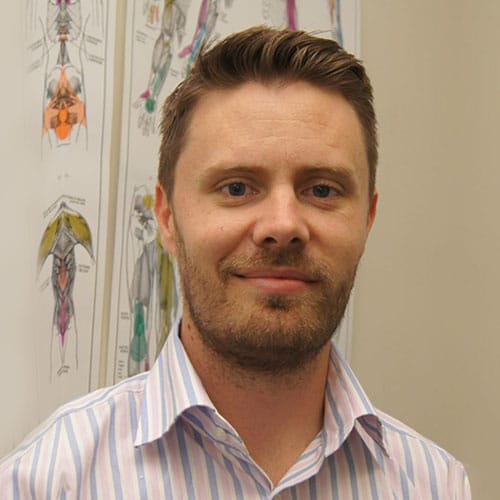
In this article, Dr. Simon Nash (Chiropractor) discusses how foot pain can be caused by problems at the hip and knee, shares the story of a runner who had spent a small fortune on shoes for a problem that wasn’t her feet, and explains why a holistic biomechanical view has changed the way he practises.
Medical Disclaimer: The information provided in this article is for general knowledge and informational purposes only, and does not constitute medical advice. It is essential to consult with a qualified healthcare professional for a diagnosis and personalised treatment plan.
Table of Contents
- Understanding Foot Pain Caused by the Hip and Knee
- Common Causes of Foot Pain Caused by the Hip and Knee
- How Chiropractors Diagnose Foot Pain Caused by the Hip and Knee
- The Chiropractic Approach to Foot Pain Caused by the Hip and Knee
- Frequently Asked Questions (FAQs)
- Book a Consult with Our Chiro Brisbane
- References
- Video Transcript
Understanding Foot Pain Caused by the Hip and Knee
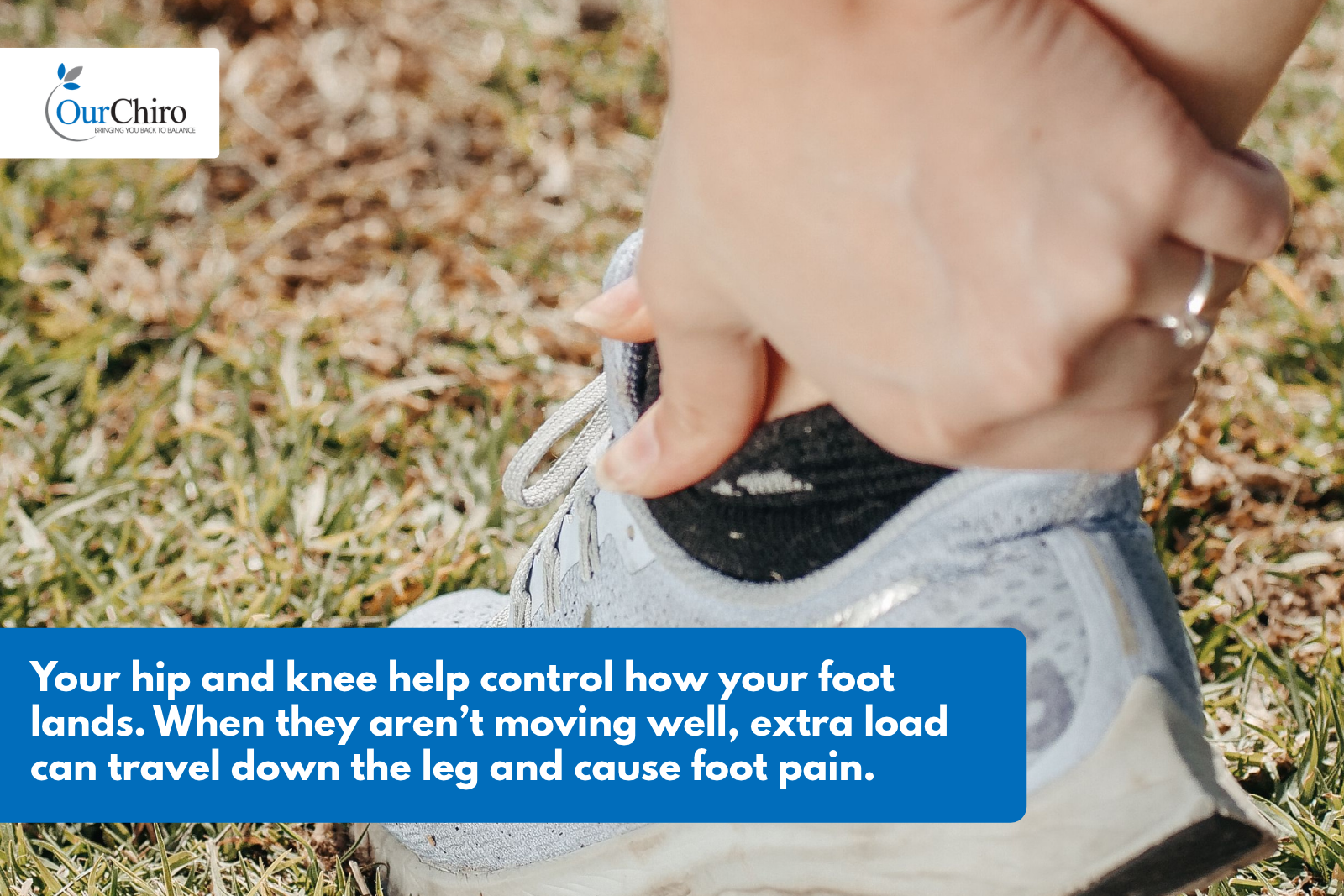
Clinicians often describe the leg as a kinetic chain: the hip, knee, ankle and foot all move together, and a problem at one link changes the load on the others. When the muscles around the hip and pelvis don’t control the thigh well, the knee can drift inwards and the lower leg and foot have to absorb forces they weren’t designed to handle. Research has shown that impaired control of the hip, pelvis and trunk can alter how the knee moves and is loaded (Powers, 2010), and the same chain continues down to the foot.
Dr. Nash describes a patient who is a perfect example. She “had seen an orthopaedic surgeon, a physiotherapist who they’d seen twice a week for 12 weeks, and had seen a podiatrist.” As he puts it, “She came in with literally a bag of, a shopping bag full of really expensive running shoes and was in tears that she couldn’t run.”
The key insight was simple: “everyone had focused on her feet. But that wasn’t the problem. It was the problem to do with a hip and a knee that was causing the problem with the foot.”
Common Causes of Foot Pain Caused by the Hip and Knee
- Old or “forgotten” injuries: Dr. Nash’s patient “had those issues about 18 months prior and had forgotten about it because now it had progressed to her foot.” A past hip or knee problem can quietly change how you move long after the original pain settles.
- Reduced hip muscle control: Weakness or poor timing in the gluteal muscles can let the thigh rotate and the knee collapse inwards during running.
- Knee mechanics: Altered knee movement changes how the lower leg lands and transfers load into the foot.
- Training load: Sudden increases in kilometres, hills or speed work expose weak links in the chain.
- Relying on footwear alone: Changing shoes rarely fixes a movement problem that starts higher up. A review of running shoe research found that the factors shoes were designed to control, such as pronation and impact forces, were not reliable predictors of injury, and suggested comfort may matter more (Nigg et al., 2015).
How Chiropractors Diagnose Foot Pain Caused by the Hip and Knee
- Detailed history: Your chiropractor will ask about the foot pain, but also about your running, training changes and any previous hip, knee, back or ankle problems, even ones you think are long gone.
- Movement and gait assessment: Watching you walk, run, squat and balance on one leg can show whether the hip drops, the knee drifts inwards or the foot is compensating.
- Physical and orthopaedic tests: Strength and range-of-motion testing of the hip, knee and ankle, along with joint and soft-tissue examination, help pinpoint the true source of the problem.
- Imaging only when needed: X-ray, ultrasound or MRI is only recommended when red flags or specific findings suggest it, consistent with best-practice guidance to use imaging selectively (Lin et al., 2020).
- Differential diagnoses: Local foot conditions such as plantar fasciitis, stress fractures, Achilles tendinopathy, nerve irritation (including from the lower back) and inflammatory conditions need to be considered and ruled out.
The Chiropractic Approach to Foot Pain Caused by the Hip and Knee
High-quality clinical guidelines for musculoskeletal pain consistently recommend patient-centred, conservative care built around education, exercise and physical activity, with manual therapy used alongside these rather than on its own (Lin et al., 2020). In Dr. Nash’s case, the plan was clear: “we ditched the foot and worked on the hip and knee, and within two weeks she was running 30 kilometres a week where she wasn’t able… to run at all.”
- Manual Adjustments and Mobilisations: Gentle techniques to restore movement at the hip, knee, ankle and foot so the whole chain can share load more evenly.
- Soft Tissue Therapy: Hands-on treatment for tight or overloaded muscles around the hip, thigh and calf.
- Dry Needling: May help reduce muscle tension and pain in the gluteal, thigh and calf muscles.
- Exercise Prescription: Targeted strengthening and control exercises for the hip and knee, progressed back to running-specific drills. The link between hip strength and running injury varies between conditions (Mucha et al., 2017), so exercises are tailored to what your assessment shows.
- Kinesio Taping: Can provide short-term support and feedback while you rebuild strength and return to running.
Frequently Asked Questions (FAQs)
Q1: Can a hip or knee problem really cause foot pain? A: Yes. The hip, knee and foot work together as a chain, so poor control higher up can change how forces reach the foot. That’s why a full assessment looks beyond the sore spot.
Q2: Will new running shoes fix my foot pain? A: Sometimes a more comfortable shoe helps, but research suggests shoes don’t reliably prevent running injuries (Nigg et al., 2015). If the problem starts at the hip or knee, new shoes alone are unlikely to solve it.
Q3: Why does an old injury matter if it doesn’t hurt any more? A: Your body adapts around injuries, and those adaptations can persist. As Dr. Nash’s patient found, an issue from 18 months earlier can show up later as pain somewhere else.
Q4: How quickly can I get back to running? A: It depends on the individual and the cause. Some people improve quickly once the real driver is addressed, while others need a longer, graded return. Your chiropractor will guide you on safe progressions.
Q5: Do I need a scan before seeing a chiropractor? A: Usually not. Most cases can be assessed with a thorough history and physical examination, and imaging is only recommended when there’s a clear clinical reason.
Book a Consult with Our Chiro Brisbane
If you’re dealing with foot pain that isn’t improving, take the first step towards relief. You can explore our Chiropractic Services or learn more about our non-invasive care options on our Services Page. Ready to get checked? Book an appointment with Our Chiro Brisbane today or call (07) 3257 0399.
References
Lin, I., Wiles, L., Waller, R., Goucke, R., Nagree, Y., Gibberd, M., Straker, L., Maher, C. G., & O’Sullivan, P. P. B. (2020). What does best practice care for musculoskeletal pain look like? Eleven consistent recommendations from high-quality clinical practice guidelines: Systematic review. British Journal of Sports Medicine, 54(2), 79–86. https://doi.org/10.1136/bjsports-2018-099878
Mucha, M. D., Caldwell, W., Schlueter, E. L., Walters, C., & Hassen, A. (2017). Hip abductor strength and lower extremity running related injury in distance runners: A systematic review. Journal of Science and Medicine in Sport, 20(4), 349–355. https://doi.org/10.1016/j.jsams.2016.09.002
Nigg, B. M., Baltich, J., Hoerzer, S., & Enders, H. (2015). Running shoes and running injuries: Mythbusting and a proposal for two new paradigms: ‘Preferred movement path’ and ‘comfort filter’. British Journal of Sports Medicine, 49(20), 1290–1294. https://doi.org/10.1136/bjsports-2015-095054
Powers, C. M. (2010). The influence of abnormal hip mechanics on knee injury: A biomechanical perspective. Journal of Orthopaedic & Sports Physical Therapy, 40(2), 42–51. https://doi.org/10.2519/jospt.2010.3337
Video Transcript
The biggest ones that you remember are people that have had, like, something really chronic that other people haven’t been able to help, whether it’s something really simple. So I have a patient that I’m currently treating who had seen an orthopaedic surgeon, a physiotherapist who they’d seen twice a week for 12 weeks, and had seen a podiatrist. She came in with literally a bag of, a shopping bag full of really expensive running shoes and was in tears that she couldn’t run. And everyone had focused on her feet. But that wasn’t the problem. It was the problem to do with a hip and a knee that was causing the problem with the foot. But it was, she had those issues about 18 months prior and had forgotten about it because now it had progressed to her foot. So we ditched the foot and worked on the hip and knee, and within two weeks she was running 30 kilometres a week where she wasn’t able, wasn’t able to run at all. So things like that, it’s, I think, thinking outside the box and looking more of a, I guess, at a holistic biomechanical view, which is something that I think has definitely changed the way I’ve practised since I first started.
This blog post was written and approved by Dr Simon Nash
Dr Simon Nash (M.Chiro, B.Chiro Sci.) is a chiropractor with over 20 years of clinical experience. He is a full professional member of Sports Medicine Australia (SMA) and Chiropractic Australia, and is AHPRA registered (CHI0000970189). Simon graduated from Macquarie University and is dual-registered to practise in Australia and Hong Kong.
He began his career in a multidisciplinary neurology-focused clinic in Sydney, developing a strong interest in treating headaches and migraines. Since 2006, he has operated Our Chiro Brisbane, now alongside his sisters Jessica and Rebecca.
Simon treats everyday injuries, workplace rehabilitation cases and complex presentations using a wide range of techniques. His sports medicine experience spans elite athletes including NRL and Rugby Union players, Olympians, and events like the Australian Open and Hong Kong 7s. He has also treated Guns N’ Roses during tour.


Disclaimer:
The information provided in this blog is for general informational purposes only and is not intended as medical advice. It should not be used to diagnose, treat, or replace professional consultation with a qualified healthcare provider. Always seek the advice of a chiropractor, GP, or other qualified health professional regarding any medical condition or treatment.
Click here to learn more about our editorial policy, that explains how content is created, fact-checked, and updated by qualified chiropractors and other health professionals.