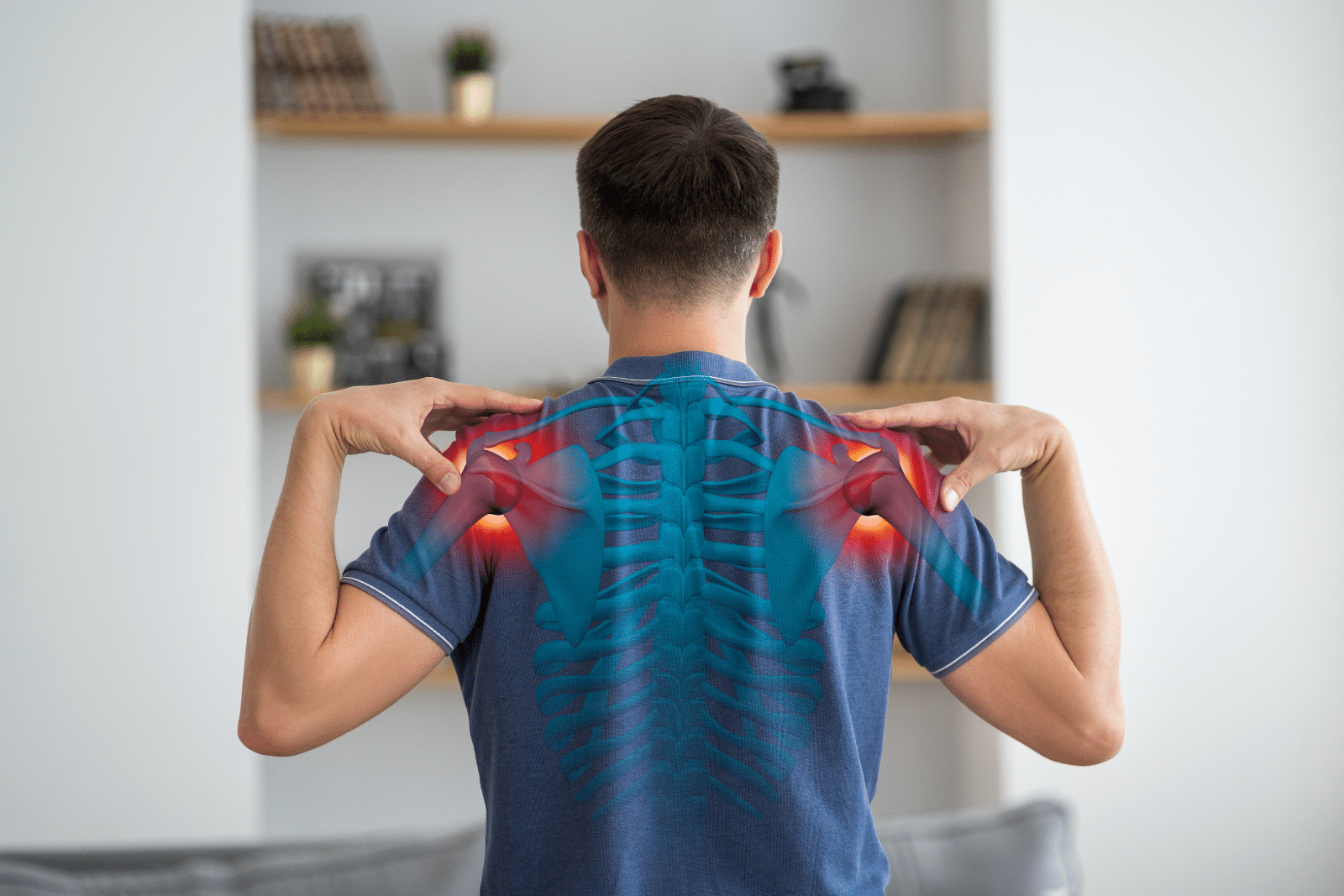
As a common and deeply frustrating musculoskeletal complaint, a frozen shoulder can cause significant discomfort, sleep disruption, and a severe loss of independence in your daily life. Simple actions you once took for granted like reaching for a seatbelt, brushing your hair, or getting dressed can suddenly become excruciating or physically impossible. This fact sheet is designed to provide you with a comprehensive overview of frozen shoulder, its multi-faceted causes, and how targeted chiropractic care can help you regain your mobility.
In this article, Dr Simon Nash (Chiropractor) discusses the varied presentations of frozen shoulder and the evidence-based management options available to help restore proper function.
Medical Disclaimer: The information provided in this article is for general knowledge and informational purposes only, and does not constitute medical advice. It is essential to consult with a qualified healthcare professional for a diagnosis and personalised treatment plan.
Table of Contents
- Understanding Frozen Shoulder
- The Main Drivers of Shoulder Dysfunction
- The Chiropractic Approach to Frozen Shoulder
- Prognosis and the Road to Recovery
- Frequently Asked Questions (FAQs)
- Book a Consult with Our Chiro Brisbane
- References
- Video Transcript
Understanding Frozen Shoulder
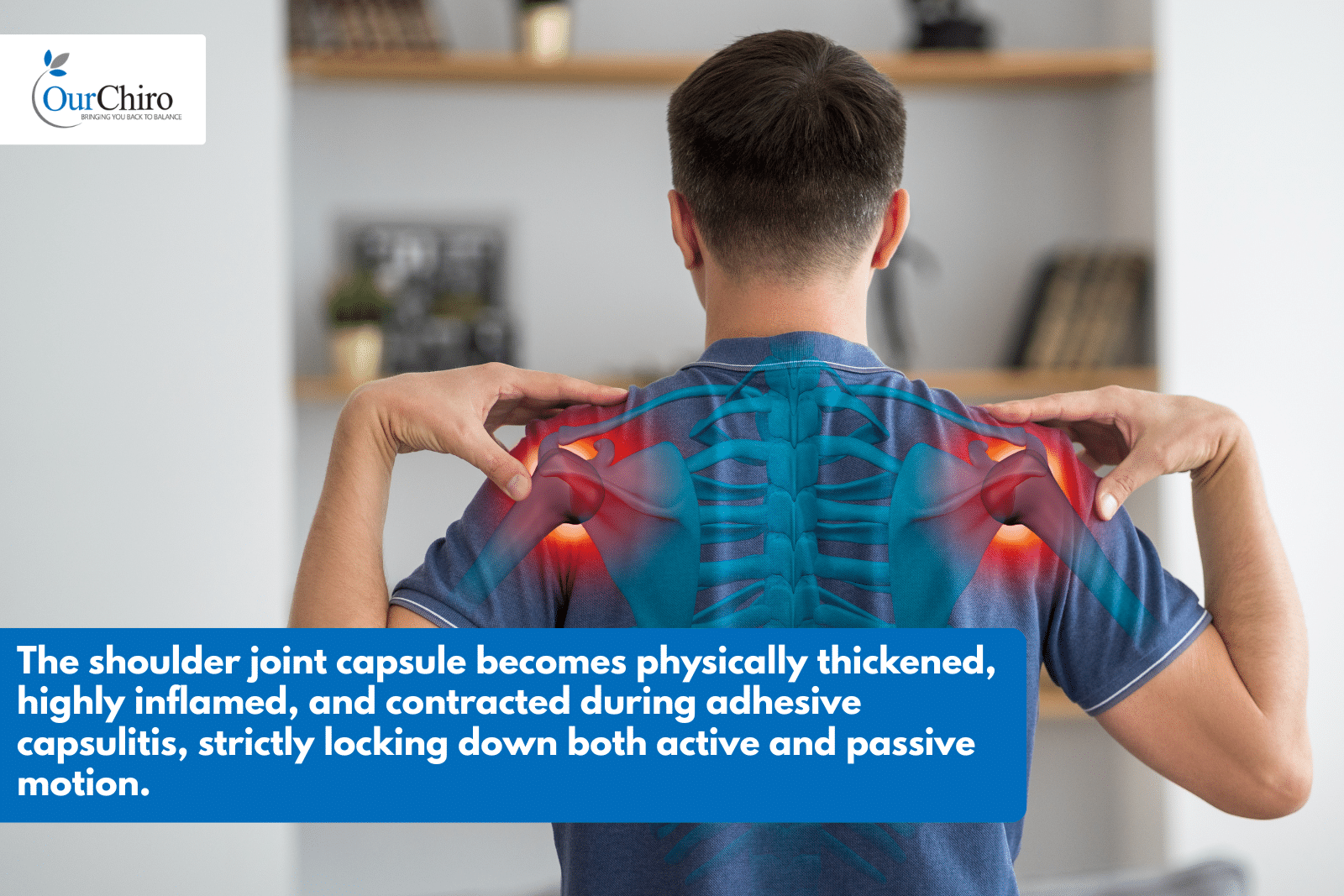
Frozen shoulder, medically known as adhesive capsulitis, is an umbrella term that describes a clinical syndrome of progressive pain and severe restriction of both active and passive shoulder movement. The shoulder joint is a ball-and-socket configuration surrounded by a protective sleeve of connective tissue known as the joint capsule. When this capsule becomes highly inflamed, thickened, and scarred, the joint loses its natural lubrication, effectively “freezing” the arm in place.
Dr Simon Nash encounters this presentation frequently at our Brisbane clinic. He notes that the path to a frozen shoulder often starts quietly before escalating into profound mechanical restriction. Frozen shoulder or adhesive capsulitis is a condition that can involve a fair few structures in the shoulder. It doesn’t have to involve them all at once, and it can involve just one or two of them.”
This classic presentation leaves many patients feeling isolated and confused, as the onset can sometimes appear without any obvious structural trauma. Everyday biomechanical strain can gradually build up, eventually triggering a robust inflammatory response that compromises the entire glenohumeral joint complex.
The Main Drivers of Shoulder Dysfunction
To manage a frozen shoulder effectively, a clinician must peer beneath the “frozen” surface to discover exactly which tissues are driving the restriction. The shoulder relies on a delicate balance between stabilising muscles, fluid-filled sacs, tendons, and bones.
According to Dr Nash, several specific structural issues commonly contribute to the clinical picture:
Tendonitis and Tendinopathy: Chronic irritation or microscopic tearing within the rotator cuff tendons (the four key muscles surrounding the shoulder joint) can act as the initial trigger for protective muscle guarding and subsequent capsule thickening.
Bursitis: The bursa is a tiny, fluid-filled cushion that prevents rubbing between bones and tendons. When this sac becomes compressed or inflamed, even microscopic arm movements cause sharp, pinching pain.
Calcification: In long-standing cases of mechanical strain, the body may lay down calcium deposits within the local tendons, altering their structural integrity and severely blocking physical movement.
“Inflammation of the Bursa, which is a little fluid filled sac that allows the tendons to move over it. So it’s when you get an inflammation of that… or you could have a tearing of some of the muscles. You could have calcification that’s being laid down.” Dr Nash says.
When these tissues flame up, the body’s natural response is to stop moving the joint to avoid pain. Unfortunately, this prolonged immobility is precisely what allows the joint capsule to tighten, thicken, and stiffen over time.
“Frozen shoulder is basically an umbrella term for a problem with the shoulder,” Dr Nash points out. “You typically see patients with reduced movement of the shoulder. They’re unable to lift their shoulder out and up or put their hand above their head or behind their back.”
The Chiropractic Approach to Frozen Shoulder
Because a frozen shoulder stems from diverse anatomical drivers, a generic “one-size-fits-all” treatment plan will rarely yield optimal outcomes. Modern chiropractic care looks past the structural stiffness to provide a multimodal approach tailored to the unique phase of the condition.
Research strongly supports this comprehensive methodology. A clinical review published in the Journal of Manual & Manipulative Therapy indicates that combinations of manual joint mobilisation, soft tissue therapy, and progressive home exercises significantly improve shoulder range of motion and diminish localised pain levels when compared to rest alone. (Jain & Sharma, 2014)
Furthermore, a systematic evaluation in Cochrane Database of Systematic Reviews notes that manual therapies and exercise remain key conservative strategies for improving functional outcomes in patients navigating adhesive capsulitis. (Page et al., 2014)
“And depending on the reason for the shoulder, we would then pick a treatment technique,” Dr Nash outlines. “So we may use cold laser. We might use shockwave therapy. We might use some rehabilitation exercises or movements. We’d use some soft tissue techniques to help reduce the inflammation around the shoulder.”
At Our Chiro Brisbane, advanced physical modalities are systematically paired with classic chiropractic adjustments and precise joint mobilisations:
Advanced Modalities: Non-invasive interventions such as Cold Laser Therapy and Extracorporeal Shockwave Therapy (ESWT) are utilised to target cellular repair, dismantle stubborn calcifications, and aggressively calm the deep capsular inflammation without aggravating the patient’s discomfort.
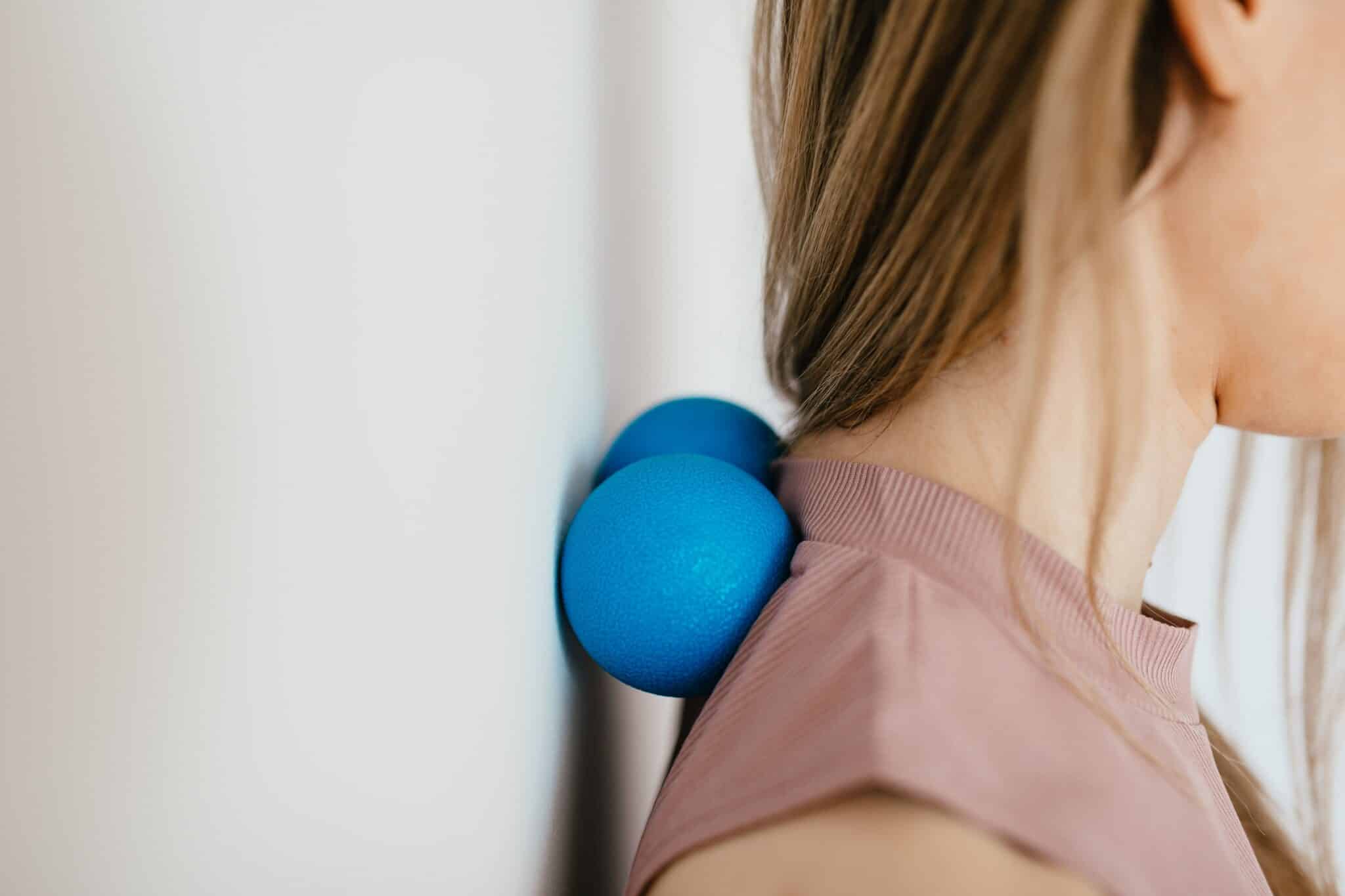
Soft Tissue Techniques: Modalities like Dry Needling Therapy and Trigger Point Therapy are crucial for safely deactivating hypertonic (overly tight) shoulder muscles that are structurally locking down the glenohumeral complex.
Kinesio Taping: Elastic therapeutic taping provides consistent tactile feedback to the brain, mechanically supporting the joint while subtly encouraging safer movement patterns throughout the day.
Prognosis and the Road to Recovery
Recovering from a frozen shoulder requires patience, communication, and structural consistency. The condition traditionally progresses through three distinct clinical phases:
- The freezing phase (highly painful),
- The frozen phase (extreme stiffness with stabilising pain)
- Thawing phase (gradual return of movement).
Dr Nash emphasises that setting realistic expectations surrounding healing timelines is an essential part of the modern practitioner-patient partnership.“Sometimes it can take quite a while for the shoulder to settle down depending on the cause,” Dr Nash advises honestly. “But prognosis is good and treatment outcomes are usually fantastic.”
To optimise long-term outcomes and prevent chronic movement compensations, active home rehabilitation is non-negotiable.
“We don’t just want to temporarily relieve the burning or aching discomfort,” Dr Nash states authoritatively. “Our ultimate goal is to guide the body through active biomechanical restoration. We give the patient tailored exercises to do at home, which include gentle movements to promote normal biomechanical movement of the shoulder complex. By staying consistent with these movements, you directly prevent the joint capsule from fusing further.”
Frequently Asked Questions (FAQs)
Q1: What is the main difference between a frozen shoulder and a rotator cuff tear? A: A frozen shoulder involves global stiffness where the arm cannot be lifted either by yourself (active movement) or by a practitioner trying to lift it for you (passive movement). A rotator cuff tear typically limits your ability to lift the arm yourself due to weakness or pain, but a practitioner can generally still move your arm through its normal range for you.
Q2: Can I just wait out a frozen shoulder without receiving treatment? A: While frozen shoulder is technically considered a “self-limiting” condition that can resolve over one to three years, leaving it completely untreated can result in permanent, irreversible loss of your shoulder’s full range of movement, along with months of unnecessary pain and significant muscle wasting (atrophy).
Q3: Is dry needling painful when applied to an inflamed shoulder? A: Most patients describe dry needling as a dull ache or a brief twitch sensation rather than sharp pain. It is highly effective at releasing the profound protective muscle tension that locks the shoulder joint down.
Q4: How exactly does cold laser therapy assist with adhesive capsulitis? A: Cold laser therapy uses low levels of light energy to penetrate deep into the dense, stiff shoulder capsule. It stimulates cellular energy production (ATP), which helps accelerate tissue healing, increases microcirculation, and safely lowers active inflammation without creating painful friction.
Q5: Can poor neck and upper back posture contribute to developing shoulder issues? A: Yes. Forward head posture and slumped shoulders alter the physical positioning of your scapula (shoulder blade). This functional imbalance reduces the space available for your rotator cuff tendons to glide freely, significantly increasing the likelihood of impingement, bursitis, and eventual frozen shoulder.
Book a Consult with Our Chiro Brisbane
We truly understand how exhausting and physically draining a frozen shoulder can be. Living with a shoulder that refuses to move leaves you feeling trapped, and the relentless ache that wakes you up multiple times a night can leave you feeling completely worn out. It is incredibly frustrating to lose your physical independence over standard, everyday tasks.
At Our Chiro Brisbane, we are committed to helping you break free from this painful cycle. Our experienced practitioners will thoroughly assess your entire shoulder biomechanics to pinpoint the precise drivers of your condition, mapping out a clear, structured path back to fluid, comfortable movement.
Take your first meaningful step toward moving freely again. Book your comprehensive assessment with the dedicated team at Our Chiro Brisbane today or call (07) 3257 0399
References
Page, M. J., Green, S., Kramer, S., Johnston, R. V., McBain, B., Chau, M., & Buchbinder, R. (2014). Manual therapy and exercise for adhesive capsulitis (frozen shoulder). Cochrane Database of Systematic Reviews, 8. https://doi.org/10.1002/14651858.cd011275
Jain, T. K., & Sharma, N. K. (2014). The effectiveness of physiotherapeutic interventions in treatment of frozen shoulder/adhesive capsulitis: a systematic review. Journal of Back and Musculoskeletal Rehabilitation, 27(3), 247–273. https://doi.org/10.3233/BMR-130443
Video Transcript
Thing that we see in the clinic all the time. And a lot of questions we get about this condition is what’s frozen shoulder and what can be done about it. So frozen shoulder or adhesive capsulitis is a condition that can involve a fair few structures in the shoulder. It doesn’t have to involve them all at once, and it can involve just one or two of them. So typically you have an inflammation of the muscles or a tendonitis or tendinopathy, um, inflammation of the Bursa, which is a little fluid filled sac that allows the tendons to move over it. So it’s when you get an inflammation of that, um, or you could have a tearing of some of the muscles. You could have calcification that’s being laid down. So frozen shoulder is basically an umbrella term with for a problem with the shoulder, you typically see patients with reduced movement of the shoulder. So they’re unable to lift their shoulder out and up or put their hand above their head or behind their back. Um, so those movements are typically what’s saw in frozen shoulder. And depending on the reason for the shoulder, we would then pick a treatment technique. So we may use cold laser. We might use shockwave therapy. We might use some rehabilitation exercises or movements. We’d use some soft tissue techniques to help reduce the inflammation around the shoulder. Dry needling is fantastic, as well as Kinesio taping, which helps promote the movement of the shoulder. We’d obviously give the patient some exercises to do at home, which is gentle movements to promote that, um, that movement and that normal biomechanical movement of the shoulder. Um, sometimes it can take quite a while for the shoulder to settle down depending on the cause. But prognosis is good and treatment outcomes are usually fantastic.
This blog post was written and approved by Dr Simon Nash
Dr Simon Nash (M.Chiro, B.Chiro Sci.) is a chiropractor with over 20 years of clinical experience. He is a full professional member of Sports Medicine Australia (SMA) and Chiropractic Australia, and is AHPRA registered (CHI0000970189). Simon graduated from Macquarie University and is dual-registered to practise in Australia and Hong Kong.
He began his career in a multidisciplinary neurology-focused clinic in Sydney, developing a strong interest in treating headaches and migraines. Since 2006, he has operated Our Chiro Brisbane, now alongside his sisters Jessica and Rebecca.
Simon treats everyday injuries, workplace rehabilitation cases and complex presentations using a wide range of techniques. His sports medicine experience spans elite athletes including NRL and Rugby Union players, Olympians, and events like the Australian Open and Hong Kong 7s. He has also treated Guns N’ Roses during tour.


Disclaimer:
The information provided in this blog is for general informational purposes only and is not intended as medical advice. It should not be used to diagnose, treat, or replace professional consultation with a qualified healthcare provider. Always seek the advice of a chiropractor, GP, or other qualified health professional regarding any medical condition or treatment.
Click here to learn more about our editorial policy, that explains how content is created, fact-checked, and updated by qualified chiropractors and other health professionals.