
As a common issue we see every day in our clinic, pain and tightness between the shoulder blades can be a surprisingly disruptive condition. It’s the kind of persistent, nagging ache that makes it hard to focus, difficult to sit comfortably, and even interferes with a good night’s sleep.
This area, known as the thoracic spine, is a complex intersection of joints, ribs, and muscles. When something goes wrong here, the discomfort can range from a mild stiffness to a sharp, burning pain. For those living with it, finding the cause and an effective solution is paramount to returning to a comfortable and active life.
In this article, Dr. Simon Nash (Chiropractor) discusses the common causes of this discomfort, the body’s natural healing process, and the range of chiropractic techniques available to help.
Please note: The information provided in this article is for general knowledge and informational purposes only, and does not constitute medical advice. It is essential to consult with a qualified healthcare professional, such as a chiropractor, for a diagnosis and a personalised treatment plan.
Table of Contents
- Common Causes of Inter-scapular Pain
- The Role of Posture and Ergonomics
- Understanding Muscle Dysfunction
- How Breathing and Rib Articulations Contribute
- The Chiropractic Approach to Mid-Back Pain
- Frequently Asked Questions (FAQs)
- Book a Consult with Our Chiro Brisbane
- References
- Video Transcript
Common Causes of Inter-scapular Pain
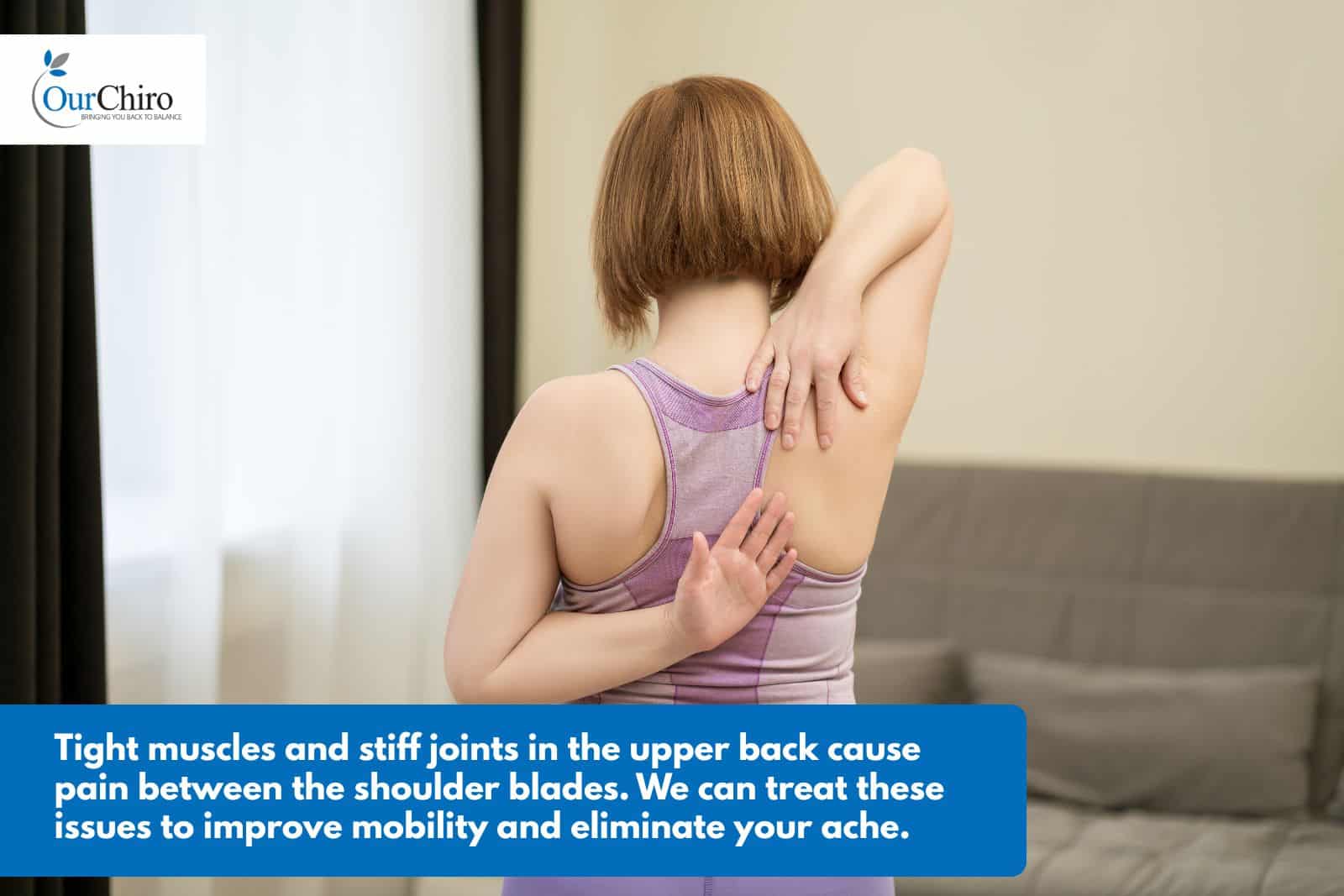
Pain and tightness between the shoulder blades can stem from a variety of sources. Often, it’s a cumulative issue, where several factors combine to place excessive stress on the thoracic spine and its surrounding structures.
As Dr. Nash notes, “This is something that we see every day in the clinic.” The persistent nature of this complaint highlights the need for a comprehensive assessment to determine the true underlying cause.
The Role of Posture and Ergonomics
In our modern, desk-bound world, postural problems have become one of the most common culprits. Spending hours hunched over a computer or constantly looking down at a mobile phone places significant strain on the mid-back. This forward-head and rounded-shoulder posture stretches and weakens the muscles that are meant to keep your back straight, leading to chronic tightness and pain.
Dr. Nash points directly to this lifestyle factor:
“Most commonly, this is caused by postural problems. So, sitting at a desk, people use their mouse hands a lot.”
This repetitive strain, particularly from one-sided activities like mousing, can create muscular imbalances that pull the spine out of alignment and irritate the joints.
Understanding Muscle Dysfunction
Beyond simple posture, the muscles themselves can become dysfunctional. The large trapezius muscle and the deeper rhomboids and teres muscles, which are crucial for scapular movement and stability, are often involved.
“We can also just have muscle dysfunction,” explains Dr. Nash. “So, that’s when the trapezius muscle gets tight and the thoracic joints get irritated.”
When these muscles become tight, weak, or develop trigger points (knots), they can refer pain to the area between the shoulder blades. This muscle dysfunction can be triggered not only by poor posture but also by:
- Sporting injuries: Strains from activities like lifting weights, particularly bench pressing or overhead movements, or repetitive actions in sports like tennis.
Overuse: Any activity that involves repetitive use of the arms and shoulders.
How Breathing and Rib Articulations Contribute
The thoracic spine is unique because it articulates with the ribs. Each of the twelve thoracic vertebrae connects to a pair of ribs, forming the rib cage. These articulations allow for the expansion and contraction necessary for breathing.
When a patient presents with chronic mid-back pain, it’s crucial to consider the mobility of these rib joints.
“We have the ribs that articulate around near the thoracic spine as well. So sometimes patients might have breathing problems or asthma where there’s a lot more load on the articulations with the ribs and the facet joints and that’s another reason that patients may have pain between their shoulder blades,” Dr. Nash states.
Conditions that increase the effort of breathing, such as asthma or persistent coughing, can put an unusual amount of mechanical load on these joints, leading to irritation of the facet joints of the thoracic spine and subsequent pain. A study published in the Journal of Manual & Manipulative Therapy highlights the connection, noting that restricted rib mobility can be a significant factor in thoracic pain, which a chiropractor is uniquely placed to assess and address through techniques that restore movement to the rib-vertebra articulations. (Strunce et al., 2009)
The Chiropractic Approach to Mid-Back Pain
Chiropractic care for tightness between the shoulder blades is centred on restoring the normal biomechanical function of the spine, ribs, and surrounding musculature. Because the causes are varied, treatment is always tailored to the specific diagnosis.
Techniques for Restoring Function
Chiropractors employ a myriad of different techniques to address both the joints and the muscles:
- Manual Adjusting: This involves gentle, precise forces applied to the restricted joints. Dr. Nash explains the goal: “Typically we would use manual adjusting techniques through that area, which are just gentle techniques to help move the facet joints and restore biomechanical function.” This helps to increase joint mobility, reduce nerve irritation, and restore normal movement patterns.
- Soft Tissue Work and Dry Needling: Addressing the tight and dysfunctional muscles is equally important. Techniques include massage, stretching, and, “We would release the muscles such as the trapezius or around the romboids and the terries which are at the back of the shoulder blade,” Dr. Nash describes. Dry needling may also be used to target deeper trigger points within the muscles, helping to restore function and release chronic tension.
- Taping Techniques: Taping, such as Kinesio or rigid taping, is used to provide support, reduce muscle fatigue, and help restore the proper function to these muscles by encouraging better posture.
- Rehabilitation Exercises: A complete treatment plan includes prescribing specific rehabilitation exercises. These are crucial for strengthening weak muscles, improving spinal stability, and preventing the pain from returning, allowing patients to take control of their long-term health.
Understanding the Healing Timeline
For many patients, the good news is that mid-back pain often responds quickly to treatment.
“Upper back pain and pain between the shoulder blades usually has a really good outcome and doesn’t take a lot of treatment to actually restore that function and get patients out of pain and getting back to doing what they normally do,” Dr. Nash reassures.
However, the tissue itself needs time to heal fully. The duration of the treatment plan is often guided by the body’s natural orthopaedic tissue healing process.
“If you think about orthopaedic tissue healing is, you know, if you break a bone and you put a cast on, it usually takes about 6 to 8 weeks to heal. So orthopaedic tissue, so the joints and the muscle surrounding it usually takes around that time to restore its normal function,” Dr. Nash clarifies.
Therefore, while initial relief can be felt quickly, a typical treatment plan to ensure lasting stability and function usually spans 6 to 8 weeks. This commitment to a full course of care is what helps patients achieve sustainable results and prevent recurrence.
A systematic review published in The Spine Journal affirmed the benefit of manual therapy, including spinal manipulation, for the management of non-specific neck and back pain, often resulting in quicker pain relief and functional improvement than other conservative approaches. Chiropractic care, which integrates these techniques with active rehabilitation, offers a holistic pathway back to comfort and mobility. (Rubinstein et al., 2011)
Frequently Asked Questions (FAQs)
Q1: How can my ‘mouse hand’ cause pain between my shoulder blades? A: Repetitive use of your mouse often causes you to round your shoulders forward and elevate that shoulder slightly. This posture over-stretches and fatigues the muscles in the mid-back and can lead to muscular imbalance and joint irritation on that side.
Q2: I don’t sit at a desk. Why am I still getting this pain? A: The pain isn’t just a posture issue. It can be caused by repetitive lifting, working overhead, poor sleeping posture, or excessive strain on the rib joints from conditions like chronic coughing or asthma.
Q3: Is the pain coming from a muscle or a joint? A: It is often a combination of both. A restricted joint (like a facet joint or a rib joint) can cause the surrounding muscles (like the trapezius or rhomboids) to tighten up in a protective spasm, leading to both joint and muscle pain. Your chiropractor will determine the primary source.
Q4: Will a chiropractic adjustment hurt my back? A: The adjusting techniques used in the thoracic spine are typically gentle and precise. While you might hear a ‘pop’ or ‘crack,’ this is just a release of gas within the joint fluid, and the goal is to restore smooth, pain-free movement.
Q5: Should I use heat or ice for this kind of tightness? A: Both can be helpful. Heat is generally best for chronic tightness, as it helps relax tight muscles like the rhomboids and trapezius. Ice should be used if the pain is acute (sharp and recent) or feels inflamed, as it helps reduce local inflammation.
Q6: What is a “thoracic joint irritation”? A: This refers to irritation or inflammation of the facet joints (small joints connecting the vertebrae) or the joints where the ribs meet the spine in the middle back (the thoracic spine). This irritation can cause localised pain and is a common source of inter-scapular discomfort.
Q7: Can stress and anxiety make this pain worse? A: Yes. Stress and anxiety often lead to increased muscle tension, especially in the upper back and neck, which can significantly contribute to or worsen tightness and pain between the shoulder blades.
Book a Consult with Our Chiro Brisbane
We know how frustrating and distracting constant pain between the shoulder blades can be. It can steal your focus at work, make a simple drive feel like a burden, and stop you from enjoying your leisure time. You don’t have to just ‘live with it.’ This is a highly treatable condition, and we are here to help you move past the discomfort.
At Our Chiro Brisbane, our experienced team is dedicated to accurately diagnosing the root cause of your mid-back pain, whether it’s a postural issue, a stiff rib joint, or muscle dysfunction. We will create a personalised treatment plan to not only relieve your pain but also address the underlying factors to restore optimal function and prevent future issues.
Take the first step towards a more comfortable and active life. If you’re ready to start your journey to pain relief, you can Book an Appointment today.
References
- Strunce, J. B., Walker, M. J., Boyles, R. E., & Young, B. A. (2009). The Immediate Effects of Thoracic Spine and Rib Manipulation on Subjects with Primary Complaints of Shoulder Pain. Journal of Manual & Manipulative Therapy, 17(4), 230–236. https://doi.org/10.1179/106698109791352102
- Rubinstein, S. M., van Middelkoop, M., Assendelft, W. J. J., de Boer, M. R., & van Tulder, M. W. (2011). Spinal Manipulative Therapy for Chronic Low-Back Pain. Spine, 36(13), E825–E846. https://doi.org/10.1097/brs.0b013e3182197fe1
Video Transcript
What causes tightness between the shoulder blades? This is something that we see every day in clinic. Most commonly, this is caused by postural problems. So, sitting at a desk, people using their mouse hand a lot. Um, we can have it from sporting injuries. So, when we go to the gym or we’re lifting things, um, sometimes playing tennis, and we can also just have muscle dysfunction. So, that’s when the trapezius muscle gets tight and the thoracic joints get irritated. Um we have uh the ribs that articulate around near the thoracic spine as well. So sometimes patients might have breathing problems or asthma where there’s a lot more load on the on the articulations with the ribs and the facet joints and that’s another reason that patients may have uh pain between their shoulder blades. Typically we would use manual adjusting techniques through that area um which are just gentle techniques to help move the facet joints and restore biomechanical function. Uh we could use soft tissue work so we would release the muscles uh such as the trapezius or around the romboids and the terries which are at the back of the shoulder blade. Um we could use uh taping techniques to help restore the proper function to these muscles. Um, we could even use some dry needling to help uh, again restore the function to those muscles. So, there’s a myriad of different techniques that we use all the time to help restore function and get patients out of pain. Um, upper back pain and pain between the shoulder blades usually has a really good outcome and doesn’t take a lot of treatment to actually restore that function and get patients out of pain and getting back to doing what they normally do. Uh so typically uh a treatment plan around pain between your shoulder blades would follow this a standard orthopedic tissue healing process. So if you think about orthopedic tissue healing is you know if you break a bone and you put a cast on usually takes about 6 to 8 weeks to heal. So orthopedic tissue so the joints and the muscle surrounding it usually takes around that time to restore its normal function. So typically we’d see anything with to do with the joints around that sort of 6 to 8 weeks to actually heal and get patients back to normal function.
This blog post was written and approved by Dr Simon Nash
Dr Simon Nash (M.Chiro, B.Chiro Sci.) is a chiropractor with over 20 years of clinical experience. He is a full professional member of Sports Medicine Australia (SMA) and Chiropractic Australia, and is AHPRA registered (CHI0000970189). Simon graduated from Macquarie University and is dual-registered to practise in Australia and Hong Kong.
He began his career in a multidisciplinary neurology-focused clinic in Sydney, developing a strong interest in treating headaches and migraines. Since 2006, he has operated Our Chiro Brisbane, now alongside his sisters Jessica and Rebecca.
Simon treats everyday injuries, workplace rehabilitation cases and complex presentations using a wide range of techniques. His sports medicine experience spans elite athletes including NRL and Rugby Union players, Olympians, and events like the Australian Open and Hong Kong 7s. He has also treated Guns N’ Roses during tour.


Disclaimer:
The information provided in this blog is for general informational purposes only and is not intended as medical advice. It should not be used to diagnose, treat, or replace professional consultation with a qualified healthcare provider. Always seek the advice of a chiropractor, GP, or other qualified health professional regarding any medical condition or treatment.
Click here to learn more about our editorial policy, that explains how content is created, fact-checked, and updated by qualified chiropractors and other health professionals.