Dry needling is a treatment that uses very fine, solid needles to target tight muscles, trigger points and other soft tissues that contribute to pain and restricted movement. It’s commonly used for neck and back pain, headaches, shoulder problems and sporting injuries, and it suits everyone from office workers to athletes. This fact sheet gives an overview of what dry needling is, how it relates to traditional Chinese medicine, and how chiropractic care may offer a gentle, non-invasive path to recovery.
In this article, Dr. Simon Nash (Chiropractor) discusses what dry needling is, what he learned about needling during his time in China, how it differs from traditional acupuncture, and how it fits alongside other treatments at Our Chiro Brisbane.
Medical Disclaimer: The information provided in this article is for general knowledge and informational purposes only, and does not constitute medical advice. It is essential to consult with a qualified healthcare professional for a diagnosis and personalised treatment plan.
Table of Contents
- Understanding Dry Needling
- Dry Needling and Traditional Chinese Medicine
- Common Conditions Treated with Dry Needling
- How Chiropractors Assess Whether Dry Needling Is Right for You
- The Chiropractic Approach to Dry Needling
- Frequently Asked Questions (FAQs)
- Book a Consult with Our Chiro Brisbane
- References
- Video Transcript
Understanding Dry Needling
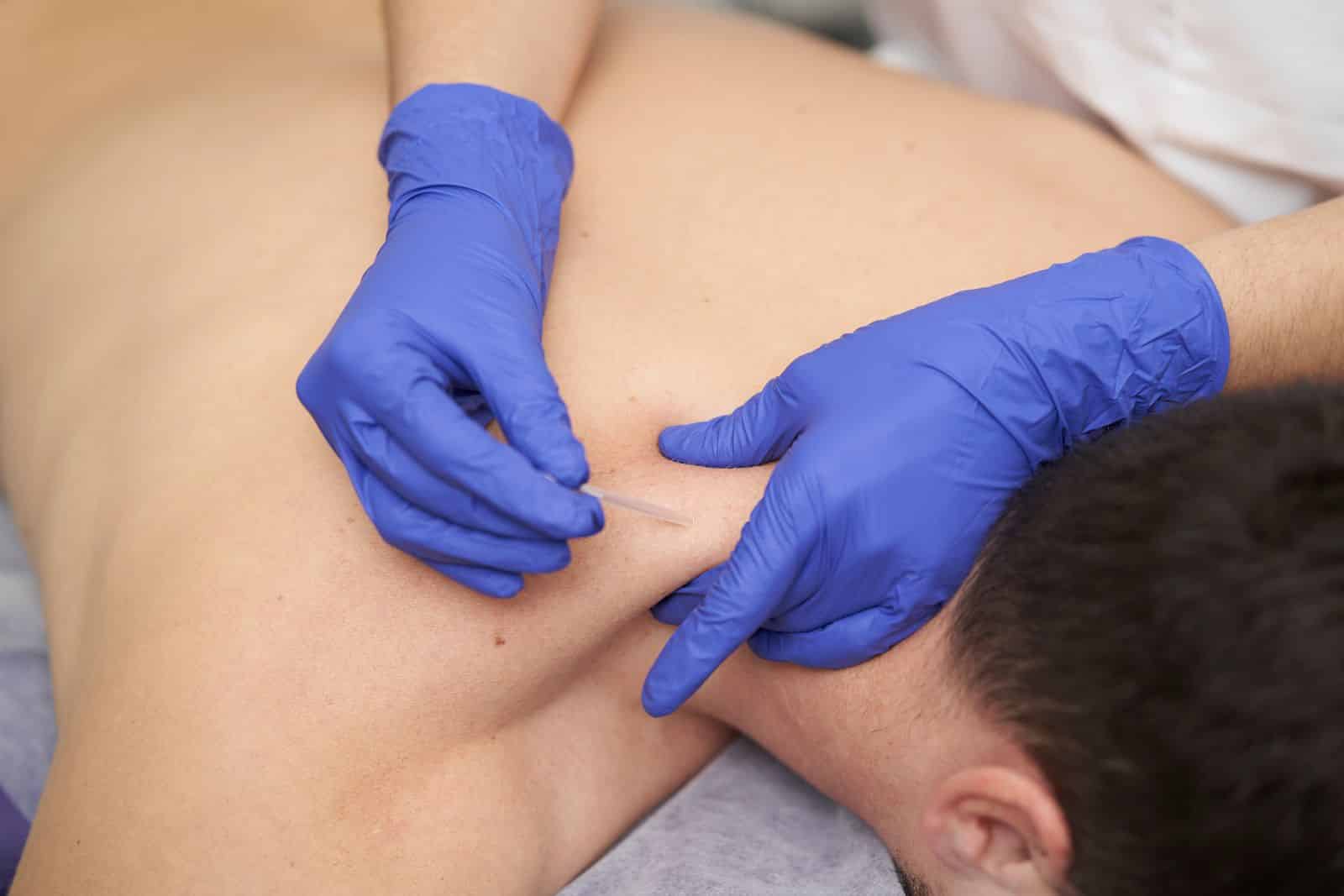
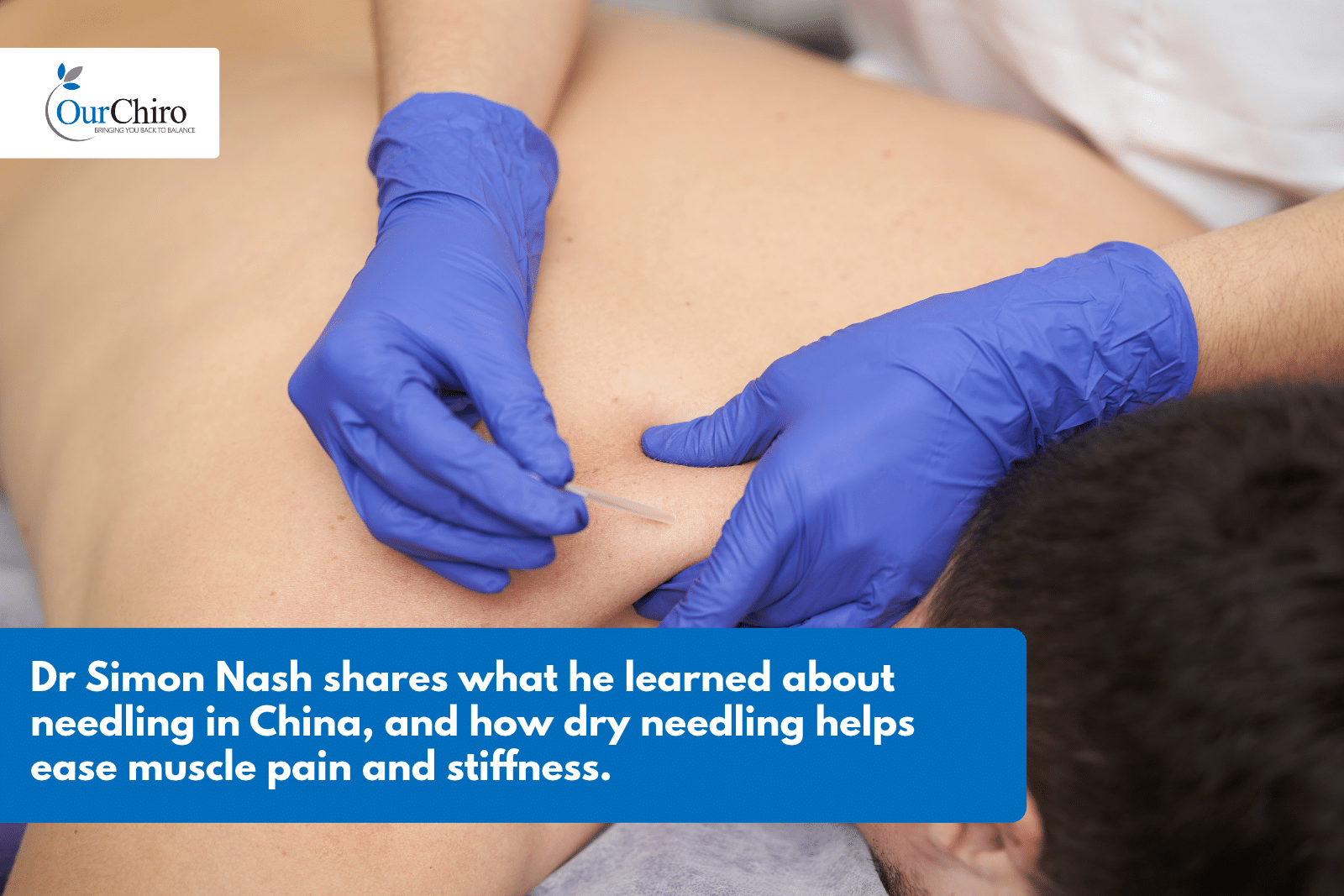
Dry needling (sometimes called trigger point dry needling or intramuscular stimulation) involves inserting a thin, solid filament needle through the skin into muscle and connective tissue. It’s called “dry” because, unlike an injection, nothing is delivered through the needle (Dunning et al., 2014).
Dry needling was originally described as a way to treat myofascial trigger points: small, tender, irritable spots within a tight band of muscle that can cause local pain and refer pain elsewhere. Research now shows the technique also stimulates nerves and connective tissue, not just trigger points, which is why modern definitions are broader (Dunning et al., 2014).
Needle placement isn’t one-size-fits-all. Dr. Nash explains that his time in China showed him “a little bit more of what you can do with a needle rather than your standard just run-of-the-mill stuff,” including “different angles that you needle at, different depths and whatnot.”
Dry Needling and Traditional Chinese Medicine
Needling therapy has its roots in traditional Chinese medicine (TCM), where acupuncture has been practised for thousands of years. As Dr. Nash puts it, “the Chinese are very famous for their TCM, the traditional Chinese medicine.”
In TCM, acupuncture is guided by a whole-body system of diagnosis. Needles are placed at specific acupuncture points along pathways known as meridians, with the aim of restoring balance in the body rather than treating one sore spot in isolation. This reflects what Dr. Nash noticed while in China: “their culture is more about healing the body rather than just trying to get pain relief.”
Dry needling and acupuncture use the same type of fine filiform needle and overlap in technique and some underlying theory, but they’re explained differently. Dry needling is reasoned through Western anatomy, physiology and research, targeting specific muscles, trigger points and nerves, while TCM acupuncture works from traditional diagnostic principles (Zhou et al., 2015). In Australia, acupuncture as a TCM practice is regulated through the Chinese Medicine Board of Australia, and “acupuncturist” is a protected title, so dry needling performed by a chiropractor is a separate musculoskeletal technique.
Dr. Nash’s time in China also showed him how needling sits within a broader approach to recovery. Technology such as shockwave and laser therapy “was still quite new in Australia” but “was being used well before over there,” particularly by those working “with athletes and training and injury recovery.” He says the clinic has “been able to bring a lot of that back.”
Common Conditions Treated with Dry Needling
Dry needling is mostly used for musculoskeletal pain where muscle tension or trigger points play a part. Common examples include:
- Neck pain and stiffness
- Tension-type headaches
- Upper back and shoulder blade pain
- Shoulder pain, including rotator cuff-related pain
- Lower back pain
- Hip, gluteal and hamstring tightness
- Tennis and golfer’s elbow
- Calf tightness, shin and heel pain
- Sporting and overuse injuries
How Chiropractors Assess Whether Dry Needling Is Right for You
Dry needling is only one tool, so your chiropractor first works out what’s driving your pain.
- History: when the pain started, what aggravates or eases it, your work, sport and training load, past injuries and general health, including bleeding disorders, blood-thinning medication, pregnancy and any fear of needles.
- Physical examination: posture and movement assessment, palpation to find tight bands and tender trigger points, and checks of joint range of motion, strength and flexibility.
- Orthopaedic and neurological tests: to see whether joints, discs, tendons or nerves are involved, rather than muscle alone.
- Imaging only when needed: X-ray, ultrasound or MRI may be recommended if there are red flags, a suspected fracture or tear, or symptoms that don’t respond to care.
- Ruling out other causes: nerve compression (such as a pinched nerve in the neck or back), tendon injuries, joint conditions and referred pain from internal organs can all mimic muscle pain and may need different care.
The Chiropractic Approach to Dry Needling
Research suggests dry needling can reduce pain and improve pressure tolerance in the short term (up to around 12 weeks) for a range of musculoskeletal conditions, and it works best as part of a broader conservative care plan (Gattie et al., 2017). At Our Chiro Brisbane, it may be combined with:
Dry Needling: fine needles placed into tight muscles and trigger points, with the angle and depth chosen to suit the tissue being treated.
Soft Tissue Therapy: hands-on massage and trigger point release to ease muscle tension and improve circulation.
Shockwave Therapy: acoustic waves applied to stubborn tendon and soft tissue problems to stimulate the body’s repair response.
Cold Laser Therapy (LLLT): low-level light applied to injured tissue to help settle pain and support healing.
Kinesio Taping: elastic tape to support muscles and joints between sessions.
Manual Adjustments and Mobilisations: gentle techniques to restore movement in stiff joints.
Exercise Prescription: stretching and strengthening to address the cause and reduce the chance of the problem coming back.
Dry needling is generally safe when performed by a trained practitioner. Mild side effects such as bruising, minor bleeding or short-lived soreness are common, while serious complications are rare.
Frequently Asked Questions (FAQs)
Q1: Is dry needling the same as acupuncture? A: Not quite. Both use the same fine needles, but dry needling is based on Western anatomy and targets specific muscles and trigger points, while traditional acupuncture follows TCM principles such as meridians and acupuncture points.
Q2: Does dry needling hurt? A: Most people feel little when the needle goes in. You may feel a brief ache, cramp or twitch in the muscle, which is a normal response.
Q3: Are there side effects? A: The most common are mild bruising, minor bleeding, and soreness for a day or two afterwards. Serious complications are rare when needling is done by a trained practitioner.
Q4: How many sessions will I need? A: It depends on your condition and how long you’ve had it. Some people notice a change after one or two sessions, while longer-standing problems usually need a course of care combined with exercise.
Q5: Who shouldn’t have dry needling? A: It may not suit people with a strong fear of needles, bleeding disorders, certain medications, infection at the treatment site, or during pregnancy. Your chiropractor will check this before treatment.
Q6: What should I do after a session? A: Keep moving gently, stay hydrated, and follow any stretches or exercises you’ve been given. Mild soreness usually settles within a day or two.
Book a Consult with Our Chiro Brisbane
If you’re dealing with muscle or joint pain that isn’t improving, take the first step towards relief. You can explore our Chiropractic Services or learn more about our non-invasive care options on our Services Page. Ready to get checked? Book an appointment with Our Chiro Brisbane today or call (07) 3257 0399.
References
Dunning, J., Butts, R., Mourad, F., Young, I., Flannagan, S., & Perreault, T. (2014). Dry needling: A literature review with implications for clinical practice guidelines. Physical Therapy Reviews, 19(4), 252–265. https://doi.org/10.1179/108331913X13844245102034
Gattie, E., Cleland, J. A., & Snodgrass, S. (2017). The effectiveness of trigger point dry needling for musculoskeletal conditions by physical therapists: A systematic review and meta-analysis. Journal of Orthopaedic & Sports Physical Therapy, 47(3), 133–149. https://doi.org/10.2519/jospt.2017.7096
Zhou, K., Ma, Y., & Brogan, M. S. (2015). Dry needling versus acupuncture: The ongoing debate. Acupuncture in Medicine, 33(6), 485–490. https://doi.org/10.1136/acupmed-2015-010911
Video Transcript
I think obviously the Chinese are very famous for their TCM, the traditional Chinese medicine, and it’s quite amazing how I guess their culture is more about healing the body rather than just trying to get pain relief. So learning different techniques with obviously our qualifications for needling in Australia, they’re great qualifications, but just seeing I guess a little bit more of what you can do with a needle rather than your standard just run-of-the-mill stuff. So different angles that you needle at, different depths and whatnot. It’s quite interesting.
So we’ve been able to bring a lot of that back, and obviously as well seeing different machines used. So things like shockwave, like laser machines, they were something that was still quite new in Australia and that sort of stuff was being used well before over there. But I guess that comes with more, I guess, the professional and sort of on the pointy edge of technology with athletes and training and injury recovery as well. Yeah.
This blog post was written and approved by Dr Simon Nash
Dr Simon Nash (M.Chiro, B.Chiro Sci.) is a chiropractor with over 20 years of clinical experience. He is a full professional member of Sports Medicine Australia (SMA) and Chiropractic Australia, and is AHPRA registered (CHI0000970189). Simon graduated from Macquarie University and is dual-registered to practise in Australia and Hong Kong.
He began his career in a multidisciplinary neurology-focused clinic in Sydney, developing a strong interest in treating headaches and migraines. Since 2006, he has operated Our Chiro Brisbane, now alongside his sisters Jessica and Rebecca.
Simon treats everyday injuries, workplace rehabilitation cases and complex presentations using a wide range of techniques. His sports medicine experience spans elite athletes including NRL and Rugby Union players, Olympians, and events like the Australian Open and Hong Kong 7s. He has also treated Guns N’ Roses during tour.


Disclaimer:
The information provided in this blog is for general informational purposes only and is not intended as medical advice. It should not be used to diagnose, treat, or replace professional consultation with a qualified healthcare provider. Always seek the advice of a chiropractor, GP, or other qualified health professional regarding any medical condition or treatment.
Click here to learn more about our editorial policy, that explains how content is created, fact-checked, and updated by qualified chiropractors and other health professionals.