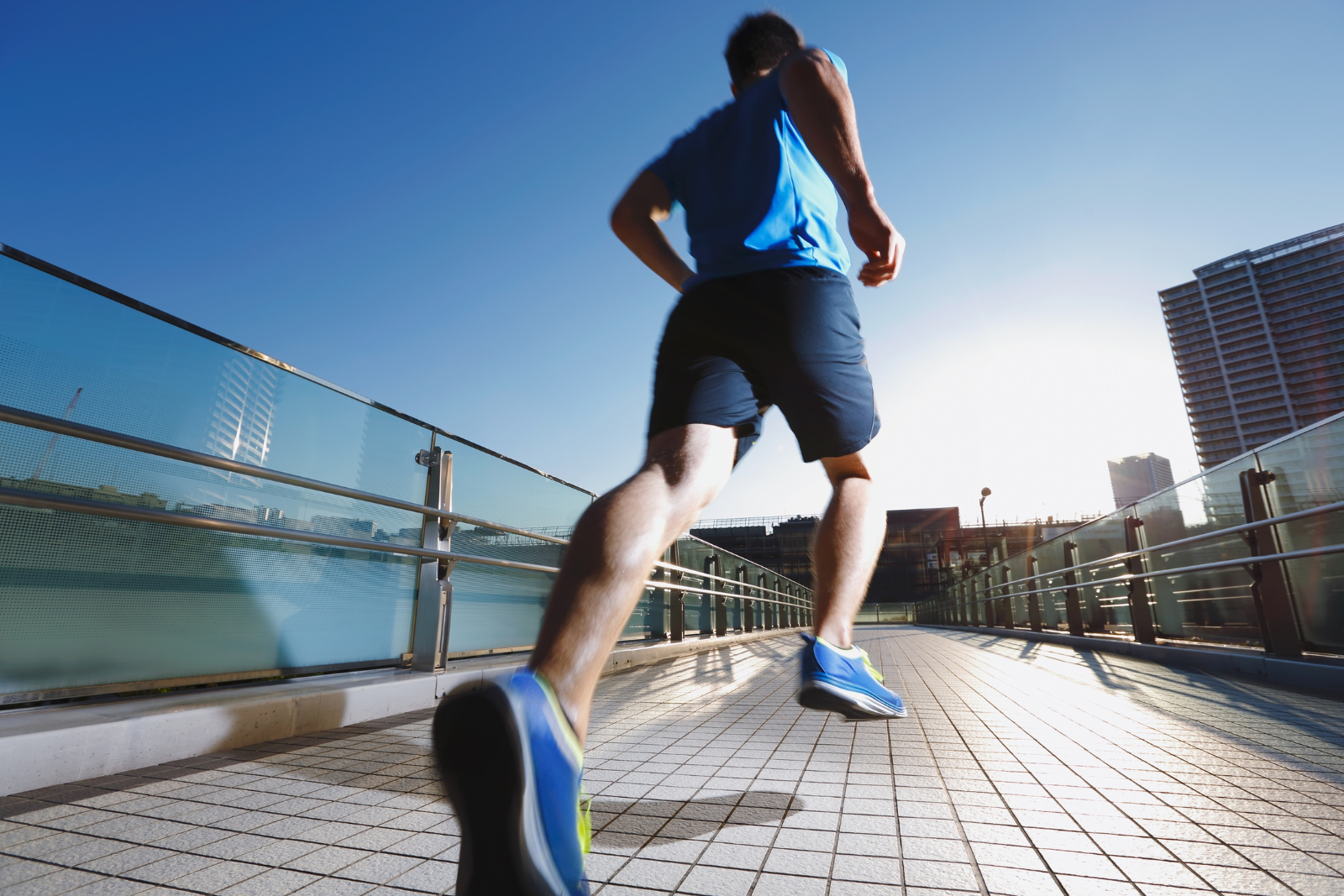
As a common physical challenge, running-related injuries and mechanical strain can cause a great deal of discomfort and disruption to daily life. These conditions affect people from all walks of life, from dedicated marathon competitors to recreational weekend runners managing sudden lower limb stiffness or back soreness. This fact sheet is designed to provide you with a comprehensive overview of running biomechanics, the mechanical loads experienced by the body, and how chiropractic care may offer a pathway to recovery and performance optimisation.
In this article, Dr. Simon Nash (Chiropractor) discusses the unique structural demands placed on runners and the various evidence-based approaches a chiropractor might take to help manage these symptoms and improve performance.
Please note: The information provided in this article is for general knowledge and informational purposes only, and does not constitute medical advice. It is essential to consult with a qualified healthcare professional for a diagnosis and personalised treatment plan.
Table of Contents
- The Biomechanical Demands of Running
- Spinal and Extremity Load in Runners
- The Chiropractic Approach to Helping Runners
- The Impact of Running Surfaces and Footwear
- Frequently Asked Questions (FAQs)
- Book a Consult with Our Chiro Brisbane
- References
- Video Transcript
The Biomechanical Demands of Running
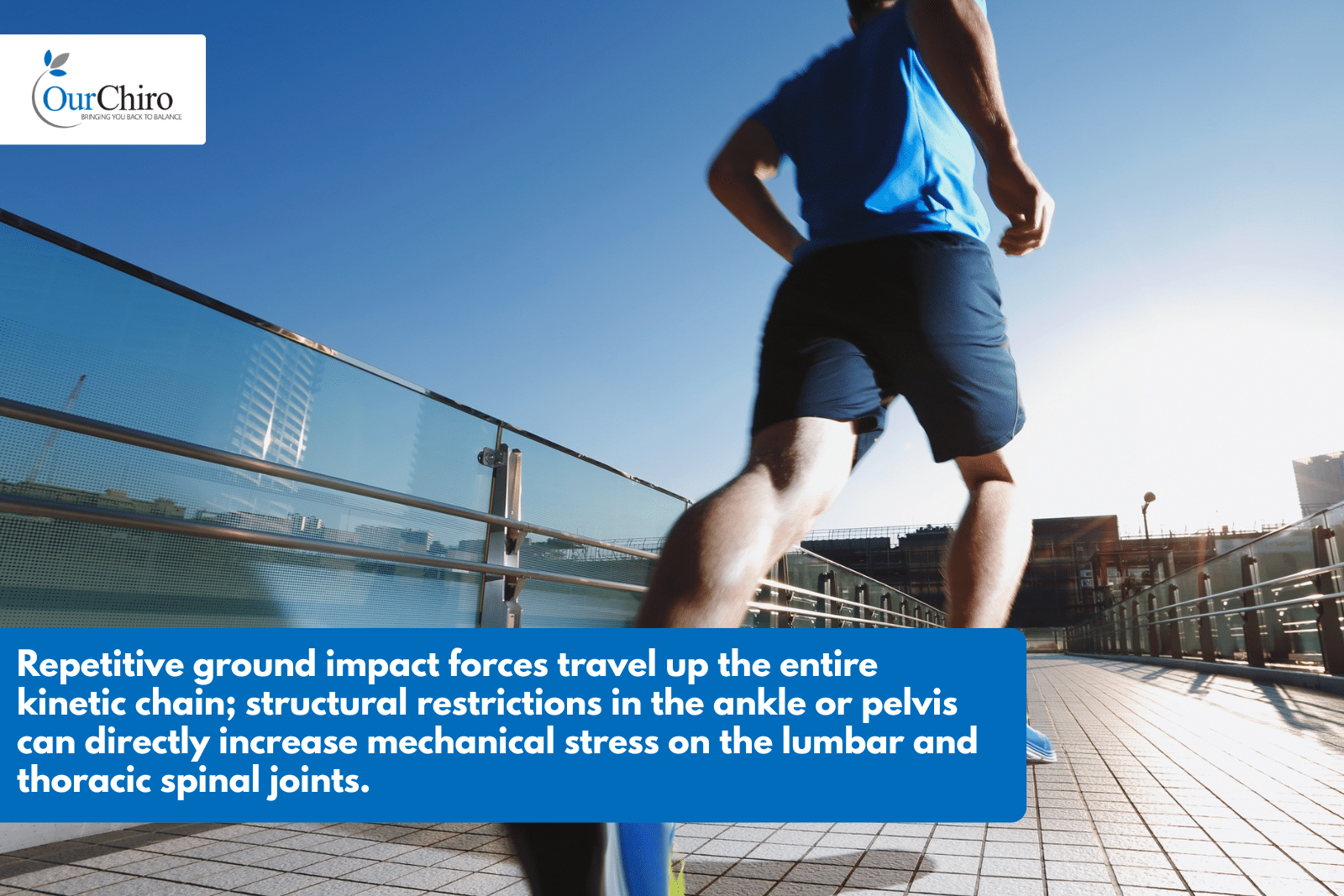
Running is an exceptional form of cardiovascular exercise, but it inherently subjects the human body to repetitive, high-impact mechanical forces. With every single stride, a runner’s body must absorb and redistribute ground reaction forces that can equal several times their total body weight. When these impacts are repeated thousands of times over the course of a single training session, even minor structural deviations can lead to cumulative tissue stress.
“So how can chiropractic help runners? Running obviously puts a fair bit of biomechanical load through the hips, the knees, the ankles.”
When an athlete runs, the lower extremities act as a dynamic kinetic chain. If there is a restriction or an imbalance at the base of this chain such as poor mobility in the ankle joints or excessive pronation of the foot the forces cannot be absorbed efficiently. As a result, adjacent structures like the knees and hip joints are forced to compensate, altering natural movement patterns and potentially accelerating joint wear or soft tissue inflammation.
Spinal and Extremity Load in Runners
While the legs are primarily responsible for propulsion and initial shock absorption, the kinetic forces do not stop at the pelvis. The spine plays a foundational role in maintaining structural equilibrium, controlling rotation, and transferring energy between the lower and upper body during the gait cycle.
Dr. Nash highlights the comprehensive physical toll that running takes on the entire skeletal frame: “obviously it also puts quite a load on the upper thoracics and the low back. So we would look at reducing inflammation and improving biomechanics around the spinal joints as well.”
The lumbar spine (low back) and the thoracic spine (mid-to-upper back) absorb substantial residual shock with every foot strike. If a runner exhibits poor core stability or an asymmetrical pelvic tilt, the spinal facet joints can become irritated and inflamed. This mechanical stress frequently manifests as localised muscular tightness, rib cage stiffness, or dull lower back aches that can severely limit an athlete’s stride length and breathing efficiency.
The Chiropractic Approach to Helping Runners
Chiropractic care focuses on identifying the root cause of these movement restrictions rather than merely addressing surface-level discomfort. By restoring proper joint alignment, improving soft tissue compliance, and enhancing nervous system coordination, manual therapies aim to bring an athlete back to peak biomechanical efficiency.
Clinical research highlights the systemic benefits of manual therapies for managing musculoskeletal conditions. A peer-reviewed study published in the Journal of Orthopedics and Sports Medicine demonstrated that manual spinal adjustments and conservative care pathways are highly effective at reducing pain scores and restoring functional movement in individuals suffering from mechanical low back strain (Wong et al., 2023)
Because every athlete presents with a distinct physical background and set of training goals, care plans must be highly customised.
“A runner’s body behaves like a finely tuned machine. If one component is misaligned or tracking poorly, the entire system suffers. Our goal is not just to provide temporary pain relief, but to thoroughly evaluate the joint mechanics from the feet up to the spine, ensuring the body can handle the repetitive loads of training without breaking down.” Dr. Simon Nash (Chiropractor)
To achieve these optimal outcomes, a multimodality treatment strategy is often deployed in the clinic:
- Joint Mobilisations and Adjustments: Controlled manual techniques directed at restricted spinal or extremity joints to restore normal range of motion and reduce local mechanical stress.
- Soft Tissue Techniques: Focused muscle release therapies designed to eliminate trigger points, reduce painful muscle spasms, and improve flexibility.
- Dry Needling: The insertion of fine, sterile needles into hypertonic muscle bands to stimulate a local healing response and alleviate chronic tension.
- Taping Protocols: The application of flexible Kinesio taping or rigid supportive taping to assist with joint stability, improve spatial awareness (proprioception), and manage localised swelling.
- Advanced Modalities: The utilisation of innovative tools like Low-Level Laser Therapy (Cold Laser) or Shockwave therapy to manage pain and accelerate tissue repair. A review in the Journal of Pain Research confirms that low-level laser therapy is a highly effective, non-invasive method for down-regulating inflammatory pathways and accelerating recovery in musculoskeletal tissues (B Cotler, 2015)
The Impact of Running Surfaces and Footwear
A critical component of a comprehensive biomechanical assessment involves analysing the environmental and external factors unique to each runner. The human body adapts specifically to the forces it encounters, meaning that training environments dictate how stress is distributed across the musculoskeletal system.
“Obviously make sure that their shoes fit well and also work out what type of running they’re doing,” explains Dr. Nash.
“It makes a big difference whether they’re road runners or whether they’re running on a track or whether they’re trail runners or running on grass. All those different factors have different contributions to changes in biomechanics.”
Concrete and asphalt surfaces offer virtually no compliance, returning maximum impact energy directly back into the joints of the lower limb. Conversely, trail running reduces direct vertical shock but forces the ankles and hips to constantly adapt to uneven, shifting terrain. Track running involves repetitive turning in a single direction, which can induce asymmetrical muscular development.
Furthermore, worn-out or structurally inappropriate footwear can alter an individual’s natural foot strike. A lack of structural support can cause the arches of the feet to collapse excessively, forcing the tibia and femur to rotate inward, which ultimately destabilises the pelvis and lower back. Addressing these issues alongside hands-on clinical care helps ensure long-term injury prevention.
Frequently Asked Questions (FAQs)
Q1: How can chiropractic adjustments help improve my running performance? A: Chiropractic adjustments aim to correct joint restrictions throughout the spine and lower limbs. When your joints move through their full, unrestricted range of motion, your running gait becomes more efficient, fluid, and symmetrical, which can optimise energy expenditure and reduce injury risk.
Q2: Should I see a chiropractor if I am not currently experiencing running pain? A: Yes, preventative care is common among athletes. A biomechanical assessment can help identify subclinical joint restrictions, muscle imbalances, or postural asymmetries before they develop into painful injuries that interrupt your training schedule.
Q3: What is the difference between Kinesio taping and rigid taping for runners? A: Kinesio taping is flexible and elastic; it is primarily used to provide gentle support, improve neuromuscular feedback, and aid lymphatic drainage without restricting movement. Rigid taping is inelastic and is utilised to physically restrict a joint’s range of motion to protect compromised ligaments or tendons during acute recovery.
Q4: Can a chiropractor help with extremity issues like knee or ankle pain? A: Absolutely. While chiropractors are well-known for spinal care, they are fully trained to assess and treat extremity joints. Issues like runner’s knee, ankle stiffness, and plantar fasciitis are routinely managed using mobilisations, soft tissue therapies, and tailored rehabilitation exercises.
Q5: How do I know if my running shoes are causing my back pain? A: If your running shoes have logged over 500–800 kilometres, or if the soles show uneven wear patterns, they may no longer absorb impact effectively. A lack of mid-sole cushioning or structural stability causes shock waves to travel further up the kinetic chain, frequently resulting in lower back soreness.
Q6: What role does cold laser therapy play in treating running injuries? A: Cold laser therapy uses specific wavelengths of light to penetrate deep into damaged tissues. It stimulates cellular energy production, which helps accelerate the body’s natural healing cascade, reduces localised inflammation, and provides non-invasive pain relief for acute strains or tendon issues.
Book a Consult with Our Chiro Brisbane
We understand how deeply frustrating it can be to watch your running goals slip out of reach due to persistent, nagging injuries. Dealing with a stubborn knee ache that flares up a few kilometres in, or feeling your lower back tighten up so badly after a session that it hurts just to sit at your desk, can leave you feeling exhausted and worn down. Running is more than just exercise it is your time to clear your mind, de-stress, and push your limits. Being forced to sit on the sidelines is incredibly tough.
At Our Chiro Brisbane, our dedicated team is here to help you stop guessing about your injuries and start moving with confidence again. We take the time to evaluate your entire body, analysing your spinal alignment, joint mobility, and muscular balance to uncover the true root cause of your biomechanical issues.
Whether you require structural support for a chronic lower limb strain or specialised performance care through our comprehensive Chiropractic Services, we will build a supportive, evidence-based management plan tailored to your unique stride. Let us help you take the stress off your joints, restore your natural mobility, and safely get you back on the track, road, or trail.
Take the first step toward pain-free movement and book your consultation with Our Chiro Brisbane today or call (07) 3257 0399
References
B Cotler, H. (2015). The Use of Low Level Laser Therapy (LLLT) For Musculoskeletal Pain. MOJ Orthopedics & Rheumatology, 2(5). https://doi.org/10.15406/mojor.2015.02.00068, 8, 583–592. https://www.ncbi.nlm.nih.gov/pmc/articles/PMC4743666/
Wong, E., Lee, W. T., Chau, C., Cheng, H. Y., & Kwok, R. (2023). Comparison of Effectiveness of Chiropractic Spinal Manipulation and Conservative Therapy for Low Back Pain. Journal of Orthopaedics and Sports Medicine, 05(01). https://doi.org/10.26502/josm.511500072
Video Transcript
A lot of questions that we get are from runners. So how can chiropractic help runners? Um, running obviously puts a fair bit of biomechanical load through the hips, the knees, the ankles. So we would look at reducing inflammation and using different techniques around those said structures. Uh, obviously it also puts quite a load on the upper thoracics and the low back. So we would look at reducing inflammation and improving biomechanics around the spinal joints as well. There’s so many different techniques that we would use. We would also give the patients, um, some techniques and some rehabilitation exercises and prevention exercises to do at home. Um, obviously make sure that their shoes fit well and also work out what type of running they’re doing because it would make, it makes a big difference whether they’re road runners or whether they’re running on a track or whether they’re trail runners or running on grass. All those different factors have different, um, different contributions to changes in biomechanics. Our techniques that we would use would be mobilizations, adjustments. We would use dry needling, uh, kinesio taping, rigid taping if necessary. Um, a lot of muscle release techniques. We could use shockwave therapy, cold laser therapy, um, just to name a few, but obviously depends on, um, on the type of running, how long patients are running for. So chiropractic can really help get patients to a great biomechanical point and really help with running and running techniques.
This blog post was written and approved by Dr Simon Nash
Dr Simon Nash (M.Chiro, B.Chiro Sci.) is a chiropractor with over 20 years of clinical experience. He is a full professional member of Sports Medicine Australia (SMA) and Chiropractic Australia, and is AHPRA registered (CHI0000970189). Simon graduated from Macquarie University and is dual-registered to practise in Australia and Hong Kong.
He began his career in a multidisciplinary neurology-focused clinic in Sydney, developing a strong interest in treating headaches and migraines. Since 2006, he has operated Our Chiro Brisbane, now alongside his sisters Jessica and Rebecca.
Simon treats everyday injuries, workplace rehabilitation cases and complex presentations using a wide range of techniques. His sports medicine experience spans elite athletes including NRL and Rugby Union players, Olympians, and events like the Australian Open and Hong Kong 7s. He has also treated Guns N’ Roses during tour.


Disclaimer:
The information provided in this blog is for general informational purposes only and is not intended as medical advice. It should not be used to diagnose, treat, or replace professional consultation with a qualified healthcare provider. Always seek the advice of a chiropractor, GP, or other qualified health professional regarding any medical condition or treatment.
Click here to learn more about our editorial policy, that explains how content is created, fact-checked, and updated by qualified chiropractors and other health professionals.