
As a common cause of shoulder disability, subacromial impingement syndrome can make the simplest daily tasks like reaching for a jar on a high shelf or getting dressed in the morning feel like an uphill battle. This condition affects everyone from office workers to overhead athletes, often resulting in a nagging ache that just won’t quit.
This fact sheet is designed to provide you with a comprehensive overview of subacromial impingement, why it occurs, and how chiropractic care can help you regain your range of motion.
In this article, Dr. Simon Nash (Chiropractor) discusses the mechanics of shoulder impingement and the various evidence-based modalities used at Our Chiro Brisbane to facilitate recovery.
Medical Disclaimer: The information provided in this article is for general knowledge and informational purposes only and does not constitute medical advice. It is essential to consult with a qualified healthcare professional for a diagnosis and personalised treatment plan.
Table of Contents
- Understanding Subacromial Impingement Syndrome
- Common Causes and Related Conditions
- The Chiropractic Approach to Shoulder Pain
- Evidence-Based Modalities for Recovery
- Frequently Asked Questions (FAQs)
- Book a Consult with Our Chiro Brisbane
- References
- Video Transcript
Understanding Subacromial Impingement Syndrome
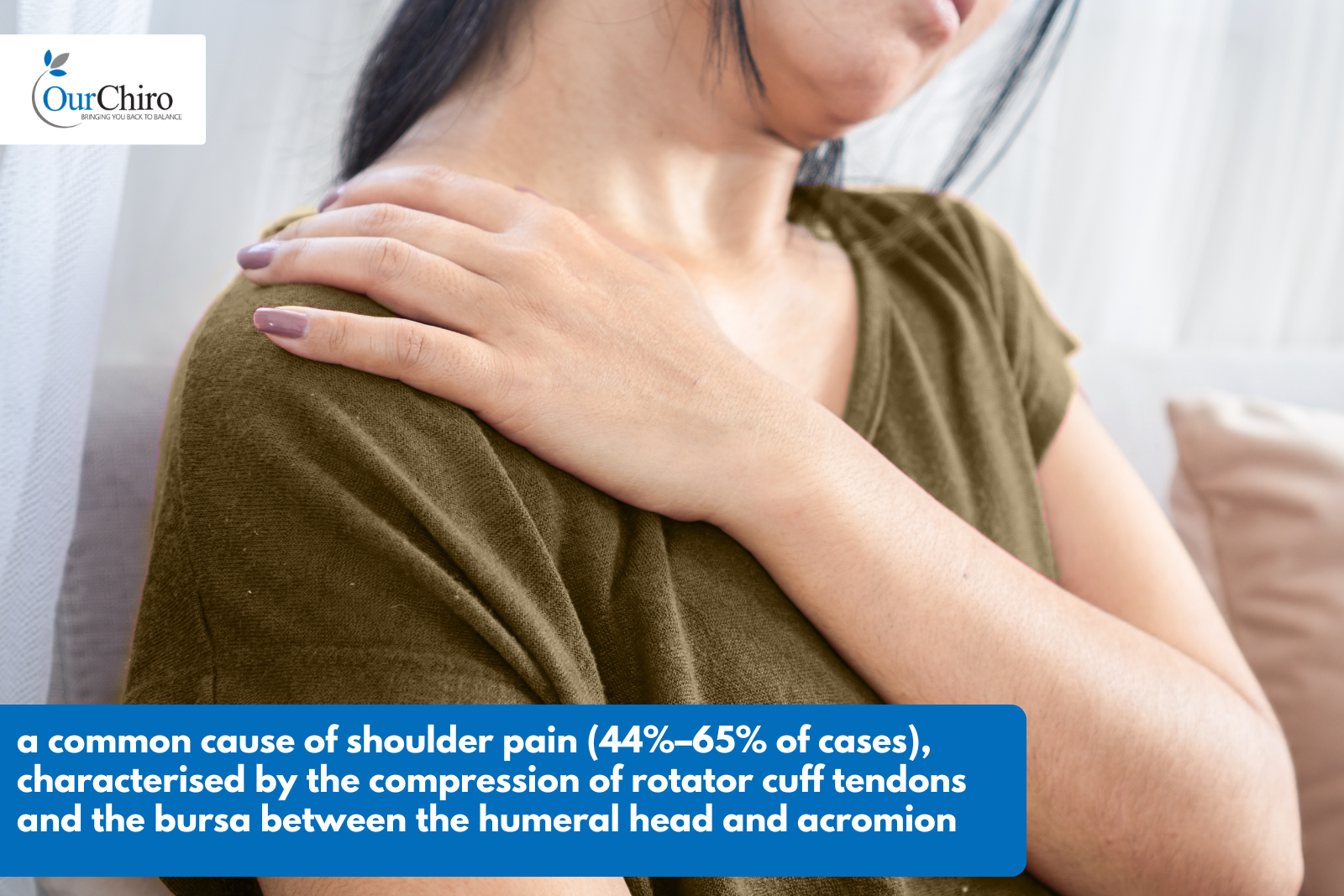
The shoulder is one of the most complex and mobile joints in the human body. However, this mobility comes at a cost of stability. Subacromial impingement syndrome (SIS) occurs when the tendons of the rotator cuff muscles become irritated and inflamed as they pass through the subacromial space a narrow passage beneath the acromion (the bony point of the shoulder).
“A question that we often get at the clinic is what’s subacromial impingement syndrome?” notes Dr. Nash. “It’s where you get an inflammation and irritation of the rotator cuff tendons. That’s where they pass through the subacromial space, resulting in pain and reduced movement of the shoulder.”
When this space is compromised, the tendons or the bursa (a fluid-filled sac that acts as a cushion) can become pinched or “impinged” against the bone, especially when the arm is raised.
Common Causes and Related Conditions
Subacromial impingement isn’t usually a single event but rather a clinical spectrum. It often involves a combination of structural issues and mechanical dysfunction. Dr. Nash identifies several key conditions that often overlap with impingement:
- Rotator Cuff Tendinosis: This refers to the wear and tear of the tendons over time. Unlike acute tendonitis, tendinosis is a chronic condition where the collagen in the tendon begins to break down.
- Subacromial Bursitis: The bursa is designed to reduce friction. When it becomes inflamed due to repetitive overhead activity, it takes up more space, further narrowing the subacromial passage.
- Postural Dysfunction: If the shoulder blade (scapula) does not move correctly or if a patient has a “rounded shoulder” posture, the acromion can tilt forward, mechanically reducing the space available for the tendons to move.
“You could have a thing such as rotator cuff tendinosis, a subacromial bursitis or irritation around that area,” Dr. Nash explains. “So we’re looking at where you’re having a reduction in movement and also pain around the shoulder area.”
The Chiropractic Approach to Shoulder Pain
Many people are surprised to learn that chiropractors treat more than just the spine. In fact, shoulder issues are some of the most common peripheral joint complaints we manage at Our Chiro Brisbane. Our approach focuses on restoring the biomechanics of the entire shoulder girdle, including the neck, mid-back (thoracic spine), and the shoulder joint itself.
“Effective shoulder treatment isn’t just about the joint itself; it’s about how the shoulder blade interacts with the ribcage and how the nervous system controls those movements,” says Dr. Simon Nash (Chiropractor).
Research supports this multimodal approach. A study published in the Journal of Manipulative and Physiological Therapeutics found that manual therapy, including spinal and peripheral manipulation combined with exercise, is significantly effective in improving pain and function in patients with shoulder impingement.(Zeynab Azin et al., 2023)
Evidence-Based Modalities for Recovery
Because the cause of impingement can vary, the treatment must be multifaceted. Dr. Nash highlights several techniques that can be used to alleviate pain and restore function:
Advanced Soft Tissue Therapies:
- Dry Needling: This involves inserting fine needles into “trigger points” or tight bands of muscle to release tension and improve blood flow to the rotator cuff.
- Kinesio Taping: This special elastic tape helps support the joint and provides sensory feedback to the brain, encouraging better posture and movement patterns.
- Technological Interventions: For patients dealing with significant inflammation or chronic tissue changes, we utilise modern technology to speed up the healing process.
- Cold Laser Therapy: This is a non-invasive, pain-free treatment that uses specific wavelengths of light to stimulate cellular repair and reduce inflammation.
- Shockwave Therapy: Particularly useful for chronic tendinosis, shockwave therapy sends acoustic waves into the tissue to “re-start” the healing process in stubborn areas.
- Manual Adjustments and Mobilisation
Dr. Nash notes: “As a chiropractor, we would look at taking away that pain and irritation by a certain number of different techniques… We would do manual adjustments, mobilisations… depending on the type and the cause of that irritation.”
By adjusting the joints of the neck and upper back, we can ensure the nerves supplying the shoulder are functioning optimally, while soft tissue therapy addresses the muscular imbalances contributing to the impingement.
“When we restore the proper movement to the joints and the soft tissues, the inflammation in the subacromial space often subsides because the mechanical ‘pinching’ is removed,” explains Dr. Simon Nash (Chiropractor).
Another peer-reviewed study in the Journal of Physical Therapy Science indicates that manual therapy and specific scapular strengthening exercises are more effective than general exercise alone for SIS. (Melo et al., 2024)
Frequently Asked Questions (FAQs)
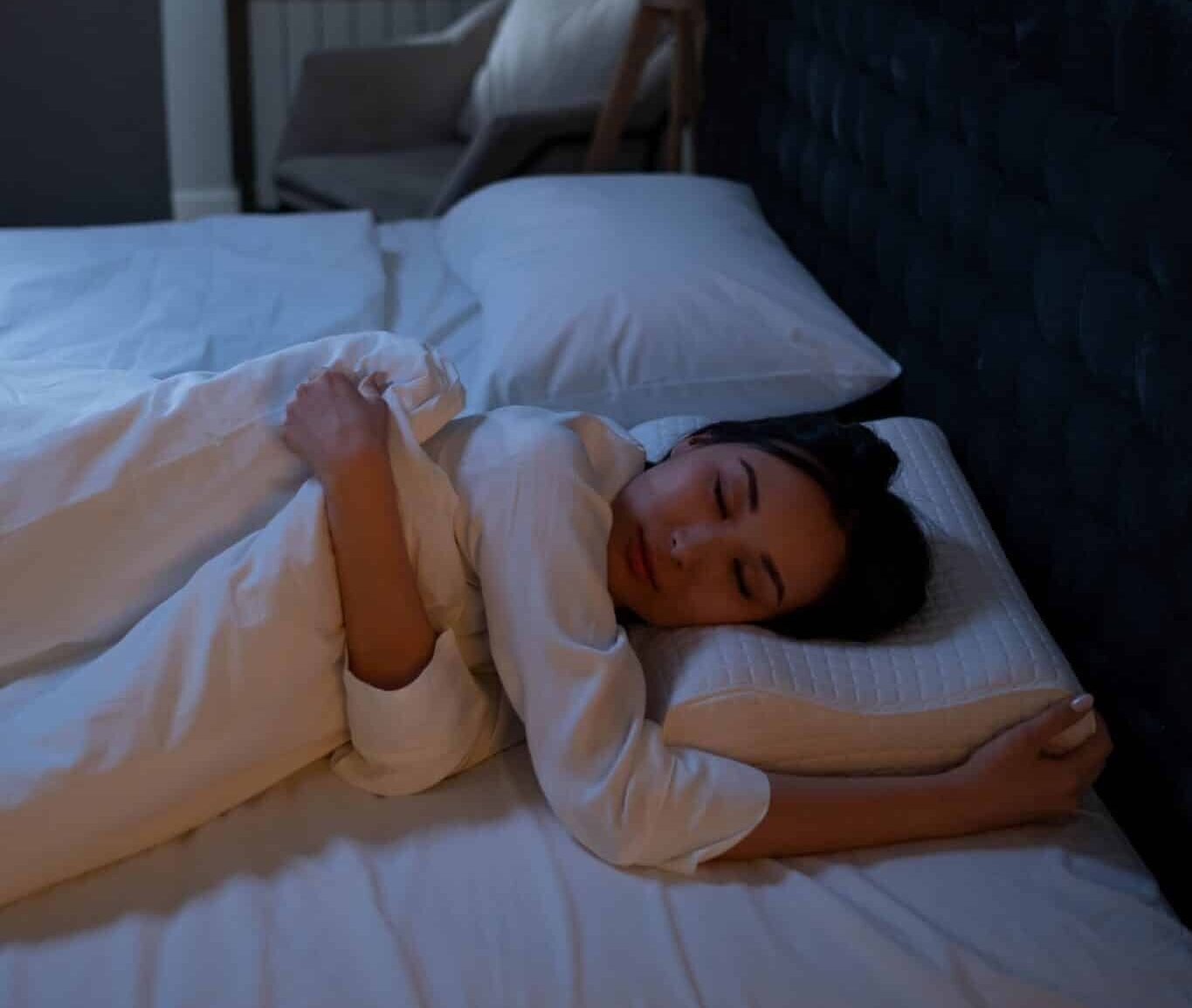
Q1: Why does my shoulder hurt more at night? A: When you lie down, the effects of gravity change, and the humerus can shift upwards, further compressing the subacromial space. Inflammation also tends to “pool” when the joint is inactive.
Q2: Can I just rest it until the pain goes away? A: While rest helps acute inflammation, it doesn’t fix the underlying mechanical issue. Without correcting the movement pattern, the pain often returns as soon as you resume normal activity.
Q3: Is shoulder impingement the same as a frozen shoulder? A: No. Impingement is a mechanical “pinching” during movement. Frozen shoulder (adhesive capsulitis) involves the joint capsule tightening and thickening, leading to a severe loss of movement in all directions.
Q4: Will I need surgery? A: Most cases of subacromial impingement respond very well to conservative care like chiropractic, exercise, and soft tissue therapy. Surgery is typically a last resort if months of conservative treatment fail.
Q5: What exercises should I avoid? A: Generally, heavy overhead pressing or “upright rows” can exacerbate impingement. Your chiropractor will provide a specific list of “safe” movements tailored to your injury stage.
Q6: How long does recovery take? A: Minor irritations can resolve in a few weeks. However, if there is underlying tendinosis or chronic bursitis, it may take 6 to 12 weeks of consistent care to fully restore function.
Book a Consult with Our Chiro Brisbane
We know how frustrating it is when you can’t play your favourite sport, lift your children, or even sleep through the night because of shoulder pain. That constant, sharp “catch” in your shoulder isn’t just an annoyance it’s your body telling you that something is out of balance.
At Our Chiro Brisbane, we don’t just look at the pain; we look at you. We understand the frustration of limited mobility, and we are dedicated to helping you move freely again. Our team uses a combination of gentle chiropractic care, advanced laser therapy, and personalised rehabilitation to get you back to your best.
Don’t let shoulder pain hold you back any longer. Book an appointment with Our Chiro Brisbane today or call 07 3257099
References
Zeynab Azin, Kamali, F., Nasrin Salehi Dehno, & Abolahrari-Shirazi, S. (2023). Comparison of Manual Therapy Technique to Therapeutic Exercise in the Treatment of Patients With Subacromial Impingement Syndrome: A Randomized Clinical Trial. Journal of Manipulative and Physiological Therapeutics, 46(2), 98–108. https://doi.org/10.1016/j.jmpt.2023.06.002
Melo, A. S. C., Moreira, J. S., Afreixo, V., Moreira-Gonçalves, D., Donato, H., Cruz, E. B., Vilas-Boas, J. P., & Sousa, A. S. P. (2024). Effectiveness of specific scapular therapeutic exercises in patients with shoulder pain: a systematic review with meta-analysis. JSES Reviews, Reports, and Techniques, 4(2). https://doi.org/10.1016/j.xrrt.2023.12.006
Video Transcript
A question that we often get at the clinic is what’s subacromial impingement syndrome? So it’s where you get an inflammation and irritation of the rotator cuff tendons. That’s where they pass through the subacromial space, resulting in pain and reduced movement of the shoulder. So you could have a thing such as rotator cuff tendinosis, um, a subacromial bursitis or irritation around that area. So we’re looking at where you’re having a reduction in movement and also pain around the shoulder area. So as a chiropractor, we would look at taking away that pain and irritation by a certain number of different techniques, such as dry needling. We might do some cold laser, sometimes some shockwave therapy. We would do manual adjustments, mobilisations, some kinesio taping therapy, depending on the type and the cause of that irritation with the subacromial impingement syndrome. It’s relatively common to treat, and the techniques we use are very effective and usually help reduce pain quite quickly.
This blog post was written and approved by Dr Simon Nash
Dr Simon Nash (M.Chiro, B.Chiro Sci.) is a chiropractor with over 20 years of clinical experience. He is a full professional member of Sports Medicine Australia (SMA) and Chiropractic Australia, and is AHPRA registered (CHI0000970189). Simon graduated from Macquarie University and is dual-registered to practise in Australia and Hong Kong.
He began his career in a multidisciplinary neurology-focused clinic in Sydney, developing a strong interest in treating headaches and migraines. Since 2006, he has operated Our Chiro Brisbane, now alongside his sisters Jessica and Rebecca.
Simon treats everyday injuries, workplace rehabilitation cases and complex presentations using a wide range of techniques. His sports medicine experience spans elite athletes including NRL and Rugby Union players, Olympians, and events like the Australian Open and Hong Kong 7s. He has also treated Guns N’ Roses during tour.


Disclaimer:
The information provided in this blog is for general informational purposes only and is not intended as medical advice. It should not be used to diagnose, treat, or replace professional consultation with a qualified healthcare provider. Always seek the advice of a chiropractor, GP, or other qualified health professional regarding any medical condition or treatment.
Click here to learn more about our editorial policy, that explains how content is created, fact-checked, and updated by qualified chiropractors and other health professionals.