While many people associate chiropractic care solely with spinal adjustments, the health of your muscles, tendons, and ligaments is just as vital to pain-free movement. Soft tissue dysfunction can lead to persistent issues ranging from sporting injuries to chronic office-related tension. This fact sheet provides a detailed look at how soft tissue therapy and advanced techniques like ART can help restore your body’s natural function.
In this article, Dr. Simon Nash (Chiropractor) discusses the clinical application of soft tissue work, the science behind trigger points, and how active movement can accelerate recovery for common conditions like tennis elbow and hamstring strains.
Medical Disclaimer: The information provided in this article is for general knowledge and informational purposes only, and does not constitute medical advice. It is essential to consult with a qualified healthcare professional for a diagnosis and personalised treatment plan.
Table of Contents
- Understanding Soft Tissue Therapy
- The Science of Trigger Points
- Active Release Technique (ART) Explained
- Clinical Applications: From Tennis Elbow to Hamstring Injuries
- Why Combined Treatment Works
- Frequently Asked Questions (FAQs)
- Book a Consult with Our Chiro Brisbane
- References
- Video Transcript
Understanding Soft Tissue Therapy
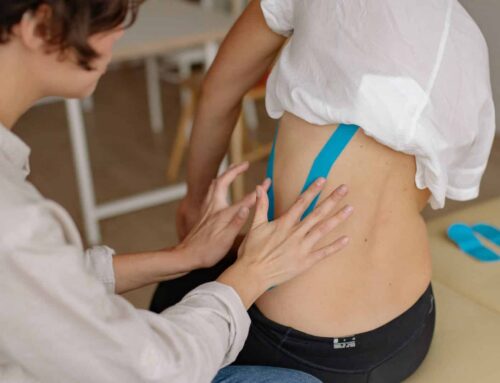
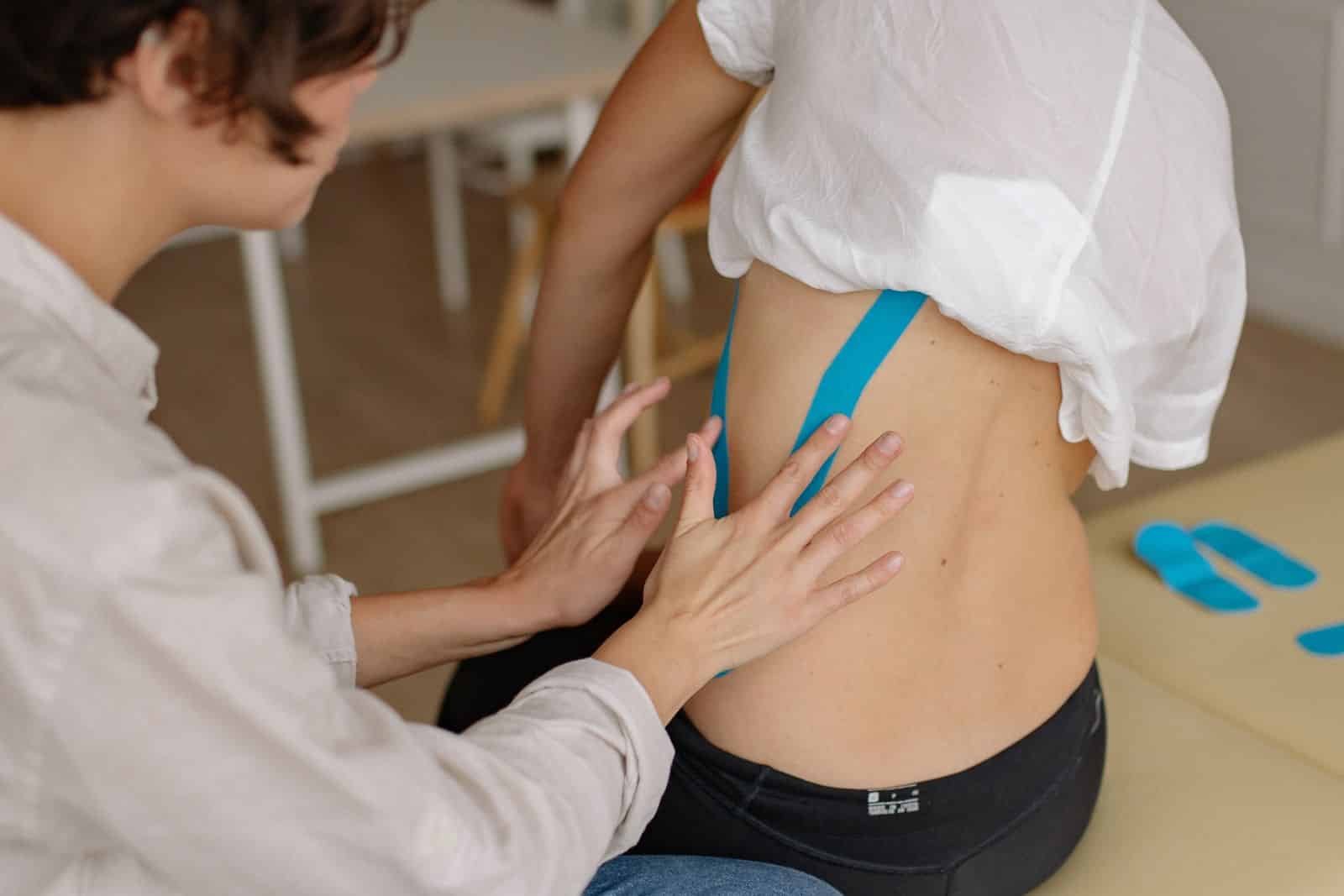
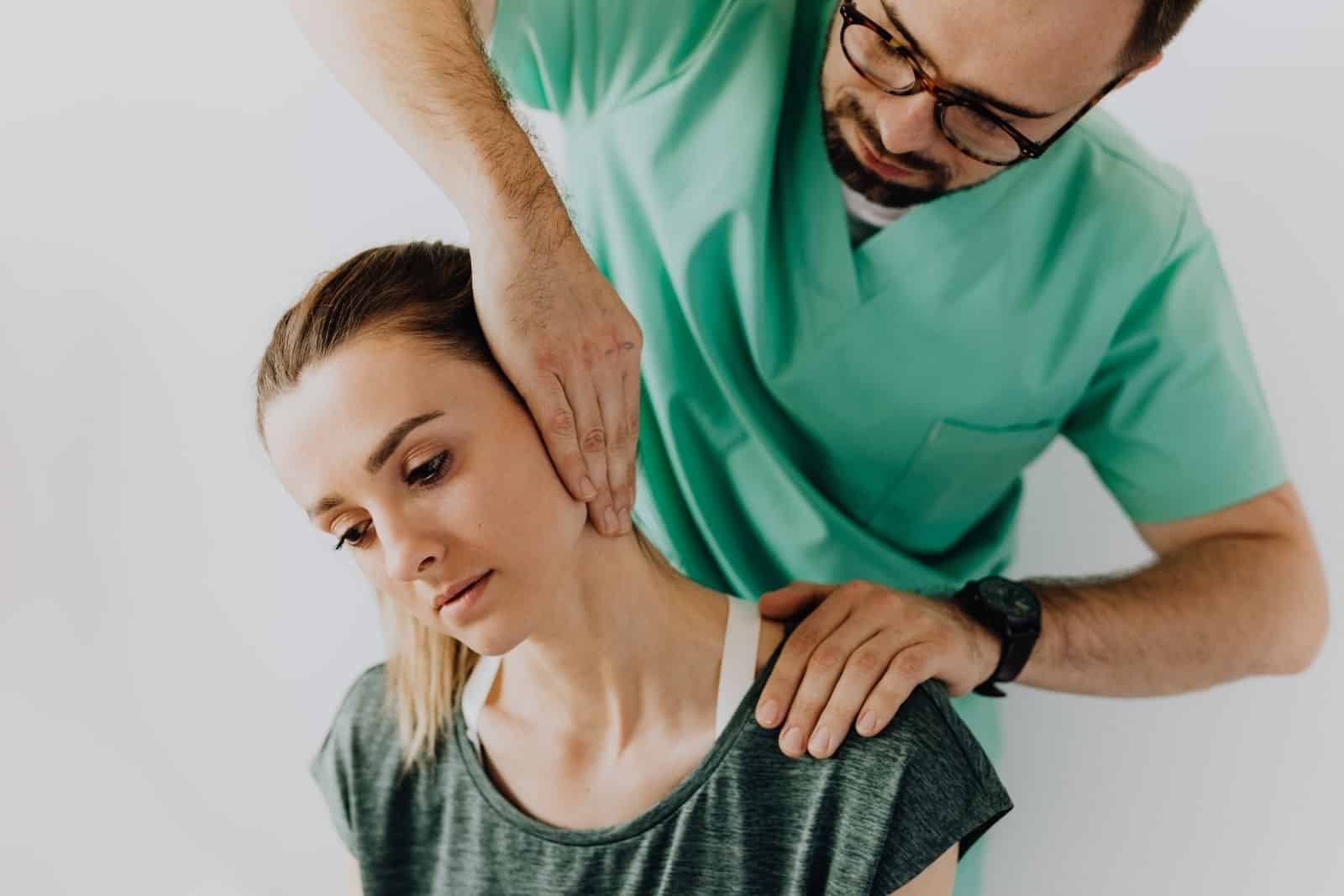
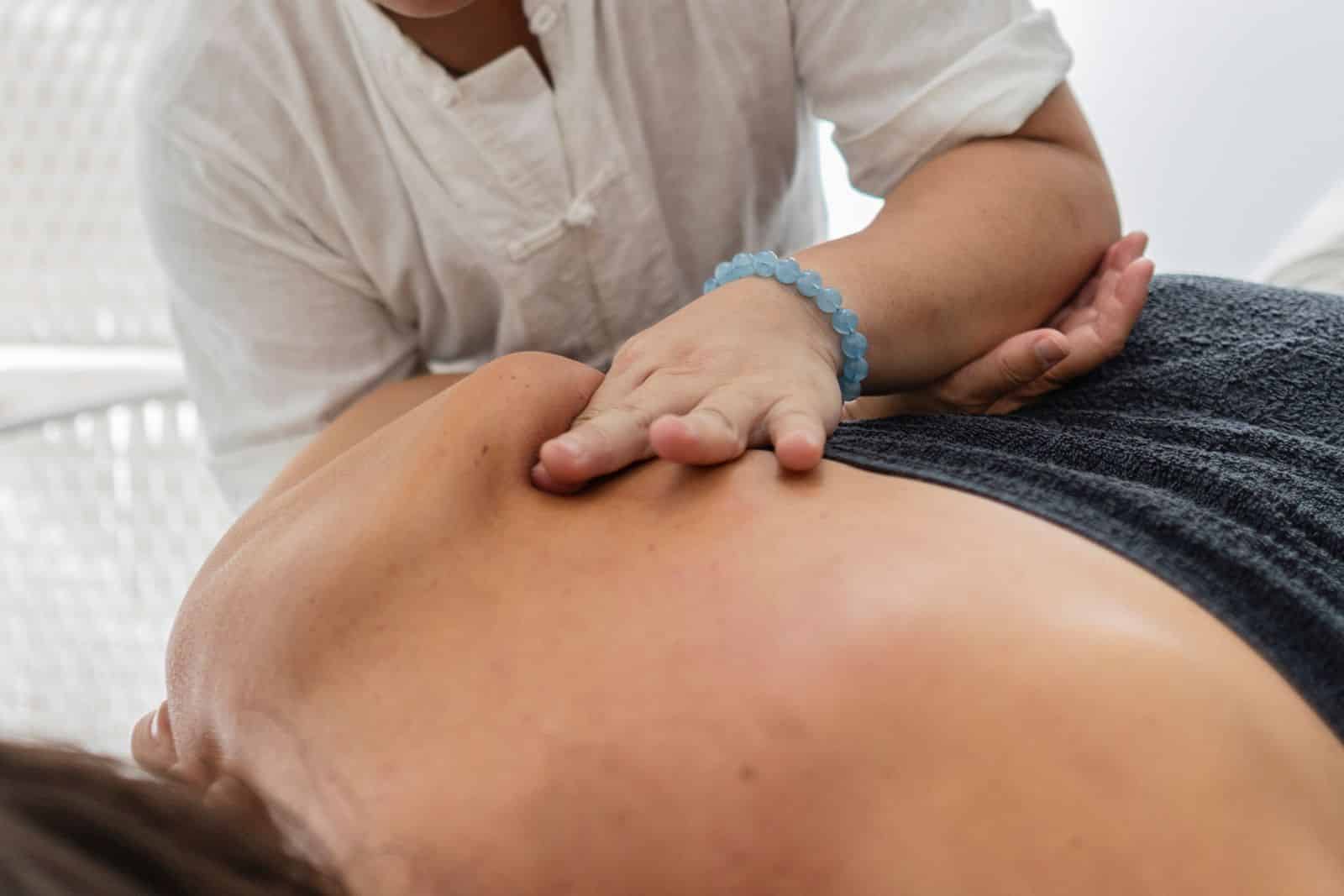
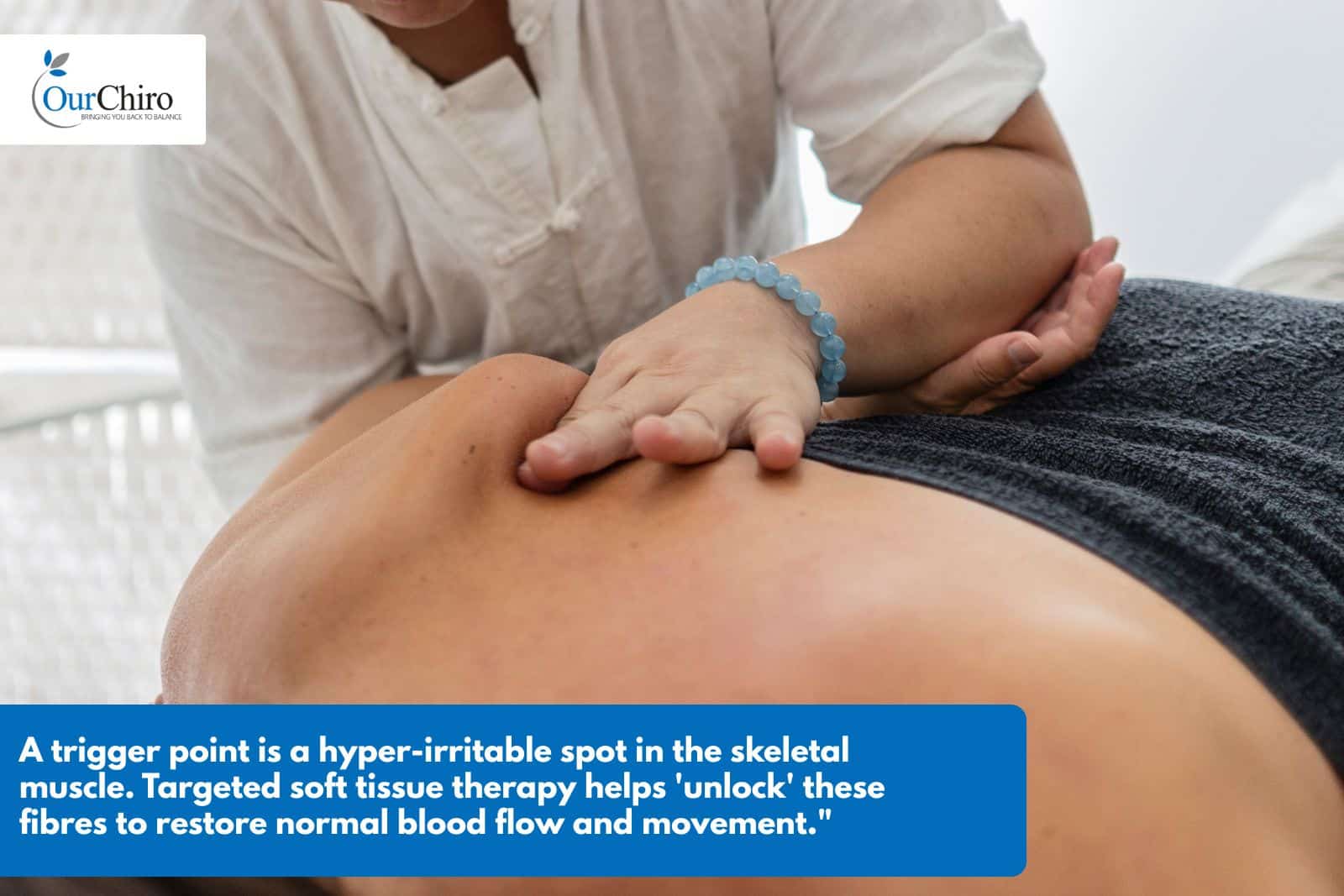
Soft tissue therapy is a clinical modality used at Our Chiro Brisbane to address issues involving muscles, lymph, and tendons. Unlike a general relaxation massage, this targeted approach is designed to improve range of motion, reduce pain, and facilitate healing in specific anatomical structures.
“That encompasses a lot of different treatments with soft tissue such as muscle, lymph or tendons,” explains Dr. Nash. “Examples of those would be your traditional massage… we would do probably more specific movements and work around trigger points.”
By focusing on these specific tissues, practitioners can address the underlying mechanical tension that often contributes to joint pain and restricted mobility.
The Science of Trigger Points
A core component of effective Soft Tissue Therapy is the identification and treatment of trigger points. These are localised areas of hyper-irritability within a muscle often described by patients as “knots” that can cause significant discomfort and even referred pain in other parts of the body.
Dr. Nash describes them simply: “Trigger points are little areas on the body that are quite tender and we would work around those.”
When these areas are released through sustained pressure or specific movement, the muscle can return to its optimal resting length, reducing the pull on attached joints and improving local blood circulation.
“Many patients are surprised to find that the source of their pain isn’t where they feel it,” says Dr. Simon Nash (Chiropractor). “By locating these tender trigger points, we can often ‘unlock’ a joint that has been restricted for months.”
Active Release Technique (ART) Explained
One of the most effective tools in the modern chiropractor’s arsenal is the Active Release Technique (ART). This is a patented, movement-based massage technique that is highly effective for treating repetitive strain injuries and adhesions.
“The other example is a thing called ART or Active Release Technique,” Dr. Nash explains. “That’s a technique where you would get the patient to actually move in certain movements holding a certain amount of pressure on the muscle or the soft tissue.”
By combining manual tension with patient movement, the practitioner can effectively “lengthen” the tissue and break down adhesions—bands of scar-like tissue that cause muscles to stick together and limit movement.
Clinical Applications: From Tennis Elbow to Hamstring Injuries
Soft tissue work is incredibly versatile and is used to treat a wide variety of musculoskeletal conditions. Because it addresses the “engine” of the body (the muscles), it is often the missing link in recovery for stubborn injuries.
Dr. Nash highlights several areas where these techniques excel:
- Tennis Elbow (Lateral Epicondylitis): ART is particularly effective here, addressing the forearm extensors that become overworked.
- Golfer’s Elbow (Medial Epicondylitis): Targeting the flexor tendons on the inside of the elbow.
- Lower Limb Injuries: “Sometimes hamstring injuries that works really well for that or glute medius or gluteal insufficiency problems,” Dr. Nash notes.
Research published in the Journal of Physical Therapy Science indicates that soft tissue mobilisation can significantly improve pain and function in patients with lateral epicondylitis (Ajimsha et al., 2012) Furthermore, studies on myofascial release (a component of soft tissue work) show it to be a powerful tool for improving flexibility and reducing muscle soreness (Cheatham et al., 2015)
“In clinical practice, we find that treating the muscle is just as important as treating the bone,” notes Dr. Simon Nash (Chiropractor). “If you adjust a joint but leave the muscle tight, the muscle will simply pull the joint back out of alignment.”
Why Combined Treatment Works
At Our Chiro Brisbane, soft tissue work is rarely used in isolation. Instead, it is integrated into a holistic treatment plan that might include spinal mobilisation, rehabilitation exercises, or Cold Laser Therapy.
As Dr. Nash emphasises, “We use soft tissue work and its different modalities… for lots and lots of different things and it works really effectively in combination with other treatments.” This multi-pronged approach ensures that we are not just treating the symptom, but addressing the mechanical, neurological, and soft-tissue components of your injury simultaneously.
Frequently Asked Questions (FAQs)
Q1: Is ART painful? A: ART can be intense, as the practitioner is applying pressure to an area that is already tight or restricted. However, it is a “productive” discomfort, and most patients feel an immediate increase in range of motion afterward.
Q2: How is soft tissue therapy different from a regular massage? A: While massage is often for general relaxation, soft tissue therapy is clinical. It involves a specific assessment, the identification of problematic structures, and the use of techniques like ART and trigger point therapy to achieve a functional goal.
Q3: How many sessions will I need? A: This depends on the chronicity of the injury. Acute issues may resolve in a few sessions, while long-standing issues like chronic tennis elbow may take longer to fully resolve.
Q4: Can soft tissue work help with sports performance? A: Yes. By releasing adhesions and ensuring muscles are moving freely, athletes often find they have better power output and a reduced risk of strain or tear.
Q5: What should I wear to a soft tissue appointment? A: It is best to wear loose-fitting or athletic clothing (like gym shorts or a singlet) that allows the chiropractor to access the area and allows you to move freely during ART.
Book a Consult with Our Chiro Brisbane
We understand how frustrating it is when an injury keeps you on the sidelines. Whether it’s the nagging ache of tennis elbow that stops you from playing your best game, or a tight hamstring that makes every step feel like a chore, we know that pain isn’t just physical it’s a barrier to the life you want to lead.
At Our Chiro Brisbane, we don’t believe in a one-size-fits-all approach. We take the time to understand your specific movement patterns and goals. By combining expert chiropractic care with advanced soft tissue techniques, we aim to get you back to your peak performance as quickly as possible, book at Our Chiro Brisbane or call 0732570399
References
Ajimsha, M. S., Chithra, S., & Thulasyammal, R. P. (2012). Effectiveness of Myofascial Release in the Management of Lateral Epicondylitis in Computer Professionals. Archives of Physical Medicine and Rehabilitation, 93(4), 604–609. https://doi.org/10.1016/j.apmr.2011.10.012
Cheatham, S. W., Kolber, M. J., Cain, M., & Lee, M. (2015). THE EFFECTS OF SELF‐MYOFASCIAL RELEASE USING A FOAM ROLL OR ROLLER MASSAGER ON JOINT RANGE OF MOTION, MUSCLE RECOVERY, AND PERFORMANCE: A SYSTEMATIC REVIEW. International Journal of Sports Physical Therapy, 10(6), 827. https://pmc.ncbi.nlm.nih.gov/articles/PMC4637917/
Video Transcript
Another modality or treatment method we use at the clinic in combination with um other ones is soft tissue work soft tissue therapy. Um so that encompasses a lot of different um treatments with soft tissue such as muscle um lymph or tendons. So uh examples of those would be your traditional massage. Um we would do probably more specific um movements and work around trigger points. So trigger points are little areas on the body that are quite tender um and we would work around those. Uh the other example is a thing called art or active release technique. So that’s a a technique where you would get the patient to actually move in certain movements holding a certain amount of pressure on on on the muscle or the soft tissue. That works really really well for things like tennis elbow. Lateral epicondilitis is the same thing. um or golfer’s elbow or medial epicondilitis. Uh sometimes hamstring injuries that works really well for that or glute medius um or glutal insufficiency problems. Um so we use soft tissue work um and it’s different modalities in and around that for lots and lots of different things and it works really effectively in combination with other treatments.
This blog post was written and approved by Dr Simon Nash
Dr Simon Nash (M.Chiro, B.Chiro Sci.) is a chiropractor with over 20 years of clinical experience. He is a full professional member of Sports Medicine Australia (SMA) and Chiropractic Australia, and is AHPRA registered (CHI0000970189). Simon graduated from Macquarie University and is dual-registered to practise in Australia and Hong Kong.
He began his career in a multidisciplinary neurology-focused clinic in Sydney, developing a strong interest in treating headaches and migraines. Since 2006, he has operated Our Chiro Brisbane, now alongside his sisters Jessica and Rebecca.
Simon treats everyday injuries, workplace rehabilitation cases and complex presentations using a wide range of techniques. His sports medicine experience spans elite athletes including NRL and Rugby Union players, Olympians, and events like the Australian Open and Hong Kong 7s. He has also treated Guns N’ Roses during tour.

Disclaimer:
The information provided in this blog is for general informational purposes only and is not intended as medical advice. It should not be used to diagnose, treat, or replace professional consultation with a qualified healthcare provider. Always seek the advice of a chiropractor, GP, or other qualified health professional regarding any medical condition or treatment.
Click here to learn more about our editorial policy, that explains how content is created, fact-checked, and updated by qualified chiropractors and other health professionals.