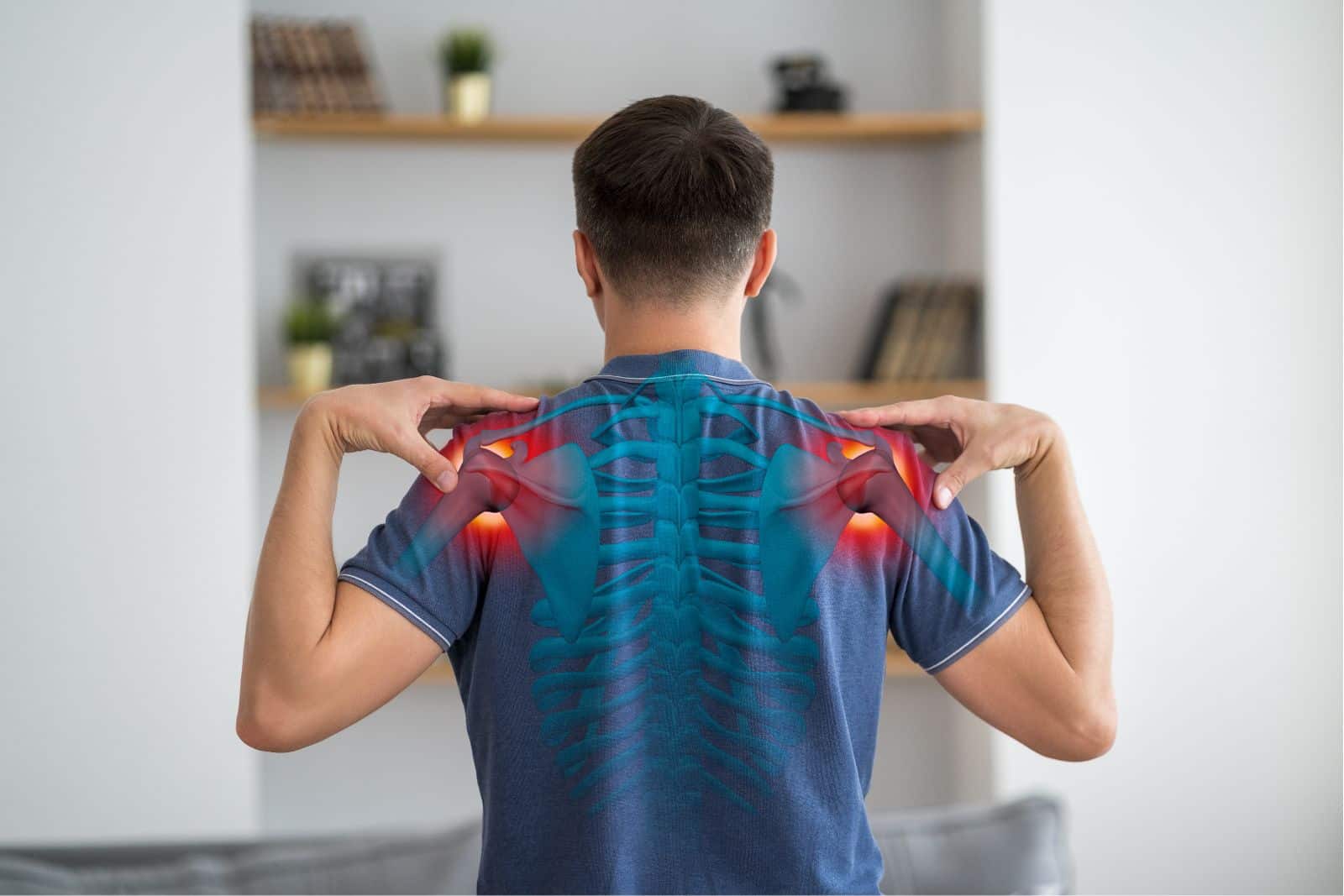
Shoulder pain is a prevalent and often complex issue that can significantly impact a person’s quality of life. The shoulder is a highly mobile joint, which makes it susceptible to a wide range of injuries and conditions, from repetitive strain to sudden trauma. This can lead to persistent pain, stiffness, and a reduced range of motion, making it difficult to perform everyday tasks like reaching for an object, getting dressed, or even sleeping comfortably.
This fact sheet is designed to provide you with a comprehensive overview of common causes of shoulder pain and how chiropractic care may offer a path to recovery.
In this article, Dr. Simon Nash (Chiropractor) discusses the various causes of shoulder pain and the different approaches a chiropractor might take to help with the symptoms.
Please note: The information provided in this article is for general knowledge and informational purposes only, and does not constitute medical advice. It is essential to consult with a qualified healthcare professional for a diagnosis and personalised treatment plan.
Table of Contents
- Understanding the Causes of Shoulder Pain
- Bursitis
- Rotator Cuff Injuries
- Frozen Shoulder
- The Chiropractic Approach to Shoulder Pain
- Understanding the Healing Process
- Frequently Asked Questions (FAQs)
- Book a Consult with Our Chiro Brisbane
- Video Transcript
Understanding the Causes of Shoulder Pain
The shoulder’s intricate anatomy, consisting of bones, muscles, tendons, and ligaments, allows for a wide range of motion. However, this complexity also makes it vulnerable to injury. Understanding the underlying cause of your pain is crucial for effective treatment. Dr. Nash identifies three of the most common causes of shoulder pain that he sees in his clinic: bursitis, rotator cuff injuries, and frozen shoulder.
Bursitis
The bursa is a small, fluid-filled sac that acts as a cushion between bones, tendons, and muscles around a joint. Bursitis occurs when this sac becomes inflamed and irritated.
Dr. Nash explains that bursitis is often a chronic issue. “Bursitis is where a little fluid-filled sac, called the bursa, gets irritated and inflamed,” he notes. “That is more of a chronic issue. So, for example, someone that has a repetitive strain type of issue with their shoulder, you can see it in sporting people.”
This condition can be quite painful and is often the result of repetitive strain, which is why it is common in athletes and people who perform overhead work. When the inflammation is severe, it can be difficult to manage. In such cases, a cortisone injection may be required to reduce the initial inflammation, but the long-term solution lies in addressing the underlying cause.
Dr. Nash points out that if a patient receives a cortisone injection from a specialist, “we would set to restore the function of the musculature and the tissue around that to help it calm down.”
Rotator Cuff Injuries
The rotator cuff is a group of four muscles and their tendons that surround the shoulder joint, providing stability and enabling a wide range of motion. Injuries to these muscles and tendons are a common cause of shoulder pain. These injuries can range from minor strains to full tears.
According to Dr. Nash, rotator cuff injuries are typically caused by repetitive motions, sports injuries, or lifting heavy objects. “Rotator cuff injuries are typically around the musculature around the shoulder,” he explains. “We might see injuries to those again in sporting issues or injuries, lifting and things around where the shoulder’s put under a lot of load.”
When these muscles and tendons are under excessive load, they can become irritated and inflamed, leading to pain and weakness. Treatment focuses on restoring function to the shoulder and taking pressure off the affected tissues.
Frozen Shoulder
Frozen shoulder, or adhesive capsulitis, is a condition characterised by stiffness and pain in the shoulder joint. It occurs when the connective tissue surrounding the shoulder joint, known as the shoulder capsule, becomes thickened and inflamed. This causes scar tissue, or adhesions, to form, restricting movement and causing significant pain.
Frozen shoulder typically progresses through three stages: the “freezing” stage where pain gradually increases, the “frozen” stage where pain may lessen but stiffness becomes more pronounced, and the “thawing” stage where the range of motion slowly returns.
Dr. Nash notes that the condition can have several triggers. “You can sometimes see it from a trauma or injury,” he says. “A lot of women get it as they approach menopause.”
The Chiropractic Approach to Shoulder Pain
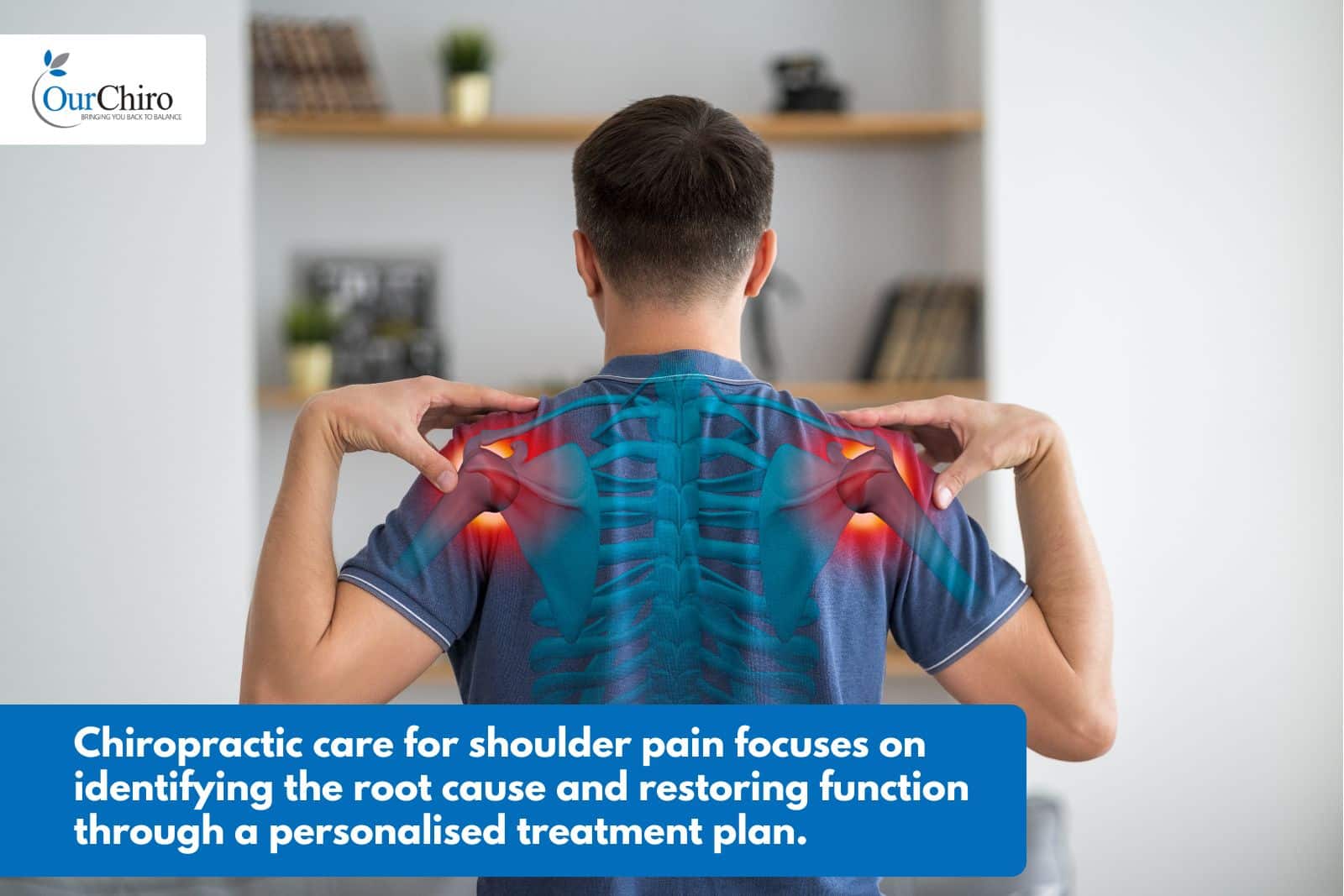
Chiropractors use a holistic and non-invasive approach to treat shoulder pain. The first step is to accurately diagnose the cause of the pain through a comprehensive examination and, if necessary, refer for imaging like X-rays or an MRI. Once the cause is identified, a personalised treatment plan is developed.
Dr. Nash describes the combination of therapies often used for shoulder pain: “We would use cold laser or sometimes shockwave therapy around that. We would use manual mobilisations, some taping methods to help restore function through that. And we’d give the patient some rehab programs.”
- Manual Mobilisation: Gentle, targeted movements are used to restore the range of motion in the joint and reduce stiffness.
- Cold Laser Therapy: A painless, non-invasive therapy that uses specific wavelengths of light to stimulate cellular repair, reduce inflammation, and alleviate pain.
- Shockwave Therapy: This therapy uses high-energy sound waves to stimulate healing and blood flow in the affected tissues. It is particularly effective for chronic conditions like bursitis and tendinopathy.
- Dry Needling and Soft Tissue Therapy: These techniques are used to release muscle tension, reduce trigger points, and improve circulation in the muscles surrounding the shoulder.
- Kinesio Taping: This elastic therapeutic tape is applied to the shoulder to provide support, reduce swelling, and improve muscle function without restricting movement.
- Rehabilitation Exercises: Patients are given specific exercises to perform at home to strengthen the muscles around the shoulder, improve posture, and prevent future recurrences.
Understanding the Healing Process
The healing time for shoulder pain varies depending on the specific condition and its severity. Acute injuries may resolve in a few weeks, while chronic issues can take longer.
“Typically with shoulder injuries, they do take a little bit longer to heal than most things,” Dr. Nash explains. “You’d look at orthopedic tissue healing around 6 to 8 weeks with most acute shoulder injuries and then chronic can take a little bit longer.”
“Our aim is to obviously get you out of pain and get your shoulder functioning back to the way it was before the injury happened,” he adds. The goal is not just to alleviate the pain but to restore full function and prevent future problems. By taking a comprehensive approach that combines in-clinic treatments with a personalised rehabilitation program, chiropractors can help you achieve lasting relief.
Frequently Asked Questions (FAQs)
Q1: What is the difference between a rotator cuff injury and frozen shoulder?
A: A rotator cuff injury involves damage to the muscles or tendons, often from overuse or trauma. Frozen shoulder, on the other hand, is a condition where the shoulder capsule becomes stiff and restricted due to scar tissue, severely limiting your range of motion.
Q2: Can a chiropractor help with a torn rotator cuff?
A: A chiropractor can help with non-surgical management of many rotator cuff injuries, focusing on reducing pain, improving range of motion, and strengthening the surrounding muscles. However, a full tear often requires surgical intervention.
Q3: Is chiropractic treatment for shoulder pain painful?
A: Chiropractic treatment for shoulder pain is designed to be as comfortable as possible. While some manual techniques might cause temporary discomfort, many therapies, such as cold laser therapy and shockwave therapy, are non-invasive and painless.
Q4: How many chiropractic sessions will I need for my shoulder pain?
A: The number of sessions required varies depending on the cause, severity, and how your body responds to treatment. Acute issues may require a shorter treatment plan, while chronic conditions might take longer. Your chiropractor will discuss this with you during your initial consultation.
Q5: Can I continue to exercise with shoulder pain?
A: It’s important to modify your activities to avoid movements that aggravate your pain. Your chiropractor will guide you on which exercises and stretches are safe and beneficial for your specific condition.
Q6: Should I use heat or ice for my shoulder pain?
A: For new injuries or flare-ups, ice is often recommended to reduce inflammation. For chronic stiffness or muscle tension, heat can help to relax the muscles. Your chiropractor can provide specific advice based on your diagnosis.
Q7: Can a chiropractor treat shoulder pain that is caused by my neck?
A: Yes. Pain from the neck can be referred to the shoulder. Our chiropractors are trained to identify if your shoulder pain is originating from the neck and will treat both areas accordingly to provide relief.
Book a Consult with Our Chiro Brisbane
We understand how frustrating and debilitating shoulder pain can be. The constant ache, the loss of motion, and the difficulty with simple daily tasks can make you feel like your life is on hold. At Our Chiro Brisbane, we are here to help you regain your mobility and get back to doing the things you love, pain-free.
Our experienced chiropractors specialise in diagnosing and treating a wide range of shoulder conditions. We will work with you to create a personalised treatment plan that not only addresses your pain but also focuses on long-term wellness and prevention.
Take the first step towards a pain-free life. Book an appointment with Our Chiro Brisbane today.
References
Lee, S., Lee, S., Jeong, M., Oh, H., & Lee, K. (2017). The effects of extracorporeal shock wave therapy on pain and range of motion in patients with adhesive capsulitis. Journal of Physical Therapy Science, 29(11), 1907–1909. https://doi.org/10.1589/jpts.29.1907b
Stergioulas, A. (2008). Low-Power Laser Treatment in Patients with Frozen Shoulder: Preliminary Results. Photomedicine and Laser Surgery, 26(2), 99–105. https://doi.org/10.1089/pho.2007.2138
Video transcript
What causes shoulder pain and how can chiropractic help? Shoulder pain can be a complex little thing. So we can see shoulder pain coming from things like bursitis. Berscitis is where a little fluid fil sack called the bersa gets irritated and inflamed, that is more of a chronic issue. So say for example someone that has a repetitive strain type issue with their shoulder. You can see it in sporting people and that requires a little bit more work to do to actually try and calm down. Some of the helpers we do we have for that would be things like potentially a cortisone injection if it was really really inflamed and you a patient would have that cortisone injection done not by us but by a specialist and then that would help reduce the amount of inflammation while we would set to restore the function of the musculature and the tissue around that to help it calm down. Um, other shoulder problems we might see are rotator cuff injuries. This is another example of a bursa injury, but rotator cuff injuries are typically around the musculature around the shoulder. We might see injuries to those again in sporting issues or injuries lifting and things around where the shoulder’s put under a lot of load. So again, we’d look at that and try and restore the function to the shoulder and take the pressure off the muscles that are being and tendons that are being irritated. Typically, we might use cold laser or sometimes shockwave therapy around that. We would use manual mobilizations, some taping methods to help restore function through that and we’d give the patient some rehab rehab programs. Another thing that we typically see is frozen shoulder. So frozen shoulder is where we typically see adhesions laid down and around the shoulder capsule and that can affect the rotator cuff muscles as well. You typically go through a freezing stage and then a thoring stage. So the patient would lose arm abduction and adduction. That is can sometimes take quite a while to treat. Patients that we’d see with that sometimes can be from a trauma or injury. A lot of women get it as they approach menopause. And so again, we try and work out a treatment solution to help with the function of the arm. And again, we’d be using kinesio taping, cold laser, which doesn’t hurt and also some shockwave therapy, as well as mobilisation and needling around that just to try and help restore function and get the patient out of pain. So, the typical treatment plan around a shoulder injury would depend on what the injury is from, whether it’s berscitis, whether it’s a frozen shoulder or whether it’s a rotator cuff injury. Typically with shoulder injuries, they do take a little bit longer to heal than most things, but we aim to restore the function to get you better as quickly as we can. So, typically you’d look at orthopedic tissue healing around 6 to 8 weeks with most acute shoulder injuries and then chronic can take a little bit longer, but we employ a lot of different techniques, and that’s something that we do at our clinic, which is a little bit of a point of difference. So we would use cold laser, sometimes shockwave in combination. We’d use kinesio taping to help restore that function and dry needling. So in the beginning phase, you’d be looking probably at around 6 weeks for treatment, but that can be brought forward or sometimes might take a little bit longer. But our aim is to obviously get you out of pain and get your shoulder functioning back to the way it was before the injury happened.
This blog post was written and approved by Dr Simon Nash
Dr Simon Nash (M.Chiro, B.Chiro Sci.) is a chiropractor with over 20 years of clinical experience. He is a full professional member of Sports Medicine Australia (SMA) and Chiropractic Australia, and is AHPRA registered (CHI0000970189). Simon graduated from Macquarie University and is dual-registered to practise in Australia and Hong Kong.
He began his career in a multidisciplinary neurology-focused clinic in Sydney, developing a strong interest in treating headaches and migraines. Since 2006, he has operated Our Chiro Brisbane, now alongside his sisters Jessica and Rebecca.
Simon treats everyday injuries, workplace rehabilitation cases and complex presentations using a wide range of techniques. His sports medicine experience spans elite athletes including NRL and Rugby Union players, Olympians, and events like the Australian Open and Hong Kong 7s. He has also treated Guns N’ Roses during tour.


Disclaimer:
The information provided in this blog is for general informational purposes only and is not intended as medical advice. It should not be used to diagnose, treat, or replace professional consultation with a qualified healthcare provider. Always seek the advice of a chiropractor, GP, or other qualified health professional regarding any medical condition or treatment.
Click here to learn more about our editorial policy, that explains how content is created, fact-checked, and updated by qualified chiropractors and other health professionals.