Kinesio Taping
Elastic therapeutic taping to stabilise joints, ease strain, and aid post-treatment movement.
Elastic therapeutic taping to stabilise joints, ease strain, and aid post-treatment movement.
Kinesio taping provides joint and muscle support without limiting movement. The elastic tape helps improve circulation, reduce strain, and promote better posture between treatments. At Our Chiro Brisbane, taping is often used after adjustments or exercise therapy to stabilise areas under stress and aid your natural healing process.
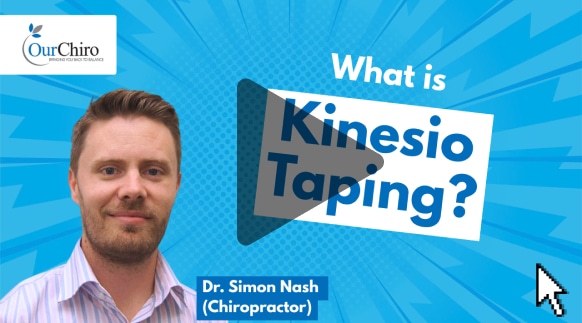
Kinesio taping is a supportive technique used by chiropractors to help stabilise joints, reduce strain, and promote recovery without limiting movement. It involves applying a specialised elastic tape to the skin in patterns that follow the muscles, tendons, and joints. At Our Chiro Brisbane, kinesio taping is often used as part of a broader treatment plan to manage pain, swelling, or postural issues following injury or overuse.
The tape works by gently lifting the skin, which can help improve circulation and reduce local pressure on pain-sensitive tissues. This can support lymphatic drainage, ease discomfort, and assist the body’s natural healing processes. It is often applied after manual therapy to help maintain joint alignment or support a recently treated area between sessions.
Kinesio taping may assist with:
Each taping application is tailored to the individual’s movement patterns and treatment goals. The tape is breathable, water-resistant, and comfortable to wear for several days, allowing you to continue normal activities.
At Our Chiro Brisbane, kinesio taping is integrated with evidence-based care to reinforce treatment effects, support recovery, and promote long-term musculoskeletal stability.
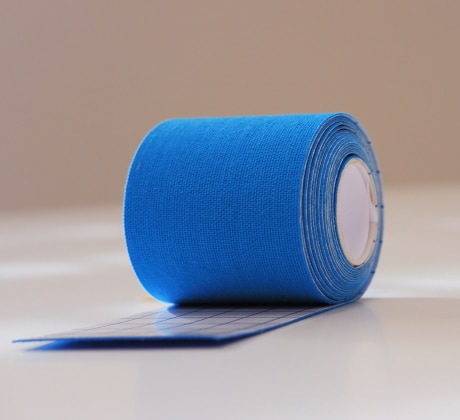
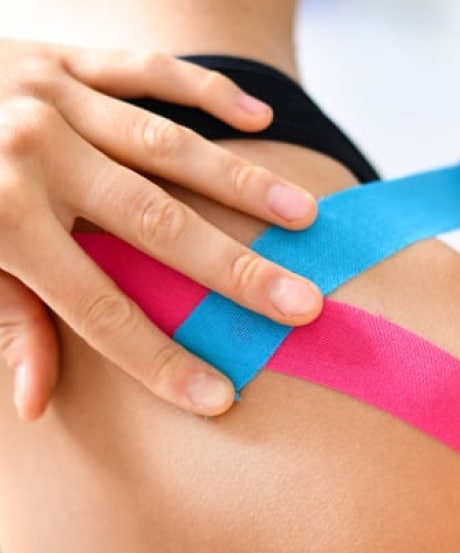


Kinesio taping is a therapeutic technique that uses a special elastic tape to support and stabilize muscles and joints without restricting movement. It can help reduce pain, inflammation, and swelling, while also improving circulation and promoting healing.
Kinesio tape is applied to the skin with varying degrees of stretch and tension, depending on the desired effect. It lifts the skin microscopically, creating space and reducing pressure on pain receptors, blood vessels, and lymphatic vessels. This can help to:
Dynamic taping is a relatively new taping technique that uses a highly elastic tape to provide dynamic support and assist with movement. Unlike Kinesio tape, which is designed to provide stability, Dynamic tape acts more like a spring, helping to absorb force and reduce stress on tissues during movement.
Dynamic tape is applied with strong recoil, allowing it to stretch and contract with movement. This can help to:
Sports taping is a traditional taping technique that uses rigid or semi-rigid tape to provide strong support and stability to joints, particularly during high-impact activities. It is commonly used to prevent injuries or to support injured joints during rehabilitation.
Sports tape is applied to restrict movement in specific directions, providing support and stability to the joint. This can help to:
Taping can be beneficial for a variety of conditions, including:
Your practitioner will assess your condition and determine the appropriate taping technique and application. They will then apply the tape with precision to achieve the desired support and therapeutic effect.
Depending on the type of tape and application, it can typically stay on for 3-5 days, even during showering and exercise.
You can book an appointment online through our website or by contacting our clinic directly. Our chiropractors and therapists are experienced in applying Kinesio taping, Dynamic taping, and Sports taping to help you achieve your health and wellness goals.
Kinesio Taping is a therapeutic method designed to support muscles and joints without restricting movement. The technique involves applying a flexible, elastic tape to targeted areas of the body to help improve circulation, reduce local discomfort, and provide gentle structural support. In chiropractic care, Kinesio Taping can complement adjustments and soft tissue therapy by helping the body maintain alignment and stability between treatments.
The tape itself is lightweight and stretchable, allowing full range of motion. When applied correctly, it lifts the skin slightly to promote better blood flow and lymphatic drainage in the underlying tissues. This gentle lifting effect may reduce swelling and pressure on sensitive areas, which can support the body’s natural healing processes.
Many people notice improved awareness of posture and movement while wearing the tape. This sensory feedback can encourage better biomechanics during daily activities or exercise, reducing the risk of overuse or strain. For athletes or active individuals, Kinesio Taping can be used before or after training sessions to support muscle performance and recovery.
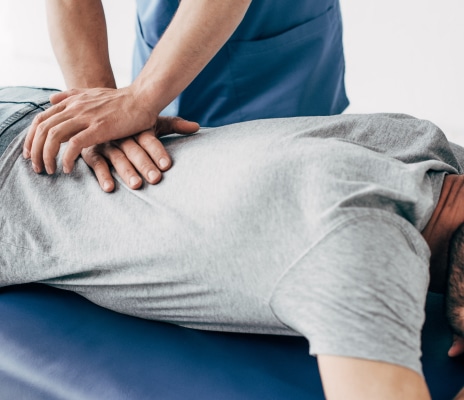
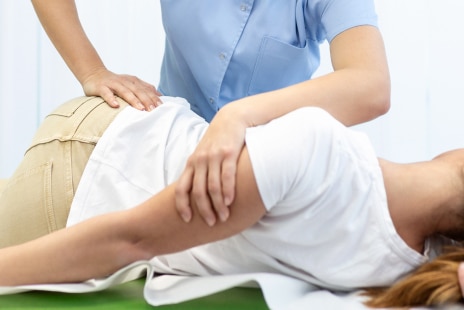
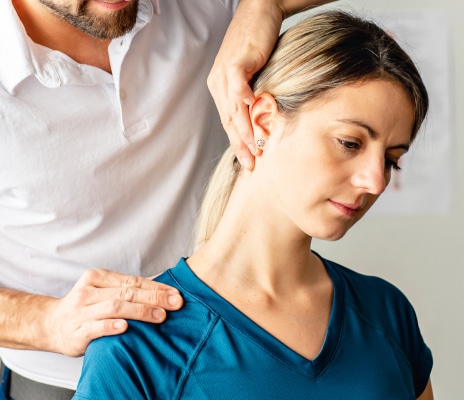
In chiropractic practice, the tape may be applied after manual adjustments to help maintain joint positioning, reduce tension in overactive muscles, or assist in retraining specific movement patterns. It can also be used to provide comfort for common concerns such as shoulder instability, lower back tension, or knee discomfort.
Kinesio Taping is generally comfortable to wear and can stay on for several days, even through showers and workouts. While it is not a replacement for hands-on treatment or rehabilitation, it can be a valuable addition to a broader care plan that includes chiropractic adjustments, stretching, and strengthening exercises.
Applied by a trained Our Chiro practitioner, Kinesio Taping helps support movement, promote body awareness, and encourage more efficient recovery from physical stress.
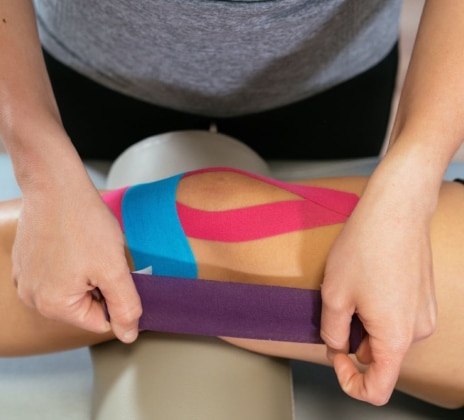
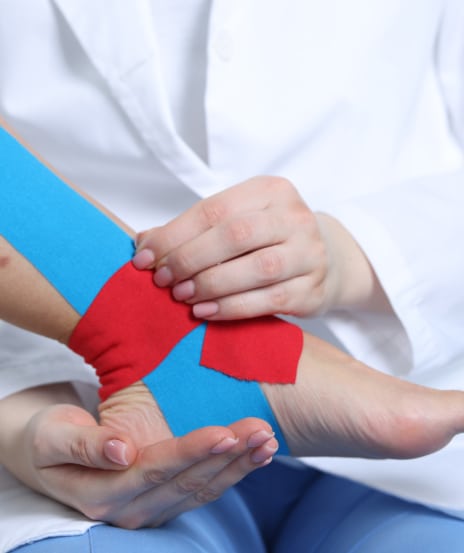

A common question we get in the clinic is about two of our treatments: rigid taping and Kinesio taping.
Rigid taping is the old-school method used to stabilise joints or support movement control. For example, someone with low back pain might have tape applied across the lumbar spine to reduce movement and provide stability. It’s called rigid tape because it doesn’t move—it’s firm and supportive. We also use it on unstable joints like ankles or wrists, such as after a sprain from basketball or footy.
Kinesio taping, on the other hand, is quite different. It’s a specialised elastic tape that stretches to about 140% of its original length once the backing is removed. We use it to promote healing within muscles and to reduce inflammation. It’s helpful for swelling or lymphoedema and can be applied to specific muscle groups to either activate or inhibit them.
A common example is tennis elbow, where we tape over the elbow to reduce inflammation and improve blood flow by gently lifting the skin. This technique allows movement in a controlled way, supporting optimal healing. We also use it for bruising or haematomas, cutting the tape into patterns that help lift the skin and speed recovery.
It’s painless, hypoallergenic, and can be worn during training or activity. It stays on during sport and is waterproof, making it an effective therapy patients can continue using after they leave the clinic.
So, that’s taping.
Support your movement and stability between visits. Schedule a kinesio taping session at Our Chiro Brisbane or speak with our team for advice.

At Our Chiro Brisbane, we prioritize personalized care, ensuring that each patient’s unique health issues, needs, and concerns are addressed with utmost attention. We are committed to delivering tailored treatments that focus on individual well-being, because your health deserves dedicated and thoughtful care.
Opening Hours
| Mon | 8:00 am – 6:30 pm |
| Tue | 8:00 am – 6:30 pm |
| Wed | 8:00 am – 6:30 pm |
| Thu | 8:00 am – 6:30 pm |
| Fri | 7:30 am – 1:00 pm |
| Sat | 8:30 am – 12:30 pm |
| Sun | Closed |
Our Treatments
Contact Info
Common Conditions
Contact Info
Copyright © 2025 | Our Chiro. All Rights Reserved.
Web Design by YEWS | Privacy Policy | Disclaimer |
Chiropractor Brisbane | Back Pain & Chiropractic Fortitude Valley

Cannot rate this practice highly enough! Both Kat and Simon are lovely and very professional. I was a little skeptical at my first appointment but in just a few short weeks I’ve noticed a huge difference in my comfort levels and range of movement. Highly recommend a visit to either Kat or Simon
Wheel alignment on this old chassis. Simon Nash is one of the best Chiropractors I’ve seen. Very informative and actually quite smooth when it comes to making adjustments. If you’re looking for a professional friendly effective chiropractor Simon Nash is one of the best

Visilios K
Emma T
Will H
One of the best investments I have made in my future! I personally recommend Our Chiro to all my friends and family.
Susana B